
How long after asbestos removal is it safe to go back in?
Not by the calendar. A home is safe to re-enter when the work area passes a visual inspection and a final air test, and the inspector or consultant clears it in writing. Some websites give a day count. A day count cannot show the air is clean. A passed test can.
That matters in St. Louis, where many jobs happen in older houses with plaster, pipe wrap, floor tile and attic insulation. The work area may sit next to rooms you use every day. Know the sign-off steps before the crew arrives, and you will not have to guess on the last day.
Why do some websites say wait 24 to 48 hours?
Because many contractors treat that as a minimum, not a finish line. Bowerman Cleaning and Restoration writes that “most professional asbestos removal projects require a minimum 24 to 48-hour waiting period after completion.” The same page says lab processing “typically requires 24 to 72 hours, depending on testing complexity and laboratory workload.”
Read those lines as two clocks, not one answer. Fibers settle on one clock. The lab works on another. Neither clock replaces the result. The EPA and Missouri pages we read give no number of days. They point to inspection, air monitoring and written assurance. So plan for the longer of the two clocks, and move back only when the paper says the area is clear.
What has to happen before the crew takes the plastic down?
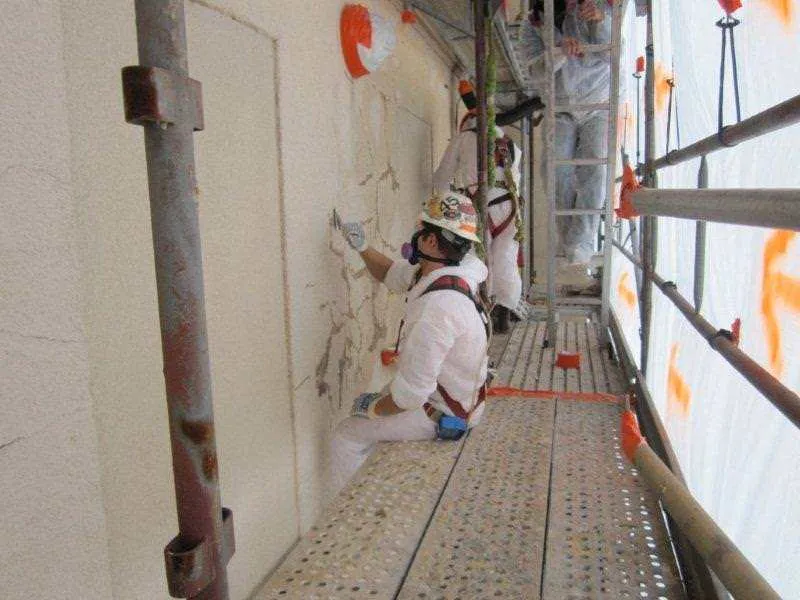
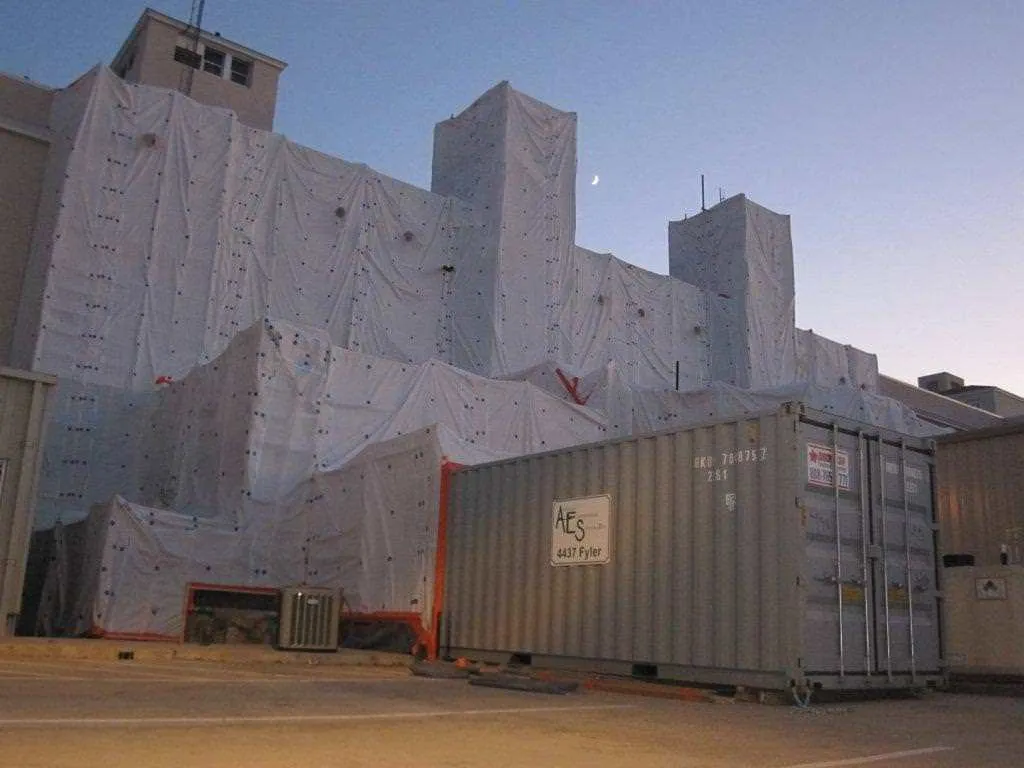
Four things, in order. The crew finishes removal and wet cleanup. A person checks every surface by eye. Air samples are taken and sent to a lab. The containment stays up until the result is in. Our asbestos removal process guide walks through all nine steps. This post covers the end of the job.
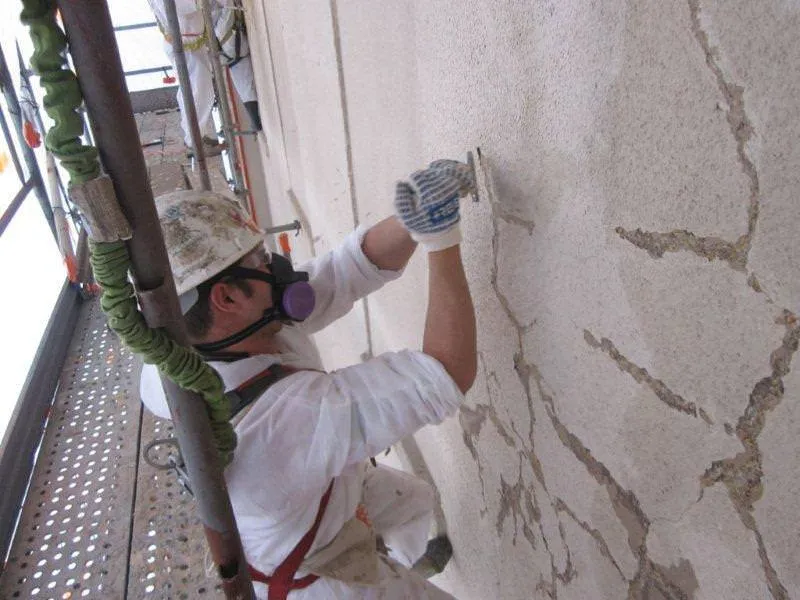
EPA lists what a good contractor does at the finish. The crew cleans the whole area with wet mops, wet rags, sponges or HEPA vacuum cleaners. EPA says a regular vacuum cleaner should never be used. A HEPA filter traps very small fibers. A regular vacuum can blow them back into the room. EPA also says the work site should be visually free of dust and debris.
AES describes the same finish on its own pages. Specialized vacuums clean the asbestos-containing materials and the surrounding surfaces. The consultant then inspects the area and takes air samples. If the samples pass, the consultant sends a clearance letter. AES says you receive copies of the inspection results and the lab analysis.
Who decides the area is clear?
An asbestos consultant or inspector decides, not the removal crew. EPA says an inspector or an independent air testing contractor may do the air monitoring after the work. EPA also says the professional who assesses the need for removal should not be tied to the firm that does the removal. That keeps a second set of eyes on the job.
Ask these questions before you sign:
- Who takes the final air samples, and are they independent of the removal crew?
- Which standard and lab method will the clearance use?
- Who pays for the air test, and is it in the written price?
- Will I get the clearance letter and lab results in writing?
- Does the containment stay up until the result is back?
- How many days should I plan between the last day of work and the lab result?
EPA also advises a written contract that covers the work plan, the cleanup and the rules the contractor must follow. Add the clearance steps to that contract. At the end of the job, EPA says to “get written assurance from the contractor that all procedures have been followed.”
What number does the air test have to meet?
It depends on the standard, and sources differ. Ask which one applies to your job and write it down.
| Standard | Number | Where it comes from | Conditions |
|---|---|---|---|
| EPA/AHERA clearance, PCM method | 0.01 f/cc or lower | Georgia EPD page | Each result of at least five samples per abatement area |
| EPA/AHERA clearance, TEM method | 70 s/mm2 or lower | Georgia EPD page | Average of at least five samples per abatement area |
Georgia EPD says the AHERA levels are “mandatory for school abatement projects” and that it “highly recommends their use for non-school projects.” That is one state agency’s advice, not a Missouri rule for homes. OSHA’s 0.1 fiber per cubic centimeter is an eight-hour exposure limit for workers, not a clearance level for a home. Have the independent consultant name the clearance standard and the sampling method in writing, and agree on it in your contract. Agree on the number before work starts, not after.
What does the timeline look like from the last bag to move-back?
It runs in five steps, and the last one is yours. The table shows the order. It is our planning outline built from the EPA, AES and Bowerman points above. Your consultant sets the real dates.
| Step | Who | What happens | What you do |
|---|---|---|---|
| 1. Final cleanup | Removal crew | Wet wipe and HEPA vacuum of the work area | Stay out |
| 2. Visual inspection | Consultant or inspector | Surfaces checked for dust and debris | Stay out |
| 3. Air sampling | Consultant or independent tester | Samples collected, plastic still up | Stay out |
| 4. Lab result | Lab | Bowerman says processing typically takes 24 to 72 hours | Ask for the date |
| 5. Clearance letter | Consultant | Written sign-off if samples pass | Keep the paper |
If a step fails, the crew goes back to step 1. Plan hotel nights or a stay with family for the longest case, not the best one.
When can my family and pets return?
When the clearance letter says the area is clear. EPA says to keep household members and pets out of the work area until the work is done. After the crew finishes, treat the area as closed until the consultant clears it. Rooms outside the sealed zone were closed off with plastic, so you can use them if your contractor says so.
Do not clean up behind the crew in the work area. EPA says not to dust, sweep or vacuum debris that may contain asbestos, and not to track it through the house. If you see dust, a torn piece of plastic or a missing bag, tell the contractor before clearance. A re-clean is cheaper than a failed test.
Your timeline also has a state step before the work. Missouri DNR rules for regulated projects need notice at least 10 working days before the start. Our post on the Missouri 10 working day notice explains when it applies. Plan your move-out and move-back dates around that notice, the work days and the lab turnaround.
What if the test fails?
The crew cleans again and the consultant retests. Containment stays up while this happens. A failed test means fibers were still in the air or on surfaces, which is the reason for testing. Ask your contractor in advance who pays for a retest, and put the answer in the contract.
If the contractor wants to remove the plastic before the result is back, say no. Once the plastic is down, a failed result is much harder to fix.
What should you do after clearance?
Keep the paper. The clearance letter, the air results and the lab analysis show that the job was finished and checked. They help at resale, with a lender or buyer, and when a later contractor asks about the materials. If you plan to cut into other walls or floors, the same asbestos-containing material rules still apply to anything that was not removed. EPA says material in good condition that will not be disturbed should be left alone, and testing before remodeling is the safe order. See the clearance air test entry for the plain definition.
Old floor tile is a common source of confusion. If your job involved tile, read are old asbestos floor tiles dangerous. For hiring questions, see our guide to hiring an asbestos contractor in Missouri.
Next step
Planning an abatement job in the St. Louis area? Read our asbestos abatement page, then call (314) 865-2662 or use the contact form. AES quotes each job. Ask us how clearance testing will work for your project.
Frequently asked questions
Is there a waiting period after asbestos removal?
The government sources we read set no waiting period in days. The test is a passed visual inspection and a passed final air test, then written clearance. Some companies say 24 to 48 hours, but a day count does not prove the air is clean. Wait for the result.
Who should do the final air test?
EPA says an asbestos professional hired to assess the work should not be connected with the firm that does the removal, and that an inspector or an independent air testing contractor may do the air monitoring. Ask who tests, and who pays for it, before work starts.
What number does the air have to meet?
It depends on the clearance standard your consultant applies. OSHA's 0.1 fiber per cubic centimeter is a worker exposure limit, not a clearance level for a home. EPA's school rule is 0.01 f/cc by phase contrast microscopy, for each of at least five samples. Ask which standard your test uses.
Can I clean the area myself after the crew leaves?
No. EPA says not to dust, sweep or vacuum debris that may contain asbestos, and not to track it through the house. If you see dust or debris left in the work area, call your contractor and ask for a re-clean before clearance.
What paperwork should I keep?
Keep the clearance letter, the air sample results, the lab analysis and the waste records. AES says the consultant sends a clearance letter if samples pass, and you receive copies of the inspection results and lab analysis. Keep them with your home records for resale and later remodeling.
Terms on this page
Sources
- U.S. EPA: Protect Your Family from Exposures to Asbestos, work site
- U.S. EPA: Protect Your Family from Exposures to Asbestos, air monitoring
- U.S. EPA: Protect Your Family from Exposures to Asbestos, conflict of interest
- U.S. EPA: Protect Your Family from Exposures to Asbestos, cleanup
- U.S. EPA: Protect Your Family from Exposures to Asbestos, written assurance
- U.S. EPA: Protect Your Family from Exposures to Asbestos, visual check
- Georgia Environmental Protection Division: Post Asbestos Abatement Clearance and Air Sampling
- Georgia Environmental Protection Division: Post Asbestos Abatement Clearance and Air Sampling, non-school projects
- Georgia Environmental Protection Division: Post Asbestos Abatement Clearance and Air Sampling, PCM level
- Bowerman Cleaning and Restoration: How Long Is It Safe to Return Home After Asbestos Removal, waiting period
- Bowerman Cleaning and Restoration: How Long Is It Safe to Return Home After Asbestos Removal, lab time
Written by Advanced Environmental Services and checked against the sources above on July 17, 2026. Rules change, so check the linked page before you act.