
Can you tell if paint has lead by looking at it?
No. Old paint with lead and old paint without it can look the same. EPA says the only way to know for certain whether a building has lead-based paint or lead hazards is to have it tested. So the real questions are how likely your paint is to contain lead, and which test fits your situation.
This post answers both. It also covers the Missouri rule on who can take paint samples, because that rule changes what a St. Louis homeowner should do.
What clues do people look for, and do they prove anything?
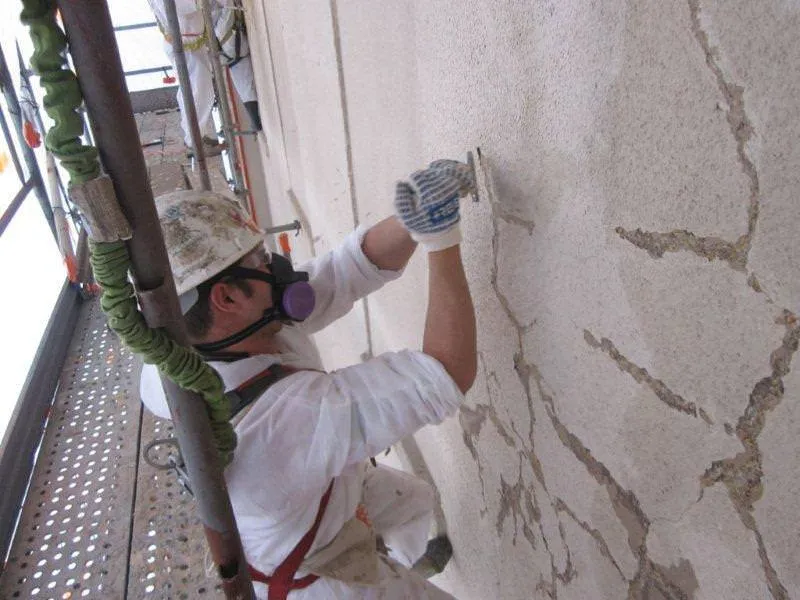
Clues only tell you the paint is old or failing. They do not tell you it contains lead. People point to a cracked “alligator” pattern, a chalky surface, many layers of paint, or paint on windows and trim that rubs and peels. Those signs show age, wear and moisture. Plenty of old paint without lead looks the same.
Use the clues for one thing: deciding where to act first. EPA says that if painted surfaces are deteriorating, this may create a hazard that requires immediate attention and a certified lead professional should be hired. EPA also says to look at surfaces that rub, such as doors and window sills, because worn lead paint there can produce chips and dust.
How likely is it that my house has lead paint?
The older the home, the more likely. EPA says approximately three-quarters of the homes in the United States built before 1978 still contain some lead-based paint. Missouri’s health department gives higher estimates for the state, broken out by decade.
Missouri DHSS estimates 60% of dwellings built between 1960 and 1978 contain lead-based paint, 80% of those built from 1940 to 1959, and as high as 90% of those built before 1949. The two sources measure different things, so treat both as odds, not as a prediction for your house.
| Year built | Missouri DHSS estimate of dwellings with lead-based paint |
|---|---|
| Before 1949 | As high as 90% |
| 1940 to 1959 | 80% |
| 1960 to 1978 | 60% |
| After 1978 | Not covered by this estimate |
St. Louis has an old housing stock. The Census Bureau’s 2024 one-year estimates count 174,694 housing units in St. Louis city. Of those, 98,061 were built in 1939 or earlier, and another 10,923 were built from 1940 to 1949. That is about 62% of all city homes built before 1950, which is close to the group where DHSS gives its highest estimate. If your house is one of them, treat the paint as lead paint until a test says otherwise. Our guide to lead paint in pre-1978 homes covers why 1978 matters, and the glossary explains lead-based paint.
What are my options for finding out?
You have four. Each has a cost in money, time and certainty.
| Option | What it tells you | Limits |
|---|---|---|
| Treat the paint as lead and work as if it is there | Nothing about the paint, but you act safely | EPA says to assume lead-based paint when you cannot determine the home’s age. You may spend more than needed on precautions |
| Certified lead-based paint inspector | Whether the building has lead-based paint and where it is | EPA says an inspection will not tell you if lead hazards exist now or how to deal with them |
| Certified risk assessor | Whether lead hazards exist from paint, dust or soil, and what to do | Gives the broader hazard picture. Useful when children live in the home |
| Hardware-store test kit | A quick screen | CPSC says to exercise caution with these kits. EPA recognizes only three kits, and only for use by lead-safe certified renovators |
EPA recommends that you hire a certified inspector or risk assessor. That is the route that gives a clear, usable answer. An inspector may use a tool such as an XRF analyzer or may collect samples for a lab.
EPA also says you can contact a laboratory in its National Lead Laboratory Accreditation Program for paint chip, dust or soil analysis.
What should I ask a lead inspector or risk assessor?
Ask five questions before you book. The answers tell you whether you will get a result you can use.
- Are you licensed by DHSS as a lead-based paint inspector or risk assessor?
- Will you test with an XRF analyzer, collect paint chips, or both?
- Does the lab you use hold EPA’s NLLAP recognition for paint chip, dust or soil analysis?
- Does the report list each tested surface and say where lead was found?
- Do I need an inspection, a risk assessment, or both? Remember that an inspection finds lead paint and a risk assessment finds hazards and next steps.
Keep the written report. A buyer, a landlord, a lender or a later contractor may ask for it.
Who can take paint chip samples in Missouri?
A licensed lead-based paint inspector or risk assessor. DHSS says that in Missouri, paint chip sampling must be performed by one of them. The safest path for any owner is not to scrape your own samples.
Scraping or sanding old paint creates dust, and dust is how lead gets into people, especially children. A licensed inspector takes samples in a controlled way and sends them to a lab.
What should I do while I wait for results?
Act as if the paint contains lead. These steps are low-cost and do not disturb the paint.
- Do not sand, scrape, burn or power-wash painted surfaces on a pre-1978 home.
- Keep children away from any area where paint is chipping or peeling.
- Wet-wipe window sills, floors and door frames with a damp disposable cloth instead of dry sweeping or vacuuming without a HEPA filter.
- Check high-wear spots first. Windows, doors, stairs, porches and railings take the most friction and shed the most dust.
- Hold off on remodeling until you have a result. If a contractor says they will “just sand it,” ask whether they are certified and what lead-safe steps they use.
- Do not paint over it and call it done. EPA says that just painting over the paint hazards with regular paint will not permanently address lead-based paint hazards.
Our lead paint facts page covers the health side, and the lead help in St. Louis guide lists local programs, including inspection help for some households. For a broader checklist on older houses, see testing an older St. Louis home.
What happens if the test is positive?
A positive result does not mean you must tear everything out. What you do next depends on the paint’s condition, where it is, and what work you plan. Sort your result into one of three groups, because the group shapes the cost, the schedule and who you hire.
- Intact paint, no renovation planned: keep it intact, clean dust often and watch for chipping.
- Renovation planned: the work may fall under EPA’s RRP rule, which sets lead-safe work practices for pre-1978 housing.
- Peeling, chipping or high-wear surfaces: talk to a lead professional about fixing the hazard. In Missouri, removal, replacement, enclosure and encapsulation count as abatement. DHSS says anyone performing those strategies must be licensed and must provide notification to the Department as required. Missouri has a narrow exception for owners who work on their own homes, so ask DHSS before you plan any do-it-yourself work.
Next step
If you know or suspect that lead paint is chipping, peeling or in the way of a project, call Advanced Environmental Services at (314) 865-2662 or use the contact form. Our lead abatement page explains the service.
Frequently asked questions
Can I tell if paint has lead by how it looks?
No. EPA says the only way to know for certain whether a building has lead-based paint or lead hazards is to have it tested. Color, cracking and wear do not prove it either way. Home age raises or lowers the odds, but only testing gives the answer.
Do home lead test kits work?
Be careful. EPA notes that the Consumer Product Safety Commission says consumers should exercise caution when using lead test kits sold in hardware stores. EPA recognizes three kits, but only for use by lead-safe certified renovators. For a clear answer, EPA recommends a certified inspector or risk assessor.
What is the difference between a lead inspection and a risk assessment?
EPA says an inspection tells you if a building has lead-based paint and where it is, but not whether lead hazards exist now. A risk assessment tells you if the building has lead hazards from paint, dust or soil and what actions to take. Many owners want both answers before a renovation.
Should I scrape off paint and send it to a lab?
Do not scrape it yourself. Scraping makes dust. DHSS says that in Missouri, paint chip sampling must be performed by a licensed lead-based paint inspector or risk assessor. Ask the inspector to take the samples and send them to an accredited lab.
My house was built in 1985. Do I need to worry?
The federal government banned the sale of lead-based paint for use in homes in 1978, so the odds and the rules focus on homes built before then. A 1985 house sits outside them. If you are not sure of the build date, or you work on an older part of the house, treat the paint as lead paint until a test says otherwise.
Terms on this page
Sources
- U.S. EPA: Lead Abatement, Inspection and Risk Assessment (archived June 2, 2026; page last updated May 28, 2026)
- U.S. EPA: Lead Abatement, Inspection and Risk Assessment (inspection, archived June 2, 2026)
- U.S. EPA: Lead Abatement, Inspection and Risk Assessment (national odds, archived June 2, 2026)
- U.S. EPA: Lead Abatement, Inspection and Risk Assessment (deteriorating paint, archived June 2, 2026)
- U.S. EPA: Lead Abatement, Inspection and Risk Assessment (1978 ban, archived June 2, 2026)
- U.S. EPA: Lead Abatement, Inspection and Risk Assessment (friction surfaces, archived June 2, 2026)
- U.S. EPA: Lead Abatement, Inspection and Risk Assessment (painting over, archived June 2, 2026)
- U.S. EPA: Can a homeowner use an EPA-recognized lead test kit? (archive of the EPA site as of January 19, 2021)
- U.S. EPA: Can a homeowner use an EPA-recognized lead test kit? (inspector, archive as of January 19, 2021)
- U.S. EPA: Can a homeowner use an EPA-recognized lead test kit? (recognized kits, archive as of January 19, 2021)
- U.S. EPA: Can a homeowner use an EPA-recognized lead test kit? (laboratory, archive as of January 19, 2021)
- U.S. EPA: Lead-Safe Renovations for DIYers (unknown age, archived June 8, 2026; page last updated May 27, 2026)
- Missouri DHSS: Lead Licensing (Missouri housing)
- Missouri DHSS: Lead Licensing (paint chip sampling)
- U.S. Census Bureau, ACS 2024 1-year, table B25034 Year Structure Built, St. Louis city (estimates, via Census Reporter)
- U.S. Census Bureau, ACS 2024 1-year, table B25034 (column B25034011 label)
Written by Advanced Environmental Services and checked against the sources above on June 19, 2026. Rules change, so check the linked page before you act.