
Is my St. Louis landlord responsible for mold?
Often, but not always, and the law is thin. We did not find a Missouri statute that names mold. Missouri’s repair-and-deduct law covers conditions that break a local housing or building code and hurt habitability. Whether mold counts is a question for the local code office or a lawyer.
In practice, mold follows water. A roof leak, a broken pipe or a failed bath fan is usually the owner’s repair. Tenant causes, such as a blocked dryer vent or an unreported leak, can change the answer. Put your report in writing either way.
This guide covers the rental angle. For the science and the cleanup order, read mold after water damage and mold remediation cost and timeline. Not legal advice: call Missouri Legal Services or a lawyer for your lease.
Does the City or County have a mold rule?
Not that we found. St. Louis County says its Healthy Homes Program has no regulatory authority over mold or mildew in homes. It also says no federal agency has established what counts as an acceptable, tolerable or normal quantity of mold. We did not find a City page that sets a mold rule.
That means mold in a rental is usually handled as a housing condition. Ask the code office whether the leak, rot or broken system behind the mold breaks the housing code. We could not confirm whether the City acts on mold alone.
Who do I call in the City of St. Louis?
Call the Citizens’ Service Bureau (CSB) at (314) 622-4800, or file online. CSB is the City’s customer service department. It takes complaints and service requests and can direct you to the correct City service.
Before you call, have the exact address, the unit number, photos with dates, and copies of what you sent your landlord. Rental units in the City need a Certificate of Inspection, and the City says rentals are reinspected every three years or when occupancy changes.
Who do I call in St. Louis County?
The County says all complaints involving mold outside lodging and childcare facilities must go to your own housing authority. For many renters, that means the city hall of the municipality where you live, or the County permit office if you live in unincorporated County. Ask which one covers your address.
The County’s Healthy Homes Program does offer help. It advises cleaning and drying wet or damp spots within 48 hours and keeping indoor humidity below 60%, ideally 30 to 50%. It also says take-home mold tests are available through the Department of Public Health’s Environmental Lab. Call 314-615-8324 for information.
Who can I call, at a glance?
| Your situation | First call | Notes |
|---|---|---|
| Rental in the City of St. Louis | CSB, (314) 622-4800 | Online form also available |
| Rental in unincorporated County or a County city | Your own housing authority | County Healthy Homes does not regulate mold in homes |
| Hotel, motel or child care facility in the County | County Healthy Homes | The County inspects lodging and childcare |
| Need a mold test kit | County Environmental Lab, 314-615-8324 | Take-home kits |
| Lease or money dispute | A lawyer or Missouri Legal Services | Not covered by the offices above |
Can I fix mold and deduct the cost from my rent?
Only in narrow cases. Missouri’s repair-and-deduct law, RSMo 441.234, lets some tenants fix a code violation and subtract the cost from rent. The table lists the limits as the statute states them.
| Condition | What the law says |
|---|---|
| Who qualifies | A tenant who has lived there six consecutive months and paid all rent and charges due, with no uncured lease violation notice |
| What qualifies | A condition that hurts habitability, sanitation or security and violates a local housing or building code |
| How much | Less than $300 or half the periodic rent, whichever is greater, and never more than one month’s rent |
| Notice | The tenant tells the landlord in writing that the tenant intends to fix the condition at the landlord’s expense; the landlord has 14 days |
| Yearly cap | No more than one month’s rent deducted in any 12-month period |
| Before deducting | The tenant gives the landlord an itemized statement, including receipts |
| Landlord disputes it | The tenant needs a written certification from the local government before the repair, then the landlord has 14 days from the certification or the tenant’s notice, whichever is later |
| Waiver | The statute says no lease may waive these rights |
The statute adds that this remedy does not replace other remedies a tenant may have. It also bars the remedy when the tenant or a guest caused the condition. The cost cap is low. Real mold remediation usually costs more, so this route fits only small repairs, such as fixing a leaking faucet that fed the mold. Talk to a lawyer before you deduct anything.
How long must I wait for the landlord?
For repair and deduct, the notice must say that you intend to fix the condition at the landlord’s expense. The landlord then has 14 days, or as promptly as an emergency requires. A general complaint about mold is not that notice. Verbal notice does not start that clock. Send a dated letter or an email that you can prove you sent, and keep a copy. If the landlord disputes the repair in writing, the clock changes: after the local government certifies the code violation, the landlord has 14 days from the certification or your notice, whichever is later. Before you deduct anything, give the landlord an itemized statement with receipts.
This 14 days belongs to the repair-and-deduct law. It is not a deadline for every complaint. A City or County office can set its own timeline.
What do I do first when I find mold?
Do these steps in order:
- Take dated photos of the growth and the water source.
- Stop the water if you safely can, and dry wet areas within 48 hours.
- Tell your landlord in writing. Describe the problem and the date you found it.
- Keep copies of every message and receipt.
- Call CSB (City) or your housing authority (County) if the landlord does not act.
- Do not scrub or cut into large areas. Disturbing growth spreads mold spores.
Mold repair can also touch lead paint. In a pre-1978 rental, cutting out wet drywall with painted trim disturbs paint. EPA says its RRP rule applies to landlords who rent out property, so a paid crew must be lead-safe certified. See lead help in St. Louis.
When is mold a job for a remediation company?
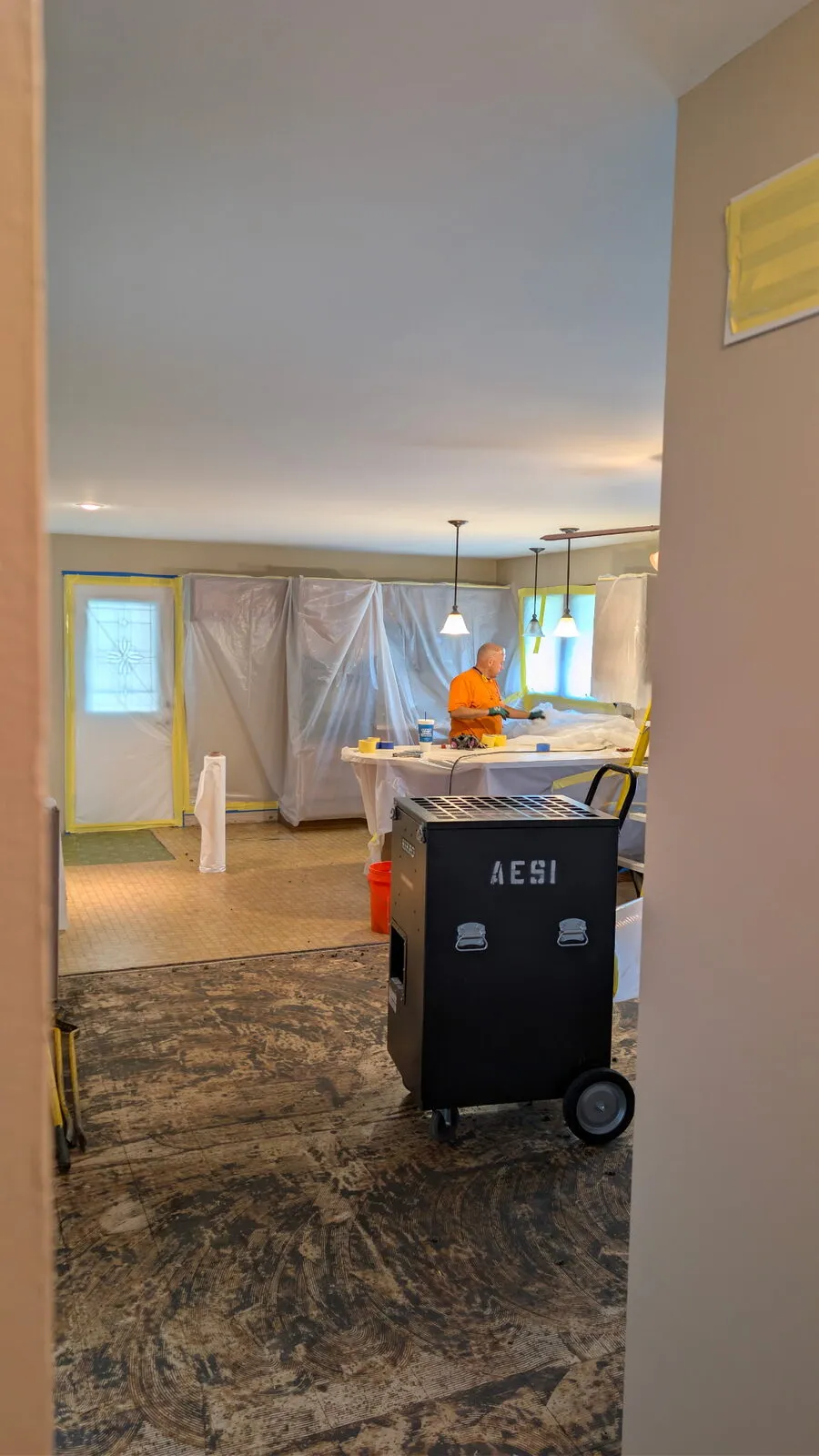
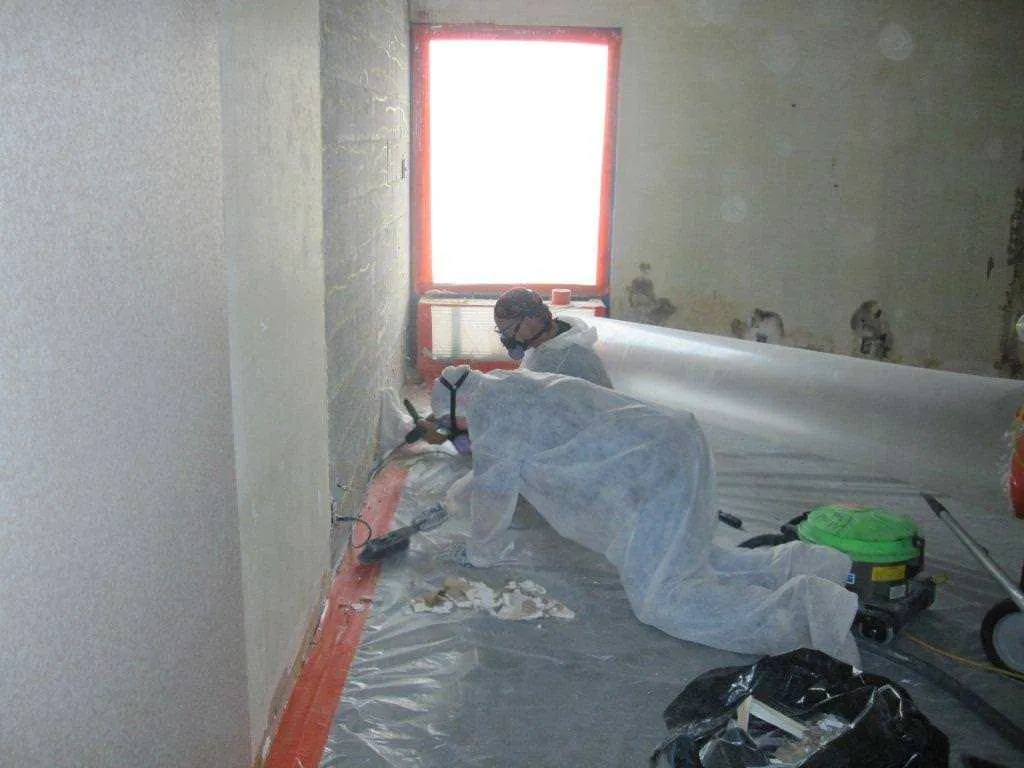
When the growth is large, keeps returning, or follows a leak you cannot stop. A professional finds the moisture source, contains the area and removes damaged material. Learn the steps in the mold remediation glossary entry, and compare options on our page about mold inspection. The black mold entry covers a common worry.
EPA’s 10 square feet line is the usual dividing mark between a small cleanup and a larger job. We explain it in mold over 10 square feet. Landlords who hire a pro should ask for a written scope that includes fixing the water source. Tenants should not hire a contractor to work inside the landlord’s unit without the landlord’s approval.
Next step
AES provides mold remediation in St. Louis and within 300 miles. Landlords and property managers can call (314) 865-2662 or request a free quote at /contact.
Frequently asked questions
Is my St. Louis landlord responsible for mold?
Often, but the answer depends on the cause and the local housing code. We did not find a Missouri statute that names mold. Missouri's repair-and-deduct law (RSMo 441.234) covers conditions that violate a local housing or building code and hurt habitability. Whether mold counts is for the local code office. Ask a lawyer.
Does the City or County have a mold rule?
St. Louis County says its Healthy Homes Program has no regulatory authority over mold or mildew in homes, and that no federal agency has set an acceptable quantity of mold. We did not find a City page that names mold. In the City, report it as a housing problem.
Can I fix mold myself and take it out of the rent?
Only in narrow cases. Missouri law lets a tenant of six months fix a code violation that affects habitability after 14 days of written notice that the tenant intends to fix the condition at the landlord's expense, if the cost is under the greater of $300 or half the rent. Before deducting, the tenant gives the landlord an itemized statement with receipts. If the landlord disputes the repair in writing, the tenant needs a local government certification first and then waits 14 days. The total deducted cannot pass one month's rent in 12 months.
What do I do first when I find mold?
Take dated photos, find the water source, and tell your landlord in writing. The County advises cleaning and drying wet or damp spots within 48 hours and keeping humidity under 60%. Do not disturb large areas of growth yourself.
When does a landlord need a mold remediation company?
When growth is large, keeps coming back, or follows a leak you cannot stop. EPA guidance, covered in our post on mold over 10 square feet, treats patches over 10 square feet differently from small ones. A pro finds and fixes the moisture source.
Terms on this page
Sources
- St. Louis County Public Health: Mold and Radon (no authority)
- St. Louis County Public Health: Mold and Radon (complaints)
- St. Louis County Public Health: Mold and Radon (48 hours)
- St. Louis County Public Health: Mold and Radon (humidity)
- St. Louis County Public Health: Mold and Radon (test kits)
- City of St. Louis: Citizens' Service Bureau
- City of St. Louis: Residential Occupancy Permit (rental reinspection)
- Missouri Revisor of Statutes: RSMo 441.234 (who qualifies)
- Missouri Revisor of Statutes: RSMo 441.234 (notice and cost)
- Missouri Revisor of Statutes: RSMo 441.234 (notice of intent)
- Missouri Revisor of Statutes: RSMo 441.234 (receipts)
- Missouri Revisor of Statutes: RSMo 441.234 (wait after certification)
- Missouri Revisor of Statutes: RSMo 441.234 (yearly cap)
- Missouri Revisor of Statutes: RSMo 441.234 (landlord dispute)
- US EPA: Lead Renovation, Repair and Painting Program
Written by Advanced Environmental Services and checked against the sources above on November 6, 2026. Rules change, so check the linked page before you act.