
What is an underground storage tank, and which ones does Missouri regulate?
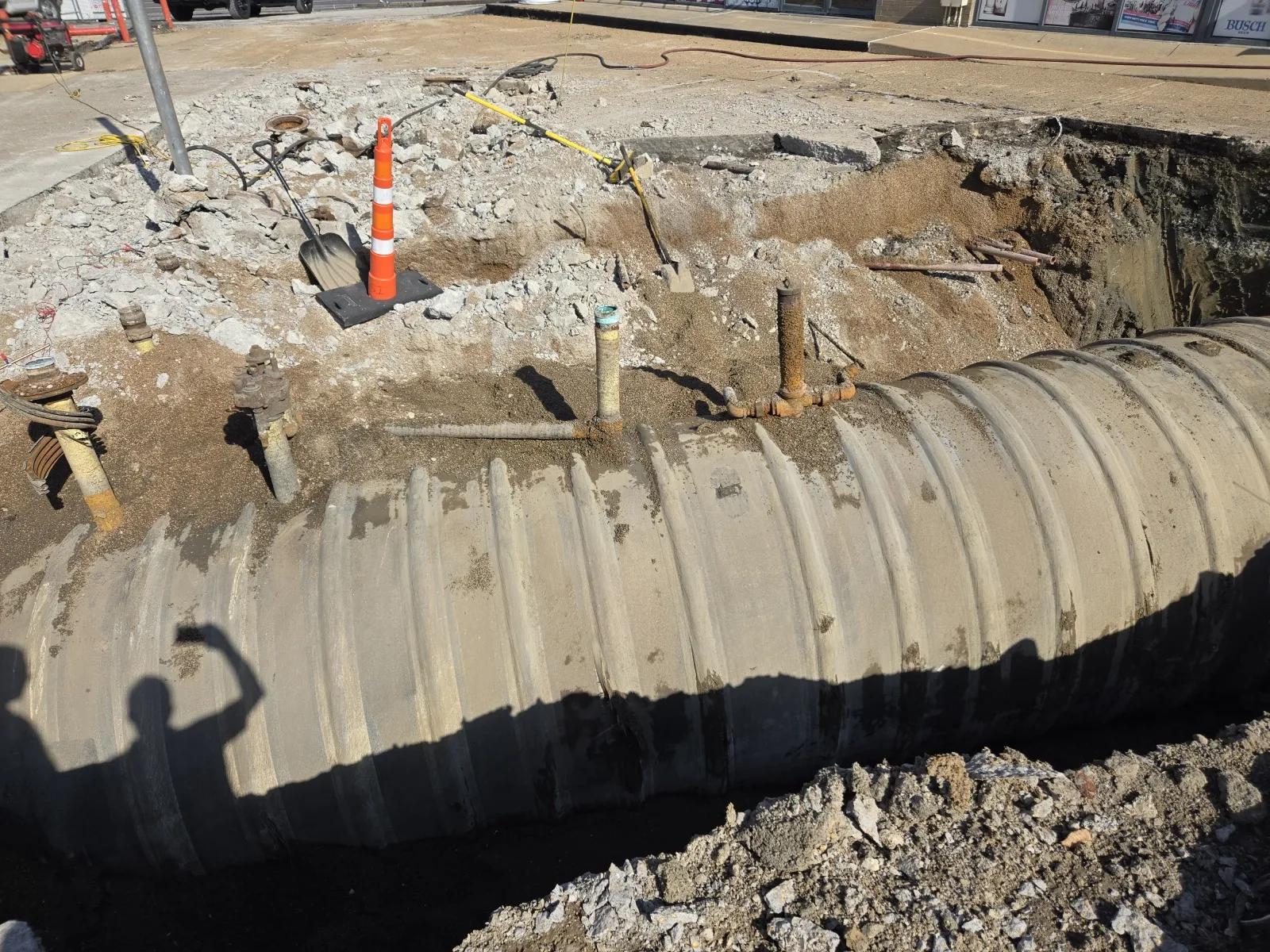
Missouri DNR defines an underground storage tank (UST) as a tank plus any connected underground piping with at least 10 percent of its combined volume underground. Whether the state regulates it depends on what the tank held and its purpose. Call DNR to confirm before you plan work.
DNR says a UST “may be regulated under Missouri’s Underground and Petroleum Storage Tank Law, depending on what is or was stored” in it. The DNR Underground Storage Tanks Section answers questions at 573-751-6822.
Above ground tanks follow different rules. DNR does not regulate how they operate, but it does oversee cleanup of petroleum releases from leaking ones. See the glossary entry for underground storage tank (UST).
Missouri takes leaks seriously. DNR reports over 4,900 releases from USTs in the past 10 years. Releases can start fires and contaminate groundwater, which is why the closure steps exist.
This page covers the owner’s decisions and the money. The step-by-step DNR process lives in our guide to tank removal and closure in Missouri, so we do not repeat it here.
When does a tank have to be closed?
Missouri sets two clocks once a tank goes out of use. A site assessment is due within 12 months. Permanent closure is due within five years. A tank is out of use when no more than one inch of product, or 0.3 percent by weight of capacity, remains.
The five-year clock starts when the tank goes out of use, not when you complete the assessment. Out-of-use tanks keep being assessed registration fees until they are removed or permanently closed. Waiting costs money.
| When | What happens | Who acts |
|---|---|---|
| Tank goes out of use | Clocks start | Owner or operator |
| Within 12 months | Site assessment with soil and groundwater sampling | Owner, with a consultant |
| At least 30 days before closure work | Closure notice filed; DNR approval expected | Owner or operator |
| At least 3 days before work | Notice to DNR that work starts | Owner or operator |
| During work | Report any spill or leak at once | Whoever finds it |
| After work | Final closure report to DNR | Owner or operator |
| Within 5 years of going out of use | Tank permanently closed | Owner or operator |
For the exact forms (MO 780-2121, MO 780-2120 and checklist PUB2218), use the DNR closure page.
Should I remove the tank or close it in place?
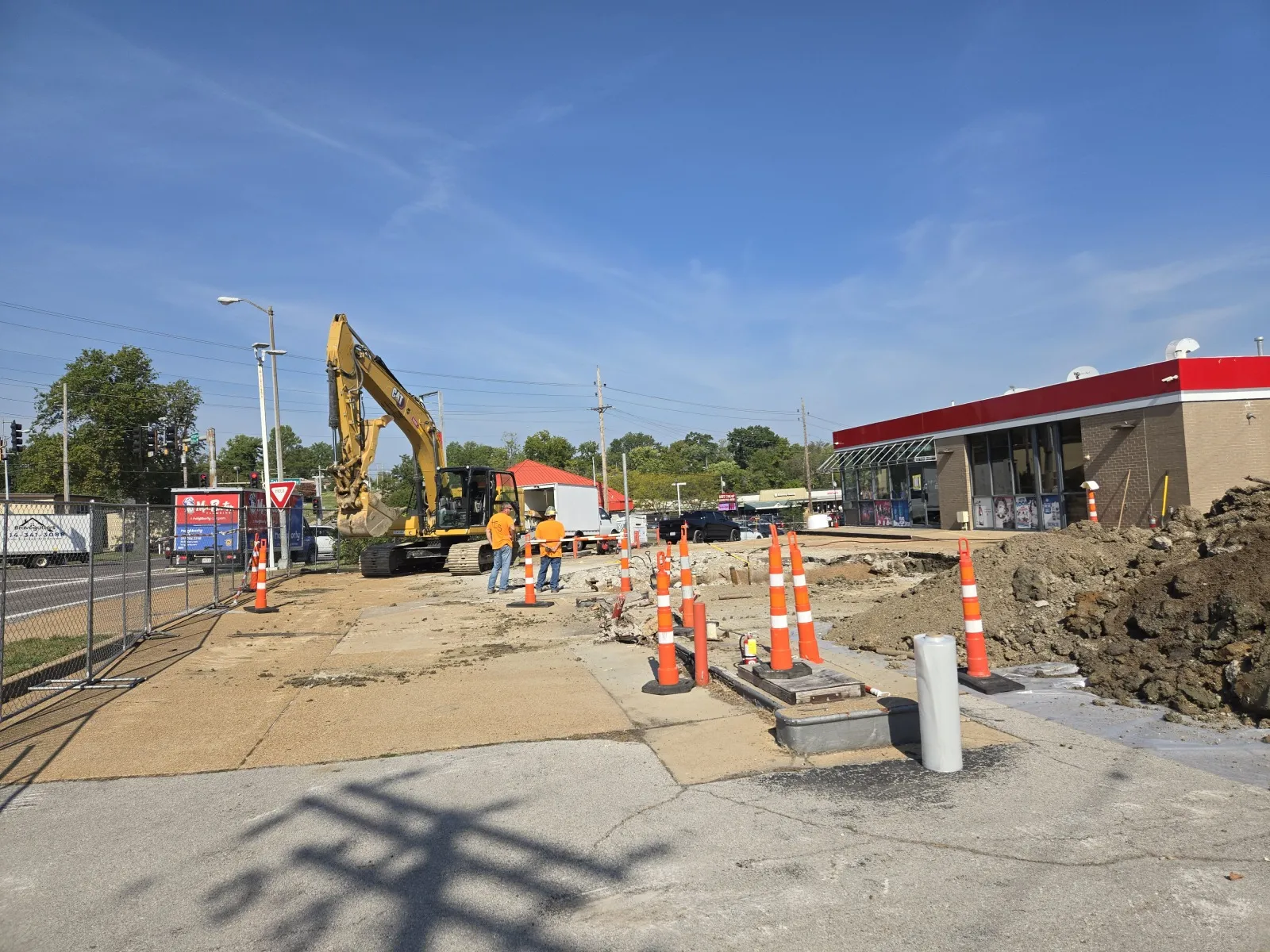
Both count as permanent closure under DNR’s rules, and both need notice to DNR beforehand. Removal pulls the tank and piping out of the ground. Closure in place seals the tank where it sits. Your site, your plans for the land and DNR approval decide which fits.
Removal takes the tank out so the soil under it can be sampled. In-place closure leaves the tank sealed underground. DNR lists a Statement of Closure Deed Notice for in-place closures. Ask DNR which one it will accept for your site.
Ask your contractor or consultant to explain both options for your site in writing. Tell them if you plan to sell or build on the land.
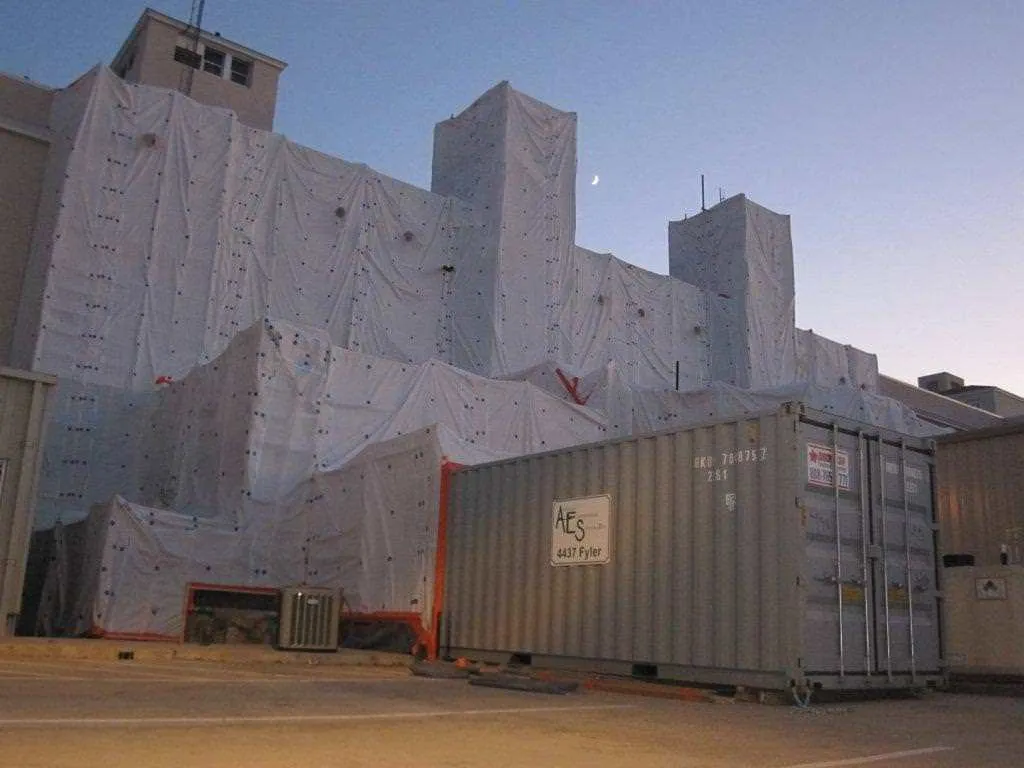
Tank work often sits inside a bigger project. If a building comes down first, the same survey and notice steps may apply. See the AES demolition service and the guide to demolition from survey to debris.
What testing happens when a tank comes out?
DNR requires soil and groundwater sampling where a release would most likely have occurred. Soil borings go on each side of the tanks, piping and pump islands or dispensers, deep enough to collect groundwater samples if groundwater is found. Results feed the closure report.
Sample data from an earlier site assessment can serve in the closure report only under strict conditions. The tank must not have held regulated substances since the sampling, there must be no new signs of a release, DNR must approve a written request, and extra soil samples must be taken beneath the tanks during removal.
In plain terms, expect fresh samples when the tank comes out. The lab results show whether the soil is clean or needs more work.
If the results show contamination, the next step is cleanup. See soil remediation and the glossary entry for soil remediation. DNR oversees site characterization and cleanup at regulated leaking tank sites.
What if we find a leak?
Tell DNR immediately. DNR says all spill and leak reports go to its Environmental Services Program Emergency Spill Line at 573-634-2436. Do not wait for the closure report. Make the call as soon as the crew sees staining, odor or liquid in the excavation.
A confirmed release changes the timeline. DNR reviews site investigation reports, corrective action plans and quarterly monitoring reports at regulated leaking tank sites. Cleanup can include soil removal and monitoring. Ask your contractor how contaminated soil is handled and where it goes. See the glossary entry for hazardous waste.
AES offers soil remediation and environmental remediation alongside tank removal. One contractor for both can save hand-offs. Ask which parts AES does itself and which a consultant does.
Does PSTIF pay for tank cleanup?
It may. The Missouri Petroleum Storage Tank Insurance Fund (PSTIF) provides coverage for cleanup and third-party damages for participating tanks. A $10,000 deductible applies to each incident, with limits of $1 million per incident and $2 million annual aggregate.
PSTIF says about 3,500 properties with tanks in use participate at any given time. Coverage meets the state’s financial responsibility requirement. Check your participation status before work begins.
| PSTIF item | Amount or detail |
|---|---|
| Deductible | $10,000 per incident |
| Limit per incident | $1 million |
| Annual aggregate limit | $2 million |
| Covers | Cleanup costs and third-party damages |
| Fee and coverage end date | State law ends fee collection and financial assurance after December 31, 2030 |
Only PSTIF can tell you whether a claim qualifies. Call the claims line at 800-765-2765 or read the PSTIF page. Do not assume your tank is covered, and do not start cleanup before you know.
How much does underground storage tank removal cost?
AES does not publish a price for tank removal. Cost depends on tank size, how many tanks, access, what the tank held, whether the soil is clean, and how much sampling DNR requires. Call AES for a quote on your site.
A fair number needs the tank size, what it held and a site visit. Without those details, any figure is a guess.
To compare bids, ask each contractor the same questions:
- Does the price include cleaning, removal, hauling and disposal?
- Who files the DNR notices and writes the closure report?
- Is sampling included, and who pays the lab?
- What happens, and what does it cost, if the soil is contaminated?
- Does the bid mention PSTIF paperwork?
What does AES do on a tank job?
AES says its tank services include industrial tank cleaning, decontamination, and tank demolition and disposal. It states the work is compliant with all federal and state regulations. It offers tank removal for residential buildings and commercial sites, and lists oil, fuel, gas, asbestos and septic tanks.
AES says a tank is cleaned before removal to clear hazardous materials and residues, then dismantled and disposed of with safe transportation. Read more on these pages:
- Tank removal, the main AES service page
- Oil tank removal
- Fuel tank disposal
- Gas tank disposal
- Septic tank removal
Tank work can involve asbestos insulation on older industrial tanks. See asbestos tank removal.
Next step
Start with the AES tank removal service, then call (314) 865-2662 or use the quote form on the contact page. Send the tank size, what it held, its location and any DNR paperwork you already have.
Frequently asked questions
How do I close an underground storage tank in Missouri?
File Closure Notice MO 780-2121 with DNR at least 30 days before closure activities, and wait for approval. Notify DNR three days before work starts. Report any spill at once. Dispose of the tank properly, then submit a final closure report. The owner or operator is responsible for the paperwork.
Does Missouri require me to remove an unused underground tank?
Unused tanks must be permanently closed within five years of going out of use, and a site assessment is due within 12 months. Closure means removing the tank and piping or closing it in place. Both methods need notice to DNR beforehand. Out-of-use tanks keep accruing registration fees until closed.
What does PSTIF cover?
PSTIF says coverage is provided for costs of cleanup and third-party damages. A $10,000 deductible applies to each incident, with limits of $1 million per incident and $2 million annual aggregate. About 3,500 properties participate. Ask PSTIF whether your tank and claim qualify.
What testing happens when a tank comes out?
DNR says a site assessment must include soil and groundwater sampling in the areas where a release would most likely occur, with soil borings on each side of the tanks, piping and dispensers. Samples go to a lab, and the results feed the closure report. Ask your consultant to explain the sampling plan before work starts.
What if the tank leaked?
Report any spill or leak found during closure at once to the DNR Emergency Spill Line at 573-634-2436. DNR then provides oversight for site characterization and cleanup at regulated leaking tank sites. Cleanup can add soil removal and monitoring, so ask about contaminated soil handling and the cost range before work begins.
Does AES remove underground tanks?
AES says it offers tank removal for residential buildings and commercial sites, including industrial tank cleaning, decontamination, and tank demolition and disposal. It lists oil, fuel, gas, asbestos and septic tanks. Ask AES to confirm your tank type and which closure paperwork it handles before you hire.
How do I get a quote?
Call AES at (314) 865-2662 or use the quote form on the contact page at /contact. Send the tank size, what it held, where it sits and any DNR paperwork you have. AES quotes each job, so you get a price for your site.
Terms on this page
Sources
- Missouri DNR: Regulated Storage Tank Cleanup and Closure (notice)
- Missouri DNR: Regulated Storage Tank Cleanup and Closure (three-day notice)
- Missouri DNR: Regulated Storage Tank Cleanup and Closure (closure report)
- Missouri DNR: Regulated Storage Tank Cleanup and Closure (site assessment)
- Missouri DNR: Regulated Storage Tank Cleanup and Closure (five-year limit)
- Missouri DNR: Regulated Storage Tank Cleanup and Closure (UST definition)
- Missouri DNR: Regulated Storage Tank Cleanup and Closure (releases)
- Missouri DNR: Regulated Storage Tank Cleanup and Closure (spill line)
- Missouri PSTIF: About PSTIF (coverage)
- Missouri PSTIF: About PSTIF (deductible and limits)
- Missouri PSTIF: About PSTIF (end date)
Checked against the sources above on November 6, 2026. Rules and fees change, so check the linked page before you act.