Where is asbestos pipe insulation found in older buildings?
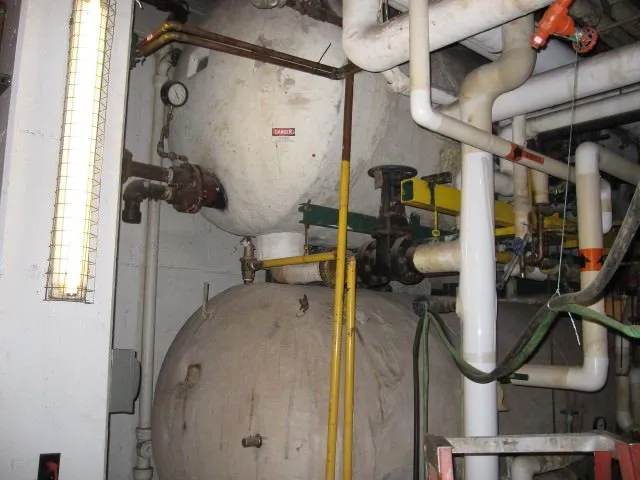
It sits on hot water and steam pipes, and on old furnaces and boilers. EPA lists hot water and steam pipes coated with asbestos material or covered with an asbestos blanket or tape. It also lists oil and coal furnaces and door gaskets with asbestos insulation.
Look for this in basements, boiler rooms and mechanical spaces of older St. Louis homes, apartment buildings and commercial buildings. Pipe elbows, joints and the boiler jacket are places where wrap was often added. Seeing old wrap does not prove it holds asbestos. Only a lab test does.
| Place | What EPA or DNR lists | Who might disturb it |
|---|---|---|
| Hot water and steam pipes | Pipes coated with asbestos material or covered with an asbestos blanket or tape | Plumber, remodeler |
| Oil and coal furnaces | Furnaces and door gaskets with asbestos insulation | HVAC technician |
| Boilers | Boiler insulation, a DNR example of friable material | Boiler service, demolition crew |
| Paper pipe insulation | A DNR example of friable material | Anyone cutting or moving pipe |
What does asbestos pipe insulation look like?
It looks like ordinary pipe wrap, which is the problem. Wrap, tape, blanket and coating can all look alike, and fiberglass or other insulation can look the same as asbestos. You cannot confirm asbestos by color or texture. An inspector has to sample it.
Missouri DNR describes friable asbestos-containing material as any material with more than one percent asbestos that, when dry, can be crumbled, pulverized or reduced to powder by hand pressure. DNR gives boiler insulation and paper pipe insulation as examples. Friable means crumbly material. Read the glossary entries for friable asbestos and asbestos-containing material.
Is it dangerous if I leave it alone?
Material that is intact and untouched is a lower concern than material that is torn, crumbling or disturbed. EPA says exposure may occur only when the asbestos-containing material is disturbed or damaged in some way that releases particles and fibers into the air.
That is why the safest first step is to avoid touching it. Do not cut, sand, scrape or pull the wrap, and do not sweep or vacuum debris from it. Call an inspector if the wrap is damaged, if it is wet, or if you plan any of the following:
- Plumbing or boiler repairs
- A remodel that moves or replaces pipes
- Demolition of any part of the building
AES explains the health side on its page about the dangers of asbestos.
How do I test pipe insulation for asbestos?
Hire a Missouri certified asbestos inspector to collect samples and send them to a lab. Missouri DNR says suspect materials should be sampled and submitted for laboratory analysis to learn if they contain asbestos. The inspector then writes up the results.
DNR requires this inspection before demolition or renovation of regulated structures, or of the areas that will be subject to the work. The inspector identifies the suspect materials that the work may disturb. AES says its inspectors are AHERA Certified Building Inspectors and that Mr. Ruckman is trained and certified as an Asbestos Inspector and Supervisor. See asbestos testing and the asbestos survey page. The glossary defines an asbestos survey.
When does Missouri require a registered contractor to remove it?
When the work will impact enough regulated material, or when the structure is regulated and the job disturbs it. Missouri DNR sets threshold quantities of 160 square feet, 260 linear feet or 35 cubic feet. If the inspection finds that much or more regulated asbestos-containing material will be impacted by demolition or renovation, all of it must be removed by a Missouri registered asbestos abatement contractor.
The state also requires a notice to DNR at least 10 working days before the start of a regulated asbestos abatement project. A registered contractor normally handles that paperwork. Read the guide to Missouri demolition and renovation asbestos rules and the post on the 10 working day notice.
Not every building is covered by the DNR rule. Its exception covers only a single residential structure with four or fewer dwelling units. Projects with two or more residential structures are not exempt. A structure used for anything other than residential, or converted between residential and commercial use, is not exempt either. The City of St. Louis and St. Louis County run their own programs, so read the guides to City permits and County permits.
Should the pipe insulation be removed or encapsulated?
Removal takes the asbestos out. Encapsulation leaves it in place and seals it with a coating. Which one fits depends on the condition of the material and the work planned nearby. An inspector’s survey should drive the choice.
| Removal | Encapsulation | |
|---|---|---|
| What happens | A registered contractor removes the material | A sealant coats the asbestos and keeps it from getting into the air |
| Asbestos left behind | No | Yes |
| Limits AES names | Follow the survey and the rules above | Not safe for badly damaged material, or where water could disturb it; future drilling or sanding in that area is discouraged |
| AES page | Asbestos removal | Asbestos encapsulation |
AES says encapsulation can be practical and affordable and that its surveyors explain the advantages and disadvantages. AES also says the asbestos remains and may pose a problem later as the material ages. For a side-by-side look, read asbestos encapsulation vs removal.
Does AES remove asbestos pipe insulation?
AES offers asbestos abatement for residential, commercial and industrial buildings. AES says its commonly required industrial services include asbestos pipe insulation removal and asbestos removal from boilers, stacks and tanks. See industrial asbestos removal and commercial asbestos removal. For houses, see residential asbestos removal.
AES says it contains the area when it handles hazardous materials, and its in-house professionals handle the documentation. AES is registered with Missouri DNR as an asbestos contractor, registration 27-06-0640. It serves St. Louis and projects within 300 miles.
AES does not publish pipe insulation removal prices. It quotes each job.
Next step
Found old wrap on your pipes or boiler? See AES asbestos abatement, then call (314) 865-2662 or use the quote form on the contact page. Send photos and the address.
Frequently asked questions
Where is asbestos pipe insulation found in older buildings?
EPA lists hot water and steam pipes coated with asbestos material or covered with an asbestos blanket or tape. It also lists oil and coal furnaces and door gaskets with asbestos insulation. Look in basements, mechanical rooms and utility chases of older homes and commercial buildings, then have an inspector confirm.
How can I tell if pipe insulation has asbestos?
You cannot tell by looking. Missouri DNR says an inspector should collect samples of suspect materials and submit them for laboratory analysis. Do not cut, scrape or tear the wrap to check. Disturbing it is how fibers get into the air. Call an inspector first.
Is intact pipe insulation dangerous?
EPA says exposure may occur only when asbestos-containing material is disturbed or damaged in some way that releases particles and fibers. Intact material that nobody touches is a lower concern. Torn, crumbling or wet wrap, or planned repair or demolition work nearby, is a reason to call an inspector.
Does Missouri require a certified contractor to remove pipe insulation?
It can. Missouri DNR requires a Missouri registered asbestos abatement contractor to remove all of the material when an inspection finds 160 square feet, 260 linear feet or 35 cubic feet or more of regulated asbestos-containing material that demolition or renovation will impact. DNR rules do not cover a single residential structure with four or fewer dwelling units.
Is a landlord, church or small apartment building covered by the state rule?
Possibly. DNR's exception covers only a single residential structure of four or fewer units. Projects with two or more residential structures are not exempt. A building used for anything other than residential, or converted from residential to commercial use or the reverse, is not exempt either.
Should I remove or encapsulate asbestos pipe insulation?
It depends on the condition. AES says encapsulation seals asbestos in place with a coating and can cost less than removal, but it is not safe for badly damaged material or material that water could disturb. It also discourages future drilling or sanding in that area. An AES surveyor can explain the trade-offs.
How do I get a quote?
Call AES at (314) 865-2662 or use the quote form on the contact page at /contact. Send the address, where the pipes or boiler are, photos of the wrap and any test results. AES quotes each job, so you get a price for your building.
Terms on this page
Sources
- EPA: Learn About Asbestos (pipes)
- EPA: Learn About Asbestos (furnaces)
- EPA: Learn About Asbestos (when exposure occurs)
- Missouri DNR: Asbestos requirements for demolition and renovation projects (friable examples)
- Missouri DNR: PUB2157 (inspection)
- Missouri DNR: PUB2157 (samples)
- Missouri DNR: PUB2157 (threshold quantities)
- Missouri DNR: PUB2157 (notice)
- Missouri DNR: PUB2157 (residential exception)
- Missouri DNR: PUB2157 (two or more residential structures)
- Missouri DNR: PUB2157 (change of use)
Checked against the sources above on November 6, 2026. Rules and fees change, so check the linked page before you act.