
On this page
- Types of Asbestos Surveys
- Obtaining Samples from Your Asbestos Survey
- Reports from Your Asbestos Survey
- What is in an asbestos survey report, line by line?
- How long is an asbestos survey good for?
- How is the report used with permits and the state notice?
- What do I do with the results?
- Who should see my asbestos survey, and who keeps it?
- How do I order a survey from AES?
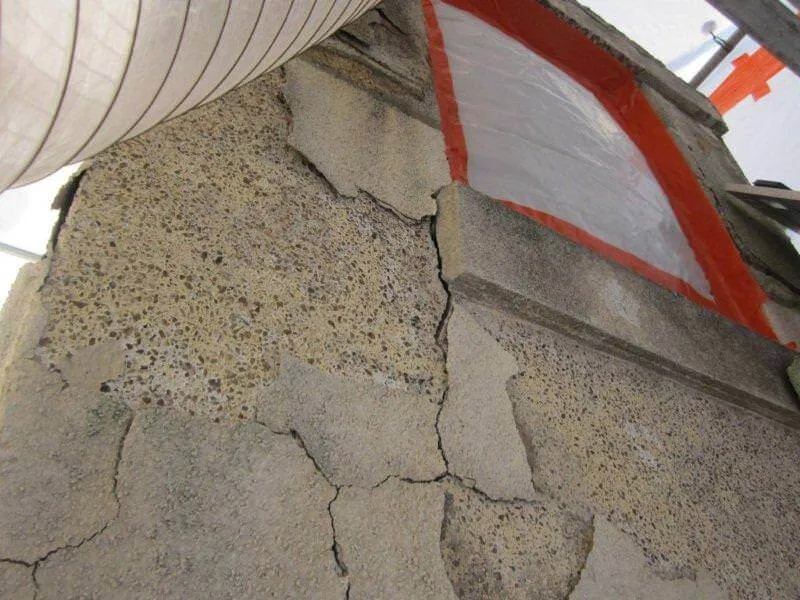
Although you will have experts explaining the results of your asbestos survey, it is worth spending the time to become familiar with what tests are being carried out and what the results will mean in regards to your decision making. The information below will act as a guide to provide you with some basic information. Contact us today to schedule an asbestos survey for your Missouri property and to learn more about our asbestos removal services.
Types of Asbestos Surveys
There are two main types of asbestos surveys available, and the results from each can yield a different outcome for your project. You may have an idea in mind of what work you want to be carried out, and depending on your survey report, you could find yourself facing a different solution altogether.
Management Survey
This asbestos survey is regarded as a standard survey and its purpose is to locate any presence (and the extent) of materials containing asbestos (ACMs). This type of survey will identify materials that may be damaged or disturbed during everyday activities. A management survey can involve some minor intrusive work, and will generally assess the following areas:
- Floors
- Walls
- Ceilings
- Accessible risers*
- Loft voids*
- Ceiling voids*
*Surface testing and inspection only, in these vicinities.
Samples collected from an asbestos survey of this type, may not give adequate information. If this is the case, a more extensive Asbestos Refurbishment/Demolition survey may be required.
Asbestos Refurbishment/ Demolition Survey
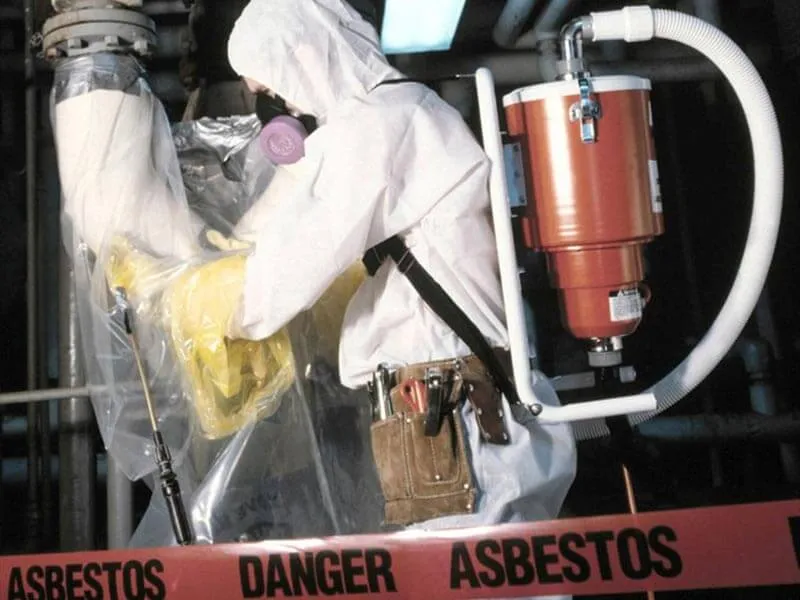
Unlike a management survey, this survey is usually only performed before any intrusive refurbishment work or demolition is carried out. This type of survey is fully intrusive and will require further destruction to enable access to all areas that require checking.
Obtaining Samples from Your Asbestos Survey
During both types of asbestos surveys, samples will be taken and placed in sealed plastic bags. These will be identified along with a corresponding identification tag being left in the location it was taken from on site. Photographs may be taken at every sampling location to confirm details. To further understand the extent of asbestos present, the surveyor will ask questions regarding the property age, usage, history, and anything else he deems relevant. At this point, floor plans will be drawn up (if not already made available) on which the location of the samples taken can be identified.
The means for sample taking can be a simple sharp knife, cork-borer, or hand drill. Each sample will be placed in the sealed bags and all equipment will be wiped down before additional samples are taken in order to avoid any cross-contamination. All wipes, gloves or anything else that has been in contact with asbestos dust will also be bagged and identified for controlled disposal.
Reports from Your Asbestos Survey
Due to the hazards associated with asbestos, the results from your survey will be quite detailed. At AES, we will not just give you a report and expect you to just understand it, as part of our commitment to our clients, we will be there to help you during the whole process. The information contained within an asbestos survey report can be quite extensive, so below we have provided an overview of what you can expect.
What is in the Asbestos Survey Report?
- Site Assessment, This will give an overview of the risks at your site.
- Materials Assessments, Guidelines indicate an algorithm can be used to give suspect materials a numerical score. The algorithm basically takes the Product Type + Extent of Damage + Surface Treatment + Asbestos Type, and gives the Material Assessment.
- Material Data Sheets, The asbestos survey must contain information on every material, which was found to be suspect during the survey. The data sheets contain information for confirmed materials and also suspected materials. Additionally, the reports contain client details, site details, survey date, building location, and specific location of the material in question.
- Restrictions or No Access Areas, This can be one of the most important parts of your asbestos survey, it will highlight which areas have NOT been tested and reasons why. This information is vital as you must expect asbestos to be present until it can be proved otherwise.
Once you have been presented with your asbestos survey, we will help you decide which direction you will need to take. For more information regarding asbestos surveys and to schedule a survey for your Missouri property, including in St. Louis, St. Charles, and Columbia, contact our experts at AES today.
What is in an asbestos survey report, line by line?
DNR’s inspection report fact sheet lists what the written report should contain: the structure, the areas inspected, each material known or assumed to contain asbestos, its quantity, the lab data, and the inspector’s signed certificate. The report is the document every later step depends on.
Here is the DNR list, matched to what you can do with each item:
| Item in the report | What it tells you | How you use it |
|---|---|---|
| Description of the structure, areas inspected, areas not accessible, inspection date | What the survey covered and what it did not | Check the covered areas against your work plan |
| Location of each material known or assumed to contain asbestos | Where the material is | Mark it on plans so trades avoid it |
| Condition and regulated status, if an assessment was done | Whether the material is regulated | Decide between leaving, repair and removal |
| Quantities in square, linear or cubic feet | How much the work will touch | Compare with the DNR thresholds |
| Lab name, results and analyst’s signature | Proof the sample was analyzed | Attach to the notice |
| Inspector’s signature and a signed, dated copy of the DNR certificate | Who did the survey | Show it to the permit office |
Two parts of that list deserve attention. The first is “areas not accessible.” A gap in the survey is not a clean result. If a room, void or wall was not reached, treat it as unknown. Our client page above explains how to read a restricted-access section in plain terms.
The second is “known or assumed.” The report lists material known or assumed to contain asbestos, and it gives quantities for both. Assumed material counts toward your totals like confirmed material. Read our asbestos testing page for how the sampling and lab steps work. The glossary has short definitions of an asbestos survey, asbestos-containing material and friable asbestos.
How long is an asbestos survey good for?
The sources we opened do not set an expiration period for a survey. We will not print a number. A survey describes a building as it stood on the inspection date, and the report says what areas were covered. A new inspection makes sense when the building changes or your work reaches an area the report did not cover.
Use these checks before you reuse an old report:
- Same scope? The old report must cover the areas your work will touch. Check its list of areas inspected.
- Same materials? Ask whether any renovation, repair or damage has happened since.
- Same reviewer? Ask the office that will review your notice or permit whether it accepts a report of that age. We found no stated limit, so the office decides.
If you buy a building with an old report, ask for the inspector’s certificate copy and the lab sheets too. A report without them is incomplete under the DNR list. For older homes, our guide to asbestos in older St. Louis homes explains where materials tend to hide.
How is the report used with permits and the state notice?
The report is an attachment. DNR says a copy of the asbestos inspection report and laboratory analytical results must accompany the notification for regulated abatement and demolition projects. The notice is due at least 10 working days before a regulated structure is demolished, and it is required even when no asbestos is found.
| Office | What it asks for | Source detail |
|---|---|---|
| Missouri DNR | Report and lab results with the notification | Demolition notice due at least 10 working days before demolition of a regulated structure |
| St. Louis County Air Pollution Control | Survey copy with each Demolition Waste Application and Release Authorization form | Each structure to be demolished must be inspected by a Missouri licensed asbestos inspector |
| St. Louis County NESHAP form | A complete copy of the report with the notification form for regulated demolition and renovation | Never enter a start date less than ten working days beyond the postmark date, unless the department grants a waiver |
| City of St. Louis | Contractors give the report and the NESHAP notification to the Air Pollution Control Board | The 2018 handbook says the board then approves or denies the permits |
The City source is a 2018 handbook. Treat it as a guide and confirm the current process with the office.
The state exception has conditions. It covers a single residential structure with four or fewer dwelling units. It does not cover a structure converted between residential and commercial use, and it does not cover a project with two or more residential structures. If you fall inside the exception, the state notice rules do not apply, but a local demolition permit may still ask for a survey.
Our guide to the Missouri demolition and renovation asbestos rules walks through the notice. The posts on the 10 working day notice, the St. Louis City asbestos abatement permit and the St. Charles County demolition permit cover each office.
What do I do with the results?
Read the quantities first, then pick a path. Only regulated asbestos-containing material counts toward the removal rule. The quantity line in the report decides whether the DNR removal rule applies to your project. If 160 square feet, 260 linear feet or 35 cubic feet or more of regulated material will be impacted by your work, all of it must be removed by a Missouri registered abatement contractor.
| What the report shows | Next step |
|---|---|
| Threshold quantities or more of regulated material that the demolition or renovation will impact, in a project the rule covers | Hire a registered abatement contractor. File the notice with the report and lab results attached. |
| Regulated material the work will impact is below the thresholds | The DNR removal duty is not triggered. Plan the work around it, or remove it by choice. Ask for written options. |
| Material in good condition that nobody will disturb | EPA says usually the best thing is to leave it alone. See asbestos encapsulation for sealing. |
| No asbestos found in a regulated demolition | File the demolition notice anyway. DNR says it is required even then. |
| Areas not accessible | Treat them as unknown until they are inspected. |
In the City, the handbook adds a firm step: if asbestos-containing materials are found, they must be properly abated by a licensed professional before a demolition permit can be issued. Plan for that time before you set a demolition date.
Send the report to every firm that quotes the job so the quotes match. Our guide to hiring an asbestos contractor in Missouri gives the questions to ask. The asbestos removal process guide shows what happens next.
Who should see my asbestos survey, and who keeps it?
You keep it, and the people doing the work see it. DNR says the written report should be provided to the person requesting the inspection. The City handbook adds that contractors should keep copies of the inspection report and the NESHAP notification on site during demolition.
A simple file plan helps:
- Original and lab sheets. Store them with the deed or lease.
- Copies for each trade. Give them to demolition, plumbing, electrical and flooring crews. Many asbestos disturbances come from a trade that never saw the report.
- Copy for the permit office. Send what the office asks for, with the notice.
- Copy for the next owner. A future buyer or tenant will ask.
How do I order a survey from AES?
Call (314) 865-2662 or use the quote form. Tell us the address, the building type and the work you plan. Advanced Environmental Services says Mr. Ruckman is trained and certified as an Asbestos Inspector and Supervisor, and that it has AHERA certified building inspectors. We quote each survey job, and we also hold Missouri DNR asbestos contractor registration 27-06-0640 for removal. Read about asbestos abatement and commercial asbestos removal for the next step.
Frequently asked questions
What should an asbestos survey report include?
DNR says it should include a description of the structure, the areas inspected and any not accessible, and the inspection date. It should locate each material known or assumed to contain asbestos, give quantities in square, linear or cubic feet, and include the lab name, results and analyst's signature, plus the inspector's signature and certificate.
How long is an asbestos survey good for?
The sources we opened give no expiration period for a survey. Treat the report as a record of the building on the inspection date. If materials change, if work disturbs a new area, or if a notice office asks for a newer report, plan on a fresh inspection. Ask the office that will review your project.
Do I need to attach the survey to the state notice?
Yes, for regulated projects. DNR says a copy of the asbestos inspection report and laboratory analytical results must accompany the notification. St. Louis County's form instructions say to always include a complete copy of the report with the notification for all regulated demolition and renovation projects.
Do I need a survey to get a demolition permit in St. Louis?
St. Louis County says each structure to be demolished must be inspected by a Missouri licensed asbestos inspector and the survey copy submitted with the demolition form. The City's 2018 handbook says all structures to be demolished must undergo an inspection before wrecking, and contractors must provide the report to the Air Pollution Control Board. Confirm current rules with the office.
What do I do if the survey finds asbestos?
Compare the quantities with the DNR thresholds. If the inspection finds 160 square feet, 260 linear feet or 35 cubic feet or more of regulated material that the work will impact, a Missouri registered abatement contractor must remove all of it. Below that, your options depend on condition and plans. Ask for written quotes.
Who should I give the report to?
Give copies to the contractor who will quote the work, and to the office that reviews your notice or permit. Keep the original. The City handbook says contractors should keep copies of the inspection report and the NESHAP notification on site during demolition. Do not rely on a verbal summary from anyone.
Terms on this page
Sources
- Missouri DNR: Asbestos Inspection Report Requirements, PUB2349
- Missouri DNR: Asbestos Inspection Report Requirements, PUB2349
- Missouri DNR: Asbestos Inspection Report Requirements, PUB2349
- Missouri DNR: Asbestos Inspection Report Requirements, PUB2349
- Missouri DNR: Asbestos Inspection Report Requirements, PUB2349
- Missouri DNR: Asbestos Inspection Report Requirements, PUB2349
- Missouri DNR: Asbestos Inspection Report Requirements, PUB2349
- Missouri DNR: Asbestos Requirements for Demolition and Renovation Projects, PUB2157
- Missouri DNR: Asbestos Requirements for Demolition and Renovation Projects, PUB2157
- Missouri DNR: Asbestos Requirements for Demolition and Renovation Projects, PUB2157
- Missouri DNR: Asbestos Requirements for Demolition and Renovation Projects, PUB2157
- Missouri DNR: Asbestos Requirements for Demolition and Renovation Projects, PUB2157
- Missouri DNR: Asbestos Requirements for Demolition and Renovation Projects, PUB2157
- St. Louis County: Demolition Inspections
- St. Louis County: Asbestos NESHAP Notification Form Instructions
- City of St. Louis: Demolition Handbook, 2018 edition
- City of St. Louis: Demolition Handbook, 2018 edition
- City of St. Louis: Demolition Handbook, 2018 edition
- US EPA: Protect Your Family from Exposures to Asbestos
Checked against the sources above on November 6, 2026. Rules change, so check the linked page before you act.