Who removes aboveground storage tanks in St. Louis?
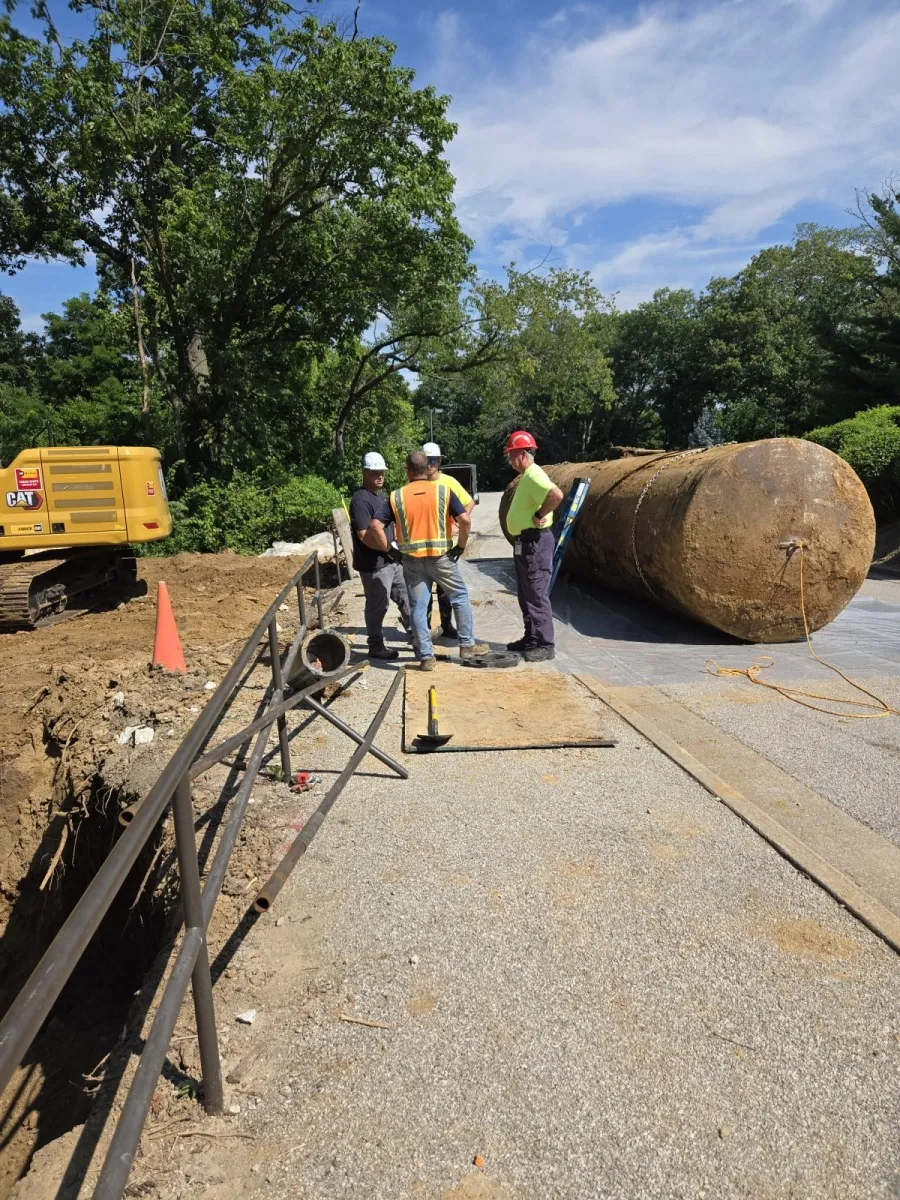
Advanced Environmental Services (AES) removes and dismantles aboveground storage tanks in St. Louis and on projects within 300 miles. AES cleans the tank, takes it apart, and hauls it for recycling or disposal. Call (314) 865-2662 or use the quote form to start.
AES offers tank removal for residential buildings and commercial sites. It says the work complies with all federal and state regulations. Its tank services run from industrial cleaning and Vac truck services to decontamination and tank removal or demolition.
An aboveground storage tank (AST) sits on a pad, a stand, a rack or a basement floor. Tank dismantling and tank decommissioning are the same job seen from two sides: taking the tank out of service, then taking it off the site.
What does aboveground storage tank removal involve?
Aboveground storage tank removal follows a fixed order. Confirm what the tank held, empty it, clean out sludge, make it vapor-free, cap the piping, then cut or lift the tank. Remove containment where the job includes it, haul the steel and waste, and restore the area.
- Confirm contents. Identify what the tank held and check its condition. On fuel tank jobs, the AES crew first visits the site to check the tank type, leaks, corrosion and contamination.
- Pump out and empty. Remove the remaining product. On oil tank jobs, AES drains any remaining oil.
- Clean and remove sludge. Clear residue from the tank walls and floor. The AES cleaning crew cleans each tank before removal to remove hazardous materials and residues.
- Make it vapor-free. Clear the vapors. No cutting or lifting starts until the tank is vapor-free.
- Disconnect and cap piping. Cut off fill, vent and supply lines. Lines are capped so nothing drains after the tank leaves.
- Cut or lift the tank. Take the tank apart or lift it whole. Once clean, AES dismantles and removes the structure.
- Remove containment and supports. Take out dikes, stands or pads if the scope includes them. AES lists concrete pad cleaning and cutting.
- Haul and recycle or dispose. Move the tank and waste to approved facilities. AES bundles disposal with safe transportation, and offers recycling and disposal services.
- Restore the area. Clean and decontaminate the site. AES decontaminates the site, including sanitizing it.
Cleaning matters most. A tank that still holds residue or vapor is a hazard to cut, lift or haul. Waste from cleaning may be hazardous. See hazardous material disposal and the glossary entry for hazardous waste.
Which aboveground tanks does AES remove?
AES removes oil and fuel tanks, whether above ground or underground, and cleans industrial tanks of many kinds. It serves homes, commercial businesses, industrial plants, warehouses and public sector sites. The table shows common above ground storage tank types and where to read more.
| Tank type | Where you find it | Read more |
|---|---|---|
| Fuel and diesel tanks | Farms, fleets, job sites, fuel islands | Fuel tank disposal |
| Generator and fleet tanks | Backup generators, truck yards, logistics sites | Fuel tank disposal |
| Heating oil tanks | Basements, yards, older commercial buildings | Oil tank removal |
| Waste oil tanks | Shops, garages, maintenance bays | Oil tank removal |
| Industrial process and chemical tanks | Plants and warehouses | Tank removal |
AES says its industrial tank removal manages any hazardous materials a tank may contain. For a process or chemical tank, start with the safety data sheet for what it held. The contents decide the cleaning method and where the waste goes. Older tanks may carry asbestos insulation. See asbestos tank removal.
How is AST removal different from underground tank removal?
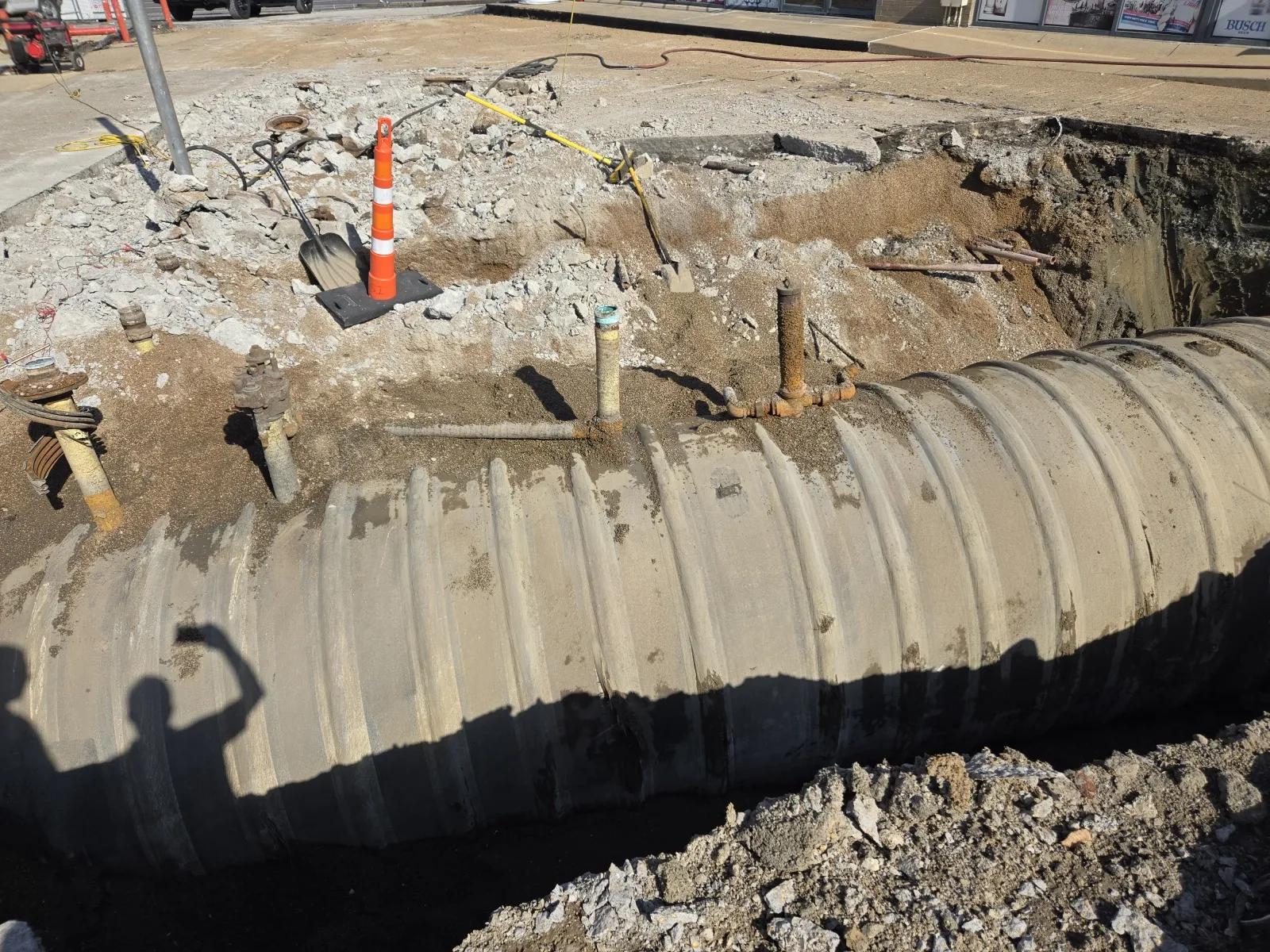
An aboveground tank is cleaned and then cut or lifted where it sits. A buried tank needs excavation and soil sampling, and Missouri DNR may regulate its closure. Different agencies set the rules for each, so the paperwork differs too.
DNR defines an underground storage tank (UST) as a tank and any connected underground piping with at least 10 percent of its combined volume underground. For buried tanks, read underground storage tank removal. For both kinds side by side, see the tank removal hub and the tank removal and closure guide.
Who regulates aboveground storage tanks in Missouri?
The Missouri Department of Agriculture regulates aboveground storage tanks. DNR says it does not regulate their operation. DNR does regulate and oversee the investigation and cleanup of petroleum releases from leaking ASTs. For operating rules, DNR sends owners to Agriculture at 573-751-5636.
Agriculture’s Fuel Device Safety and Accuracy Program inspects fuel dispensing systems and aboveground tanks. It says the inspections protect the public from fire and explosion hazards and above-ground fuel spills.
Missouri also has a rule for tanks that sit unused. Under 2 CSR 90-30.050(16), an aboveground storage tank that is not being used, and has been out of service for six months or more, must be emptied, cleaned of product and removed from the secondary containment.
That rule has a scope. Rule 2 CSR 90-30.050 covers locations used for the sale or storage of petroleum products regulated by Chapter 414, RSMo. Ask Agriculture whether your tank is covered before you plan around the six-month clock.
| Agency or rule | What it covers |
|---|---|
| Missouri Department of Agriculture | Regulates aboveground storage tanks; inspects fuel systems and ASTs |
| 2 CSR 90-30.050(16) | Unused AST out of service six months or more: empty, clean of product, remove from secondary containment |
| Missouri DNR | Oversees investigation and cleanup of petroleum releases from leaking ASTs |
| EPA SPCC (40 CFR 112) | Oil spill plans at facilities that meet its tests |
| OSHA | Worker entry into tanks as confined spaces |
If a tank leaked, DNR says that under the Missouri Spill Bill, responsible parties or spillers must report hazardous substances releases to its spill line at 573-634-2436, or to the National Response Center at 800-424-8802. AES offers spill cleanup and soil remediation. See the glossary entry for soil remediation.
Does the federal SPCC rule apply to an aboveground tank?
Only at some facilities. EPA’s SPCC rule covers non-transportation-related facilities that handle oil and could reasonably be expected to discharge harmful amounts of oil to navigable waters or adjoining shorelines. A facility that meets those tests can still be exempt by size.
The size exemption needs both of these to be true:
- Completely buried oil storage is 42,000 gallons or less. Buried tanks that meet all the technical requirements of 40 CFR part 280, or an approved state program, do not count.
- Aboveground oil storage is 1,320 gallons or less. Only containers of 55 gallons or more count.
The rule also leaves some containers out, such as a container for heating oil used solely at a single-family residence. Read 40 CFR 112.1(d) for the full list, or ask your consultant.
Is it safe to enter a tank to clean it?
Not without a plan. OSHA lists tanks among confined spaces. A permit-required confined space can hold a hazardous atmosphere, material that could engulf a worker, a shape that could trap someone, or another recognized hazard. Plan air testing, ventilation and rescue before anyone goes in.
AES says its trained professionals are certified to work in confined spaces, so that even challenging tank tasks are handled safely. Ask any bidder how it will test the air and document each entry.
How much does aboveground storage tank removal cost?
AES does not publish a price for AST removal. It quotes each job. Cost depends on tank size and count, what the tank held, how much sludge is inside, access, piping, containment, any asbestos and any leak. A site visit and photos give the clearest number.
Ask every bidder the same questions:
- Does the price include emptying, cleaning, dismantling, hauling and disposal?
- Where does the product, sludge and wash water go, and do I get disposal records?
- Is the tank steel recycled?
- Is removal of piping, the pad, supports and secondary containment included?
- Who checks with the fire or building office about permits?
- What happens, and at what cost, if you find a leak or stained soil?
How do I get a quote for AST removal?
Call AES at (314) 865-2662 or use the quote form on the contact page. Send what the tank held, its size, where it sits, its piping and containment, and photos. AES offers a same-day quote on tank work. It serves St. Louis and projects within 300 miles.
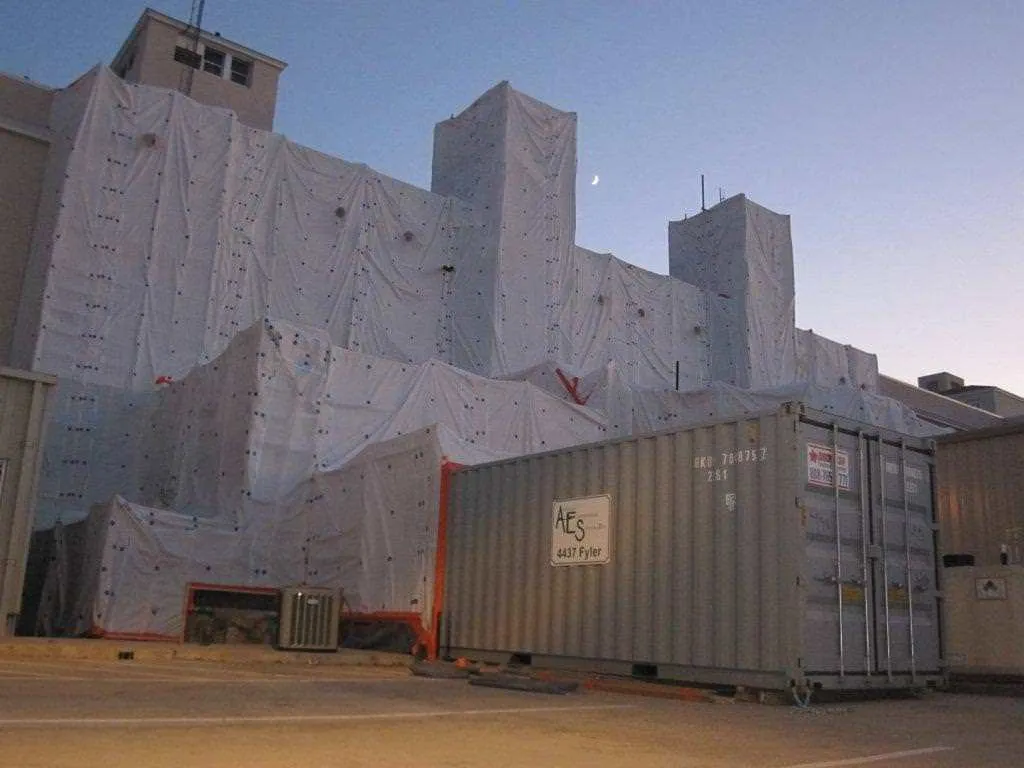
If the tank sits inside a building that is coming down, AES can handle the demolition too. It says it brings the same attention to safety and compliance to that work.
Frequently asked questions
Do I need a permit to remove an aboveground tank in Missouri?
The Missouri Department of Agriculture and DNR pages we read do not list a state permit for removing an aboveground tank. Your city or county fire or building office may have its own rules. Ask them before work starts. On fuel tank jobs, AES says it handles all necessary permitting.
Does Missouri require me to remove an unused aboveground tank?
It can. Rule 2 CSR 90-30.050(16) says an aboveground tank that is not being used and has been out of service six months or more must be emptied, cleaned of product and removed from secondary containment. The rule covers locations that sell or store petroleum products regulated by Chapter 414, RSMo. Ask the Department of Agriculture at 573-751-5636 if your tank is covered.
Who regulates aboveground storage tanks in Missouri?
The Missouri Department of Agriculture. DNR says it does not regulate the operation of aboveground tanks, but it does regulate and oversee the investigation and cleanup of petroleum releases from leaking ASTs. The Department of Agriculture's fuel program inspects fuel dispensing systems and aboveground tanks for fire, explosion and spill hazards.
Does the SPCC rule apply to my aboveground tank?
Only if the facility is non-transportation-related, handles oil and could reasonably be expected to discharge harmful quantities of oil to navigable waters or adjoining shorelines. Even then, a facility is exempt when both its completely buried oil storage is 42,000 gallons or less and its aboveground oil storage is 1,320 gallons or less. Only containers of 55 gallons or more count. Buried tanks subject to all the technical requirements of 40 CFR part 280, or of an approved state program, are left out of the 42,000.
Can you remove a heating oil tank from a basement?
Yes. AES removes oil tanks for residential homes as well as commercial and industrial sites. A basement tank is emptied and cleaned first, then dismantled if it cannot leave in one piece. EPA's SPCC rule does not apply to a heating oil container used solely at a single-family residence.
What if the tank leaked?
DNR oversees investigating and cleaning up petroleum releases from leaking ASTs. DNR says responsible parties or spillers must report hazardous substances releases to its spill line at 573-634-2436 or the National Response Center at 800-424-8802. AES offers spill cleanup, soil excavation and site remediation with its tank work.
How much does aboveground tank removal cost?
AES does not publish a price. Cost depends on tank size, contents, sludge, access, piping, containment, any asbestos and any leak. AES quotes each job. Send the tank details and photos, and ask every bidder the same questions so you can compare.
How do I get a quote?
Call AES at (314) 865-2662 or use the quote form on the contact page. Send what the tank held, its size, whether it sits outside, inside or in a basement, its piping and containment, and photos. AES offers a same-day quote on tank work.
Terms on this page
Sources
- Missouri DNR: Regulated Storage Tank Cleanup and Closure (aboveground tanks)
- Missouri DNR: Regulated Storage Tank Cleanup and Closure (leaking ASTs)
- Missouri DNR: Regulated Storage Tank Cleanup and Closure (Agriculture contact)
- Missouri DNR: Regulated Storage Tank Cleanup and Closure (UST definition)
- Missouri DNR: Above Ground Storage Tank Registration
- Missouri Department of Agriculture: Fuel Device Safety and Accuracy Program
- Missouri Code of State Regulations: 2 CSR 90-30.050(16), Inspection of Premises
- Missouri Code of State Regulations: 2 CSR 90-30.050(1), Inspection of Premises (scope)
- eCFR: 40 CFR 112.1 General applicability (who is covered)
- eCFR: 40 CFR 112.1(d)(2) (both thresholds)
- eCFR: 40 CFR 112.1(d)(2)(i) (buried capacity)
- eCFR: 40 CFR 112.1(d)(2)(ii) (aboveground capacity)
- eCFR: 40 CFR 112.1(d)(2)(i) (buried tanks under part 280 excluded)
- eCFR: 40 CFR 112.1(d)(9) (residential heating oil)
- OSHA: Confined Spaces Overview
- OSHA: Confined Spaces Overview (permit spaces)
- Missouri DNR: Environmental Emergency Response (spill line)
Checked against the sources above on November 10, 2026. Rules and fees change, so check the linked page before you act.