Is an asbestos test kit as good as a professional survey?
No. A kit tests one piece of one material that you cut yourself. A survey covers every suspect material the work will touch, and the sampler knows how to take it without spreading fibers. The EPA says “Taking samples yourself is not recommended,” and warns that sampling done incorrectly “can be more hazardous than leaving the material alone.”
A kit can only report on what you mail in. It cannot tell you what else is in the house, how much there is, or what condition it is in. It also cannot replace the report Missouri asks for on a regulated project. That gap is the whole difference.
What does a test kit really do?
It gives you a bag, a label and a mailing address for a lab. You cut or scrape a piece of material, seal it and send it. The lab looks at it under a polarized light microscope (PLM) and reports yes or no.
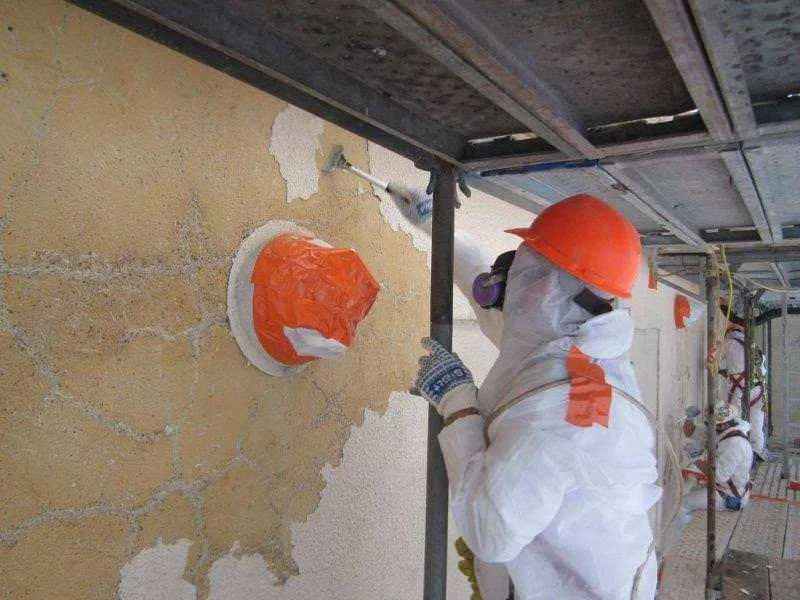
The risk sits in the step before the mailbox. Cutting a floor tile, scraping a ceiling or breaking pipe wrap is the same kind of disturbance that releases fibers. The EPA lists “disturbed, damaged, removed improperly, repaired, cut, torn, sanded, sawed, drilled or scraped” as the actions that may release them. A kit asks you to do one of those actions without containment, a respirator plan or a clean-up plan.
A kit also gives you one answer about one spot. If the sample misses the layer that holds asbestos, you get a false comfort. If it comes back positive, you still have no map of where else the material runs.
Is the lab behind a kit any good?
Ask before you buy. The CPSC says samples should go to a lab “accredited by the National Voluntary Laboratory Accreditation Program (NVLAP).” Many kit sellers name their lab, and some do not. If a kit does not say which lab reads your sample and whether it holds that accreditation, pick another route. A good lab still cannot fix a bad sample, because the lab only sees the piece you cut.
What does a professional survey add?
A survey adds scope, records and a plan. A certified inspector looks at the whole area your work will affect, samples each suspect material, and writes a report you can hand to a contractor, a buyer or the state. The EPA says the inspection should include “a complete visual examination and the careful collection and laboratory analysis of samples.”
Missouri DNR describes what the report should hold. It should “identify all suspect materials present, and indicate the amount, location, category and condition of the suspect materials.” It should also include “a copy of the analytical results and chain of custody for all samples collected.”
The CPSC adds that the inspector “should provide a written evaluation describing its location and extent of damage, and give recommendations for correction or prevention.” That written plan also protects you. The CPSC reports that some firms have “encouraged unnecessary removals or performed them improperly.” A neutral survey shows what actually needs to come out.
That paperwork matters beyond your own peace of mind. On a regulated project, the inspection report and lab results go with the notice to DNR. A kit result does not meet that need.
Side by side: kit or survey?
| Question | Mail-in test kit | Certified survey |
|---|---|---|
| Who takes the sample? | You | A trained, accredited inspector |
| How many materials are covered? | One sample per kit | Every suspect material in the work area |
| Does it show amount and location? | No | Yes, in the report |
| Does it show condition? | No | Yes, in the report |
| Chain of custody for samples? | Not what DNR expects on a regulated project unless a certified inspector collected the sample | Yes, with analytical results |
| Meets Missouri’s inspection requirement for a regulated structure? | No | Yes, when done by a Missouri certified inspector |
| Helps with a contractor bid or a home sale? | Limited | Yes |
| EPA view | “Taking samples yourself is not recommended” | Recommended |
Does Missouri require a certified inspector?
For regulated structures, yes. DNR says they “must be thoroughly inspected by a Missouri certified asbestos inspector to determine if any asbestos-containing materials are present” before demolition or renovation. Most single-family residences are exempt. DNR’s exception covers “a single residential structure that contains four or fewer dwelling units.”
Read the exception with its limits. A building converted from residential to commercial use, or from commercial to residential, “is not exempt.” A project with two or more residential structures “is not exempt.” Landlords with several buildings and anyone converting space should assume the rules apply.
Even where the state rule exempts your house, the EPA says federal law does not require training for people who inspect, repair or remove asbestos in detached single-family homes, but “some states and localities do require this.” Call the City or County air pollution control office for local rules. Our Missouri asbestos rules guide lists contacts.
When can I skip testing altogether?
When the material is in good shape and nobody will touch it. The EPA says you do not need to test your home if the materials are not damaged and will not be disturbed. Leave undamaged asbestos-containing material alone.
Test when any of these is true:
- You plan to remodel, demolish or repair in the area.
- The material is torn, crumbling or water damaged.
- You are buying an older home and need to know what you are buying.
- A contractor asks for lab results before quoting.
How do I choose an inspector?
Pick one who does not also do the removal if you can. The EPA advises that “An asbestos professional hired to assess the need for asbestos repair or removal should not be connected with an asbestos firm that does the actual repair or removal of materials.” That avoids a conflict of interest. It also gives you a second opinion on scope.
Ask these questions before you book:
- Are you a Missouri certified asbestos inspector? Can I see the certificate?
- How many samples will you take, and from which materials?
- Which lab analyzes them, and which method? Ask whether it reports by PLM and what its reporting limit is.
- What will the report show? Does it list amount, location, category and condition?
- How long until I have the results?
- What do I do while I wait?
Our asbestos survey page explains management and refurbishment or demolition surveys. Our asbestos testing page lists the areas AES inspects. AES staff include AHERA Certified Building Inspectors, and Mr. Ruckman is trained and certified as an Asbestos Inspector and Supervisor.
What should I do if I already took a sample?
Stop and keep the area closed. Do not sweep or vacuum debris. The EPA says not to dust, sweep or vacuum debris that may contain asbestos. If the material came from a damaged area or a large area needs clean-up, call an asbestos professional. Then have a certified inspector review what you sampled.
To learn what each material is likely to be, read where asbestos hides in old St. Louis houses and what year they stopped using asbestos in homes. Learn the terms asbestos survey and asbestos-containing material so lab reports make sense. Read about friable asbestos if your sample came from sprayed or crumbling material.
Next step
If you plan a remodel or are buying an older home, book a certified survey instead of a kit. Call Advanced Environmental Services at (314) 865-2662 or use our contact page to ask about asbestos testing. We can explain the lab results and what they mean for your project.
Frequently asked questions
Are asbestos test kits safe to use?
The EPA says taking samples yourself is not recommended, and that sampling done incorrectly can be more hazardous than leaving the material alone. Cutting or scraping a sample can release fibers. A trained and accredited professional knows what to look for and how to limit the release.
Do I need an asbestos test if my materials are in good shape?
Usually not. The EPA says that if building materials are not damaged and will not be disturbed, you do not need to test your home. Material in good condition that no one will disturb should be left alone. Test when you plan to remodel or when material is damaged.
Does Missouri require a certified inspector?
For regulated structures, yes. Missouri DNR says they must be thoroughly inspected by a Missouri certified asbestos inspector before demolition or renovation. DNR says most single-family residences are exempt, but not a converted building or a project with two or more residential structures.
What does a professional asbestos survey include?
A visual inspection, samples of every suspect material the work will touch, and lab results. DNR says the report should show the amount, location, category and condition of each suspect material, plus the analytical results and chain of custody for all samples.
Can one negative kit result clear my whole house?
No. A kit covers one sample from one spot. Floors, ceilings, pipe wrap and siding are different materials, and each needs its own sample. A negative result on one material says nothing about the others, and a poor sample can miss asbestos present in the material.
Terms on this page
Sources
- US EPA: Protect Your Family from Exposures to Asbestos (sampling risk)
- US EPA: Protect Your Family from Exposures to Asbestos (leave it alone)
- US EPA: Protect Your Family from Exposures to Asbestos (release actions)
- US EPA: Protect Your Family from Exposures to Asbestos (debris)
- US EPA: Protect Your Family from Exposures to Asbestos (when to professional)
- US EPA: Protect Your Family from Exposures to Asbestos (inspector scope)
- US EPA: Protect Your Family from Exposures to Asbestos (conflict of interest)
- US EPA: Protect Your Family from Exposures to Asbestos (federal law)
- Missouri DNR: Asbestos Requirements for Demolition and Renovation Projects (PUB2157), inspection
- Missouri DNR: Asbestos Requirements for Demolition and Renovation Projects (PUB2157), report
- Missouri DNR: Asbestos Requirements for Demolition and Renovation Projects (PUB2157), lab data
- Missouri DNR: Asbestos Requirements for Demolition and Renovation Projects (PUB2157), exemption
- Missouri DNR: Asbestos Requirements for Demolition and Renovation Projects (PUB2157), converted buildings
- Missouri DNR: Asbestos Requirements for Demolition and Renovation Projects (PUB2157), several structures
- US CPSC: Asbestos in the Home (lab accreditation)
- US CPSC: Asbestos in the Home (written evaluation)
- US CPSC: Asbestos in the Home (unnecessary removals)
- Missouri DNR: Asbestos
Written by Advanced Environmental Services and checked against the sources above on June 5, 2026. Rules change, so check the linked page before you act.