
Is it legal to cover asbestos siding?
Nothing we read bans it. Missouri DNR says “Category II Asbestos Cement Siding and Cementitious Wall Board is not regulated by the department as long as the material is in good condition and is not made friable during demolition or renovation activities.” Both conditions matter. EPA lists covering, which it calls enclosure, as a repair method for material that is damaged or could be disturbed, done by trained and accredited professionals. EPA’s asbestos NESHAP excludes most single houses, but not larger buildings or some projects. OSHA’s asbestos standard still covers a contractor’s crew, and local rules can add duties. The Minnesota Department of Health agrees that “sometimes asbestos-containing roofing and siding can be covered with new materials” and adds “Check your local building codes.”
Covering is common. A testing company, EHS (leadlab.com), says “many siding companies are well-experienced in techniques for covering over existing asbestos-cement siding with new vinyl, aluminum, or fiber-cement siding.” The legal question is small. The practical question, how the new siding gets attached, is bigger.
When do the asbestos rules apply to a siding job?
It depends on the building. The federal rule is the Asbestos NESHAP. EPA says its work practices apply to demolitions and renovations of “all facilities,” excluding “residential buildings that have four or fewer dwelling units.” That exclusion is for the NESHAP only. OSHA’s asbestos construction standard, 29 CFR 1926.1101, still covers the “repair, maintenance, or renovation of structures” that contain asbestos, so it protects a contractor’s crew on your house.
Missouri’s DNR repeats that exception with limits.
| Your building | Asbestos work rules apply? |
|---|---|
| One house with four or fewer dwelling units | Exempt under the DNR exception |
| Two or more residential structures in one project | Not exempt, per DNR |
| A building converted from residential to commercial, or the reverse | Not exempt, per DNR |
| A house renovated or demolished as part of a commercial or public project | Not exempt, per EPA |
| Commercial, industrial or institutional building | Regulated; notification and inspection duties apply |
The DNR exception covers “a single residential structure that contains four or fewer dwelling units.” If your project involves two or more buildings, a converted building or a larger complex, treat it as regulated until DNR tells you otherwise. Our Missouri DNR rules guide explains the filings.
What do City and County rules add?
They can add filings. Inside the City of St. Louis, the Department of Health’s Air Pollution Control program says “Demolition, renovation, and abatement projects must be reported on the STL City Permits website.” The City adds that asbestos abatement over certain sizes falls under a City ordinance. We cannot tell you from the web whether a siding cover-over counts. Call the City or County health department with your address and plan.
Read our City permits guide and County permits guide for the offices and forms.
Do you have to hire a certified pro to cover siding?
EPA says federal law does not require it for a detached single-family home, but EPA says “some states and localities do require this.” EPA still tells homeowners to use trained, accredited workers for repair and removal. A siding crew that knows how to work around asbestos-cement siding is not the same as an asbestos contractor. Ask the crew directly:
- Have you covered asbestos-cement siding before?
- How will you fasten the new siding without breaking the old?
- Will you wet, bag and dispose of any broken pieces?
- What will you do if the old siding is already damaged?
- Will you stop and call a pro if you find loose or crumbling material?
What is the real risk when you cover asbestos siding?
Fastening is the risk. Transite and other cement-asbestos siding is hard, but it is brittle. The EHS article says the siding “can crack when disturbed, such as nailing into it or sanding it.” EPA’s rule for homeowners is “Don’t saw, sand, scrape, or drill holes in asbestos-containing materials.”
Missouri DNR describes the safe way to take cement siding off: “the material should be removed manually by either driving the nails through the material or snipping off the nail or screw heads.” The same idea applies to cover-over work. Nails should not crack the old panels. If a crew plans to hammer or power-nail through brittle siding, ask for a different method.
AES lists the products to watch for: transite siding, slate-look cement board siding, mastics and adhesives, and old paint. AES says never to drill or saw the siding, because that is “a sure-fire way to release and become exposed to asbestos fibers.” A good cover-over method keeps cutting and drilling off the old siding. A bad one breaks it.
Should you cover it or remove it?
Choose by the siding’s condition and your plans. Use this table.
| Situation | Better choice | Why |
|---|---|---|
| Siding intact, no remodel planned | Leave it, or cover with care | EPA: leave asbestos-containing material alone if it is in good condition |
| Siding intact, new siding wanted | Cover, with a fastening plan | Avoids breaking the old siding |
| Siding cracked, crumbling or missing pieces | Repair or remove with a pro | EPA: damaged material needs repair or removal by trained and accredited professionals |
| Remodel will cut or open the wall | Remove first, with a pro | EPA: removal may be required when remodeling will disturb the material |
| House to be demolished | Plan removal and notification | DNR notification and inspection rules apply to regulated demolition |
Covering does not make the problem go away. The asbestos stays on the wall. The next owner or remodeler needs to know. Keep your test report and installer notes. EPA says “usually the best thing is to leave asbestos-containing material alone if it is in good condition,” so leaving intact siding alone is also a sound choice. The same logic for floors is in can you cover asbestos floor tile. If you think about doing removal yourself, read can I remove asbestos myself in Missouri.
How do you know the siding has asbestos?
You cannot tell by looking, though age is a clue. Our post on where asbestos hides in old St. Louis houses lists the usual places. EPA says “Generally, you can’t tell whether a material contains asbestos simply by looking at it, unless it is labeled.” Have a trained pro sample it. See asbestos testing and the asbestos survey entry. The post on test kits versus a professional survey compares the options. Test before the siding crew shows up, not after they cut into a wall.
What does AES offer for siding?
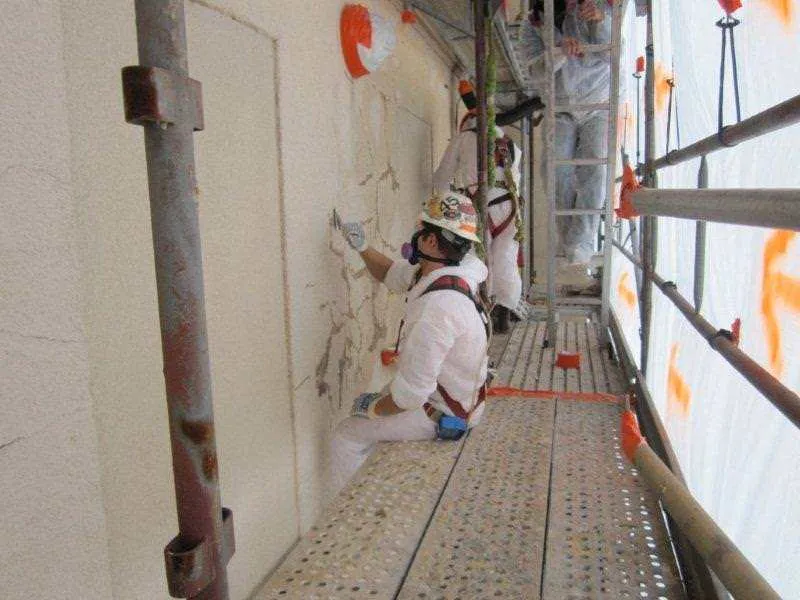
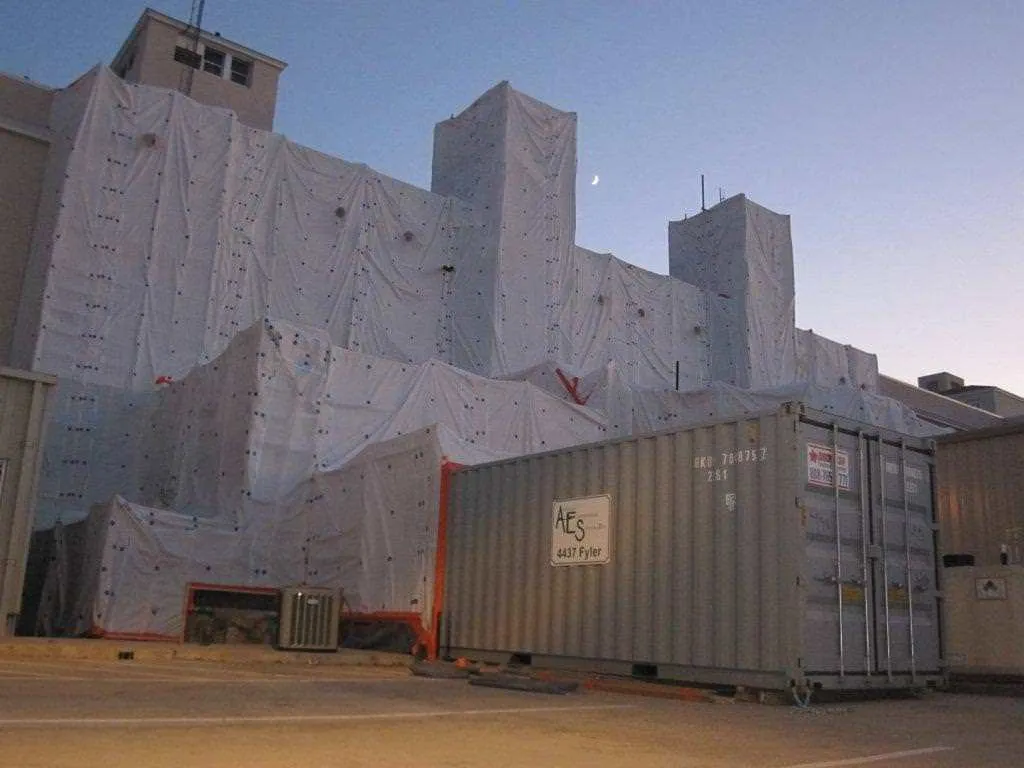
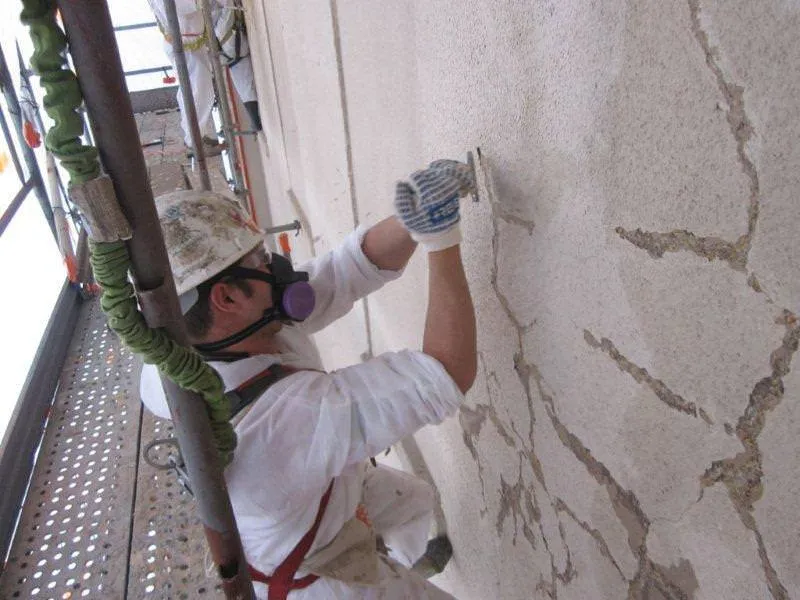
AES says that after the carcinogenic effects of asbestos were acknowledged, it stopped being used in siding by the 1980s, yet it remains in many older homes. AES offers asbestos siding removal in St. Louis, St. Charles and Columbia, Missouri, and takes projects within 300 miles. AES describes a removal process with an exclusion zone, protective gear, wetting the siding and cutting the fasteners with a special saw without damaging the shingle. AES says it will help you make an informed choice between removal and covering. Read asbestos encapsulation for the sealing option.
AES quotes each job; call (314) 865-2662 or use the quote form.
Next step
Call Advanced Environmental Services at (314) 865-2662 or use the quote form before you hire a siding crew. We can tell you whether removal or covering fits your house. See the asbestos abatement page, and the non-friable asbestos entry for why intact siding differs from crumbling material.
Frequently asked questions
Is it legal to put new siding over asbestos siding?
Nothing we read says covering is banned. EPA lists covering, called enclosure, as a repair method done by trained and accredited professionals. EPA's asbestos NESHAP excludes residential buildings with four or fewer dwelling units, and Missouri DNR has a matching exception with limits. OSHA's asbestos standard still covers a contractor's crew. Check City and County rules for your address.
Do I have to hire a licensed contractor to cover siding?
EPA says federal law does not require people who inspect, repair or remove asbestos in detached single-family homes to be trained and accredited, though some states and localities do. EPA still urges homeowners to hire trained, accredited workers. Ask your City or County health department what applies to you.
Is covering safer than removing asbestos siding?
It can be, when the siding is intact and the installer does not break it. One lead-testing company says covering is usually the preferred method. The risk is fastening. Drilling, sawing or nailing can break cement-asbestos siding. If it is already breaking down, removal is the better choice.
Does covering asbestos siding change what I must tell a buyer?
We did not find a Missouri rule on this, so we will not guess. Keep your test results and the installer's work notes. Ask your real estate agent or attorney what you must disclose when you sell.
Can I remove asbestos siding myself?
AES says the work can become risky if the siding breaks, and never to drill or saw it. EPA says removal is complex and must be done only by a trained and accredited asbestos professional. Improper removal may increase your family's exposure to asbestos fibers.
Terms on this page
Sources
- U.S. EPA: Protect Your Family from Exposures to Asbestos, covering
- U.S. EPA: Protect Your Family from Exposures to Asbestos, who does repair
- U.S. EPA: Protect Your Family from Exposures to Asbestos, single-family homes
- U.S. EPA: Protect Your Family from Exposures to Asbestos, drilling
- U.S. EPA: Protect Your Family from Exposures to Asbestos, removal
- U.S. EPA: Overview of the Asbestos NESHAP
- U.S. EPA: Overview of the Asbestos NESHAP, large-scale residential
- OSHA: 29 CFR 1926.1101, asbestos in construction (scope)
- Missouri DNR: Asbestos Requirements for Demolition and Renovation Projects (PUB2157), exception
- Missouri DNR: PUB2157, conversions
- City of St. Louis: Air Pollution Control
- EHS (leadlab.com): What is Asbestos Siding and Can it Be Covered?
- EHS (leadlab.com): brittleness
- City of St. Louis: Air Pollution Control, size threshold
- Missouri DNR: PUB2156, asbestos cement siding
- Missouri DNR: PUB2156, siding removal method
- Minnesota Department of Health: Roofing and Siding Asbestos
- U.S. EPA: Protect Your Family from Exposures to Asbestos, leave it alone
Written by Advanced Environmental Services and checked against the sources above on July 10, 2026. Rules change, so check the linked page before you act.