Does homeowners insurance pay for mold or asbestos removal?
It depends on your policy and on what caused the damage, so no one can promise coverage up front. NAIC, the group of state insurance regulators, says you are covered only if the loss is caused by a peril your policy covers. A peril is a specific risk, such as fire or windstorm.
Mold is a common sticking point. NAIC says homeowners policies often exclude covering the cost of damage from mold. Asbestos is a different case. The Missouri and NAIC consumer guides we read do not mention it by name. So the only safe move is to ask your insurer about your exact policy and your exact loss.
This post is general information, not insurance or legal advice. Your insurer decides coverage, not us.
What does a standard homeowners policy cover?
Coverage depends on the policy form. NAIC says some policies cover only the perils named in the policy, while others insure against all perils except those the policy specifically names as not covered. Either way, a policy does not cover every problem in the house. The Missouri Department of Commerce and Insurance lists fire and smoke, windstorm and hail, lightning, vandalism and theft as covered. It lists flood, earthquake, sewer and drain backup, and normal wear and tear as not covered.
NAIC adds a key point: a homeowners policy is not a maintenance contract. It insures against damage from perils such as fire, wind and hail. It does not pay to repair items that simply wear out, like rotted porch railings.
That is why a slow, ignored leak and a sudden pipe failure can get different answers. The policy wording sets the line. Read it, and do not guess.
Is mold covered if it follows water damage?
Possibly, but it is a common exclusion or limit. NAIC says water damage from a home’s plumbing or a roof leak is typically covered. It also says most homeowners policies offer limited or no coverage for mold. So a covered water event does not make the mold bill covered automatically.
NAIC says you might be able to buy an endorsement, an add-on to the policy, to cover mold damage. If you have one, check its limit and what triggers it.
The table below sums up what the sources say for common situations. It is a guide to your questions, not a ruling on your claim.
| Situation | What the sources say | What to do next |
|---|---|---|
| Mold after a plumbing or roof leak | NAIC: water damage from plumbing or a roof leak is typically covered, but policies often exclude mold. | Ask your insurer in writing how your policy treats mold. |
| Mold after flood or ground water | NAIC: homeowners policies do not cover flood damage, including ground-water damage from rain runoff and snow-melt. | Ask an agent about National Flood Insurance Program or private flood coverage. |
| Sewer, drain or sump pump backup | Missouri DCI lists sewer and drain backup as not covered, and offers an add-on. | Check your declarations page for a backup endorsement. |
| Damage from wear or lack of upkeep | NAIC: a policy is not a maintenance contract and does not pay for items that simply wear out. | Fix leaks early and keep repair receipts. |
| Asbestos found during a repair | The Missouri and NAIC guides we read do not address asbestos. NAIC: a covered peril must cause the loss. | Ask your insurer whether the cause of your loss is covered. |
Does it matter if the water damage was sudden or gradual?
It can, so check your policy wording. The sources we opened do not say how any one insurer treats slow leaks or the mold that follows. They do state that the cause of the loss must be a covered peril.
NAIC’s perils table includes “freezing, rupturing or sudden and accidental overflow of a plumbing, heating, air-conditioning or fire-sprinkler system or a household appliance.” Which policy types cover that peril is in the table, and your own form decides. NAIC also says a policy does not pay to repair items that simply wear out.
If you do not know the cause, a mold inspection can help find where the moisture came from. The guide on mold after water damage shows what usually happens in the first days. Ask your insurer which records it wants.
What if the water came from a sewer or sump pump backup?
Missouri DCI lists sewer and drain backup as not covered by standard homeowners insurance. It says you can add a rider, also called an endorsement, that covers damage caused by water backup from drains, sewers or sump pumps. If you do not have it, a backup claim may not be paid, so check before you need it.
DCI suggests asking your agent: “Does this policy cover water damage, including damage from sewer, drain or sump pump backup?” Ask it before you need it.
There is a safety side too. EPA says that if sewage or other contaminated water caused the damage, you should call a professional with experience cleaning and fixing buildings damaged by contaminated water. Do not try this yourself, whether or not insurance pays.
What should I do first when I find water damage, mold or suspect asbestos?
Call your insurer or agent and protect the home. Ask your insurer what it needs before you tear anything out. NAIC says you must protect your home from further damage. EPA says to dry water-damaged areas and items within 24-48 hours to prevent mold growth.
Follow these steps:
- Stop the water source if you can do it safely.
- Take photos and video of the damage before anything changes.
- Contact your insurance agent or company and ask how your policy treats this loss. Keep notes of dates and names.
- Ask what the insurer needs to see before work starts.
- Keep receipts for repairs, as NAIC advises.
- If you suspect asbestos in old materials, do not disturb them. Read about friable asbestos and the asbestos survey first.
If you hire a contractor, NAIC says it might help to have your contractor meet with you and the insurance adjuster. We can walk the space with you and explain what the work involves. Coverage stays between you and your insurer.
Does fixing the moisture source matter for the claim?
It matters for the repair, and often for the claim. EPA says that if you clean up the mold but do not fix the water problem, the mold will most likely come back. A claim that pays for removal does not stop the next leak.
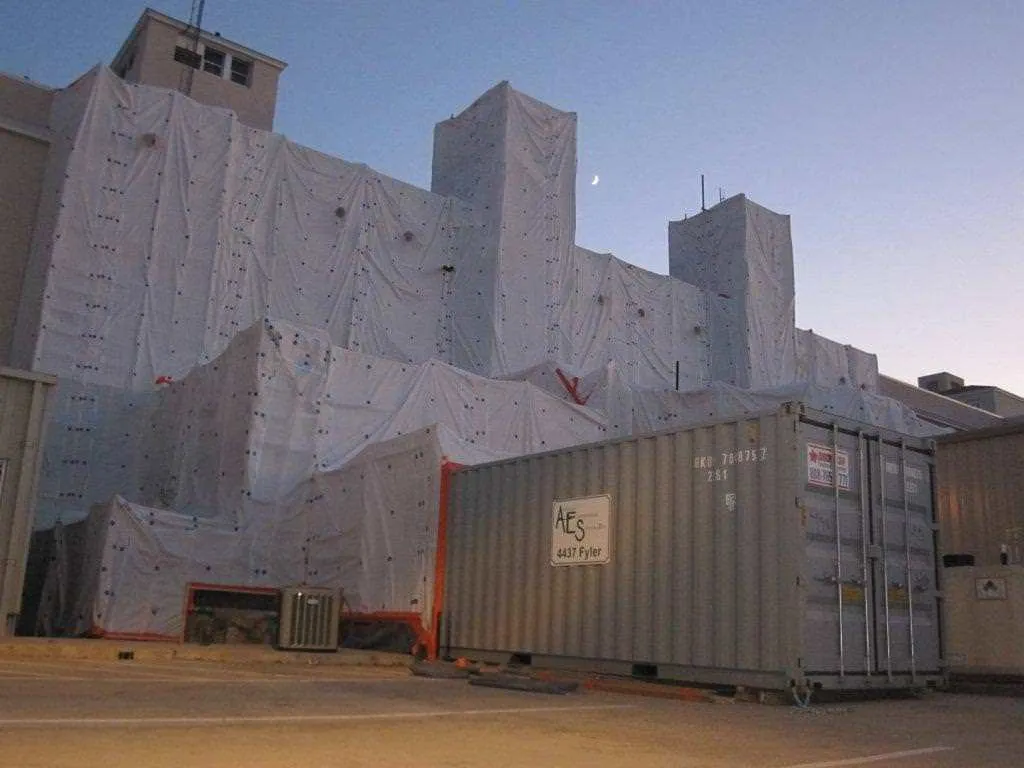
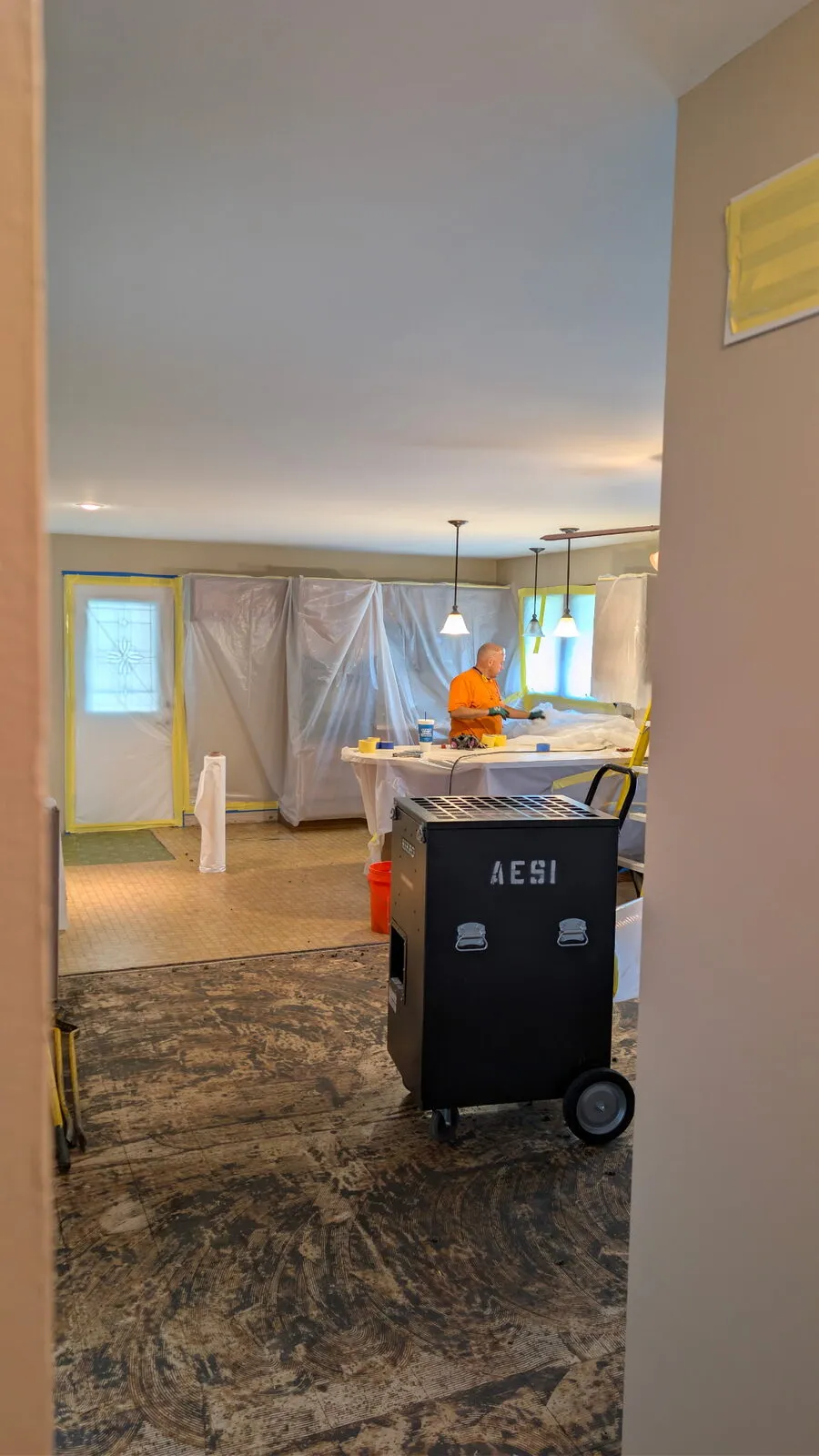
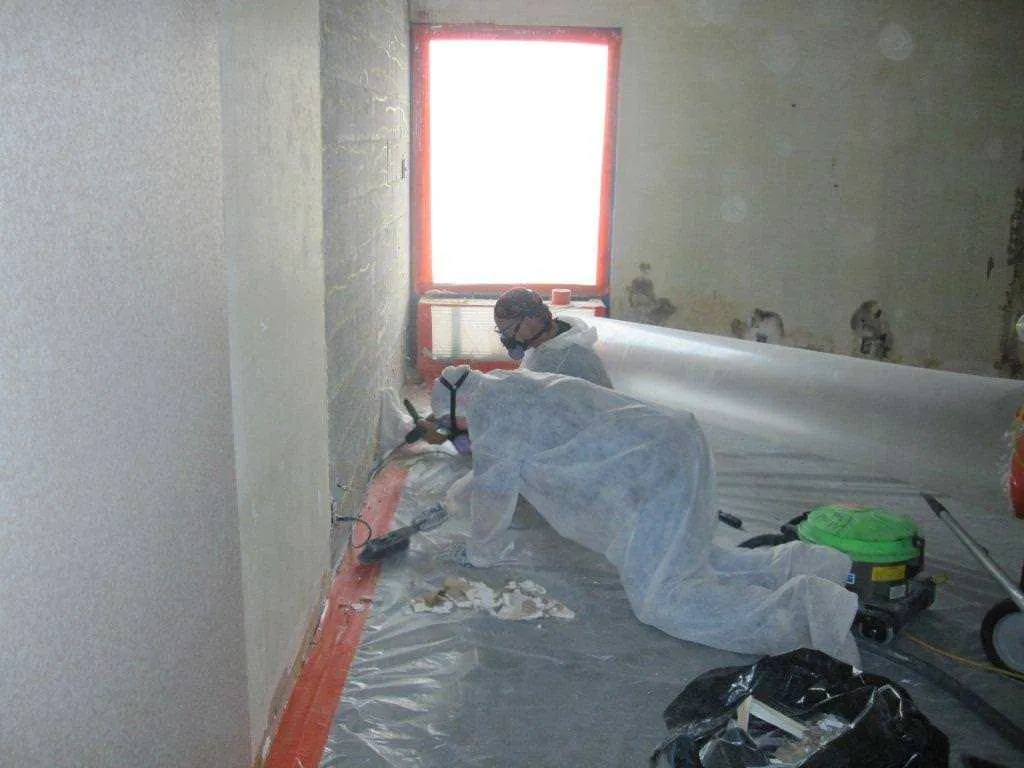
This is why a good scope covers more than the visible mold. A proper job includes containment so spores stay in the work area, and a plan for the moisture source. A damp basement may also need drainage or a moisture barrier so the problem does not repeat. Our page on mold in a basement covers what that looks like.
For the work itself, see mold remediation. For old materials that may contain asbestos, see asbestos abatement and residential asbestos removal.
What questions should I ask my insurer?
Ask short, direct questions and get answers in writing. NAIC says you should read your policy and be sure you understand it, and Missouri DCI says to go over the details of your policy with your agent or company. Use this list:
- Does my policy exclude or limit mold? Is there a dollar cap?
- Do I have a mold endorsement or a sewer, drain and sump pump backup endorsement?
- Does the cause of my loss count as a covered peril?
- What does my deductible apply to?
- What documents, photos and estimates do you need before work starts?
- Does my policy cover extra living costs if I cannot stay in the home?
If you disagree with an answer, NAIC says to try to resolve it with your insurer first. It also says your state insurance department has consumer services staff who can help. Missouri DCI lists a consumer hotline at 800-726-7390.
Next step
Get the coverage answer from your insurer, and get the work scoped by a contractor. For mold, see mold remediation. For old materials, see asbestos abatement. Call (314) 865-2662 or use the form at /contact.
Frequently asked questions
Does homeowners insurance cover mold removal?
Sometimes, but do not count on it. NAIC says homeowners policies often exclude covering the cost of damage from mold, and that most policies offer limited or no coverage for it. Your policy wording decides. Ask your agent or insurer in writing.
Does insurance pay for asbestos removal?
The Missouri and NAIC guides we read do not mention asbestos by name. NAIC says you are covered only if the loss is caused by a peril your policy covers. Ask your insurer whether your policy covers the cause of your loss.
Is a burst pipe different from a slow leak?
NAIC says water damage from a home's plumbing or a roof leak is typically covered. It also says a policy is not a maintenance contract and does not pay to repair items that simply wear out. Your policy wording decides which one applies.
Does flood damage from heavy rain count?
No. NAIC says homeowners policies do not cover flood damage, including ground-water damage from rain runoff and snow-melt. Flood coverage comes through the National Flood Insurance Program or a private insurer. Ask an insurance agent.
Do I have to stop the water before I file?
NAIC says you are required to protect your home from further damage after a loss. EPA says to clean up the mold and fix the water problem, or the mold will most likely return. Ask your insurer what it expects before you start repairs.
Should I call my insurer before I hire a mold or asbestos contractor?
Yes. NAIC says to contact your agent or company about a claim as soon as possible and to read your policy. Ask what the insurer needs to see before work starts, so you know what it needs before work starts.
Terms on this page
Sources
- NAIC: A Consumer's Guide to Home Insurance (named-peril policies)
- NAIC: A Consumer's Guide to Home Insurance (all-peril policies)
- NAIC: A Consumer's Guide to Home Insurance (PDF)
- NAIC: A Consumer's Guide to Home Insurance (PDF), mold endorsements
- NAIC: A Consumer's Guide to Home Insurance (PDF), maintenance
- NAIC: A Consumer's Guide to Home Insurance (PDF), wear and tear
- NAIC: A Consumer's Guide to Home Insurance (PDF), flood
- NAIC: A Consumer's Guide to Home Insurance (PDF), protect the home
- NAIC: A Consumer's Guide to Home Insurance (PDF), read the policy
- NAIC: A Consumer's Guide to Home Insurance (PDF), adjuster
- NAIC: Homeowners Insurance, what is not covered
- NAIC: Homeowners Insurance, water damage
- NAIC: Homeowners Insurance, ground water
- Missouri DCI: Consumer Guide to Homeowners Insurance (PDF), sewer and drain backup
- Missouri DCI: Consumer Guide to Homeowners Insurance (PDF), agent questions
- Missouri DCI: Consumer Guide to Homeowners Insurance (PDF), policy review
- U.S. EPA: A Brief Guide to Mold, Moisture and Your Home, fix the water
- U.S. EPA: A Brief Guide to Mold, Moisture and Your Home, dry in 24-48 hours
- U.S. EPA: Mold Cleanup in Your Home, contaminated water
Written by Advanced Environmental Services and checked against the sources above on November 6, 2026. Rules change, so check the linked page before you act.