How much does basement mold remediation cost?
Thumbtack reports a national average of around $480 to $2,995 for basement mold remediation, and ATI Restoration says to consider $500 to $3,000. AES says prices typically range between $1500 to $10,000 for a home which is showing visible signs of mold. The groups of jobs differ, so the figures differ.
AES does not publish a separate basement price. Third-party numbers are national, not St. Louis quotes. AES quotes each job; call (314) 865-2662 or use our contact page.
| Source | Figure | Condition the source states |
|---|---|---|
| Thumbtack | $480 to $2,995 | National average for basement mold remediation, from Thumbtack data |
| Thumbtack | $187 | Low-end average; a small, simple job |
| Thumbtack | $6,523 | High-end average; extensive mold issues requiring major repairs |
| ATI Restoration | $500 to $3,000 | Range to consider for mold in a basement |
| AES | $1500 to $10,000 | A home which is showing visible signs of mold |
| AES | 1 to 5 days | Normal timeframe for most average jobs |
For St. Louis context, our post on mold remediation cost in St. Louis covers the Angi average of $2,341 for the city.
Why do basement mold quotes vary so much?
Because a basement can be a bare concrete room or a finished living space. Thumbtack says mold behind finished walls, under flooring, or in tight crawl spaces requires more time and labor to remove. That increases the total cost. The wall has to open before anyone knows the real size of the job.
Servpro agrees: it says a finished basement with drywall and carpet will likely cost more than an unfinished one. The sources do not all agree on access, though. ATI Restoration says basement mold is often easier for crews to access and manage. This Old House says a basement can be very easy or difficult to work on, depending on accessibility. The lesson is simple: access sets the price, and finishes block access.
| Basement type | What the crew deals with | Cost pressure |
|---|---|---|
| Unfinished (bare concrete, block, joists) | Surface growth on hard material, stored items | Lower: fewer layers to open |
| Partly finished (paneling, drywall on one wall) | Mold behind the panel; wet insulation | Middle: open, remove, repair one area |
| Fully finished (carpet, drywall, ceiling) | Hidden growth in several layers | Higher: more removal and rebuild |
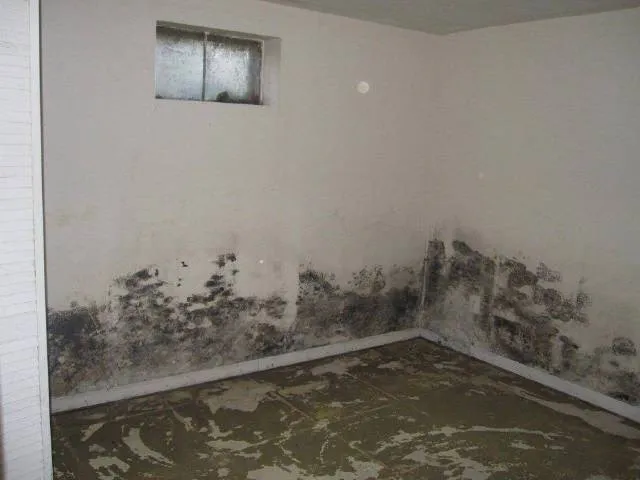
EPA says mold may be hidden in places such as the back side of dry wall, wallpaper or paneling, the top side of ceiling tiles and the underside of carpets and pads. It also says absorbent or porous materials, such as ceiling tiles and carpet, may have to be thrown away if they become moldy. A finished basement has a lot of that material.
How does the square foot rate work out?
ATI Restoration says many experts quote $10 to $25 per square foot. That rate is a national figure, not a St. Louis quote. At that rate, 100 square feet of mold comes to $1,000 to $2,500, and 200 square feet comes to $2,000 to $5,000. That is arithmetic from ATI’s rate, not an AES price.
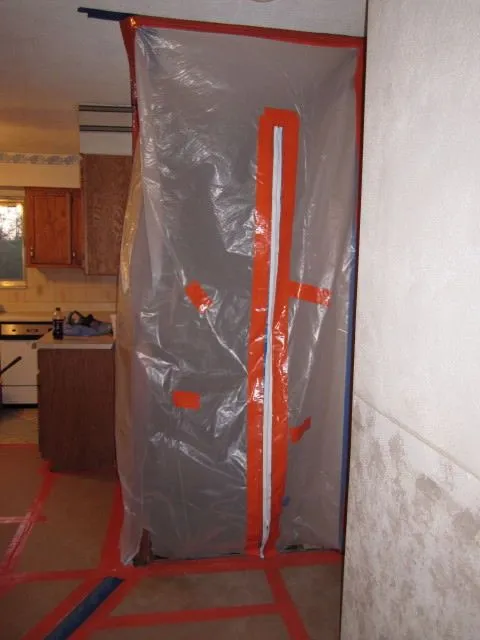
Small jobs often sit above the rate because crews still need to set up barriers and a sealed work area. Thumbtack says professionals may need barriers and negative air pressure machines to prevent spores from spreading, and that this prep work adds to labor and material costs. Our glossary explains containment and negative air machines.
What causes basement mold, and will the cleanup last?
Basement mold comes from moisture, and the cleanup lasts only if the moisture stops. EPA says the key to mold control is moisture control. Thumbtack says a common mistake is failing to fix the underlying moisture source, which can allow the mold to return.
Common sources include:
- A foundation wall or floor crack that seeps after heavy rain
- A failed seal at a window well or wall joint
- A leaking supply or drain pipe
- A dryer or bathroom vent that ends inside the house
- High indoor humidity in summer
EPA gives two numbers worth knowing. Dry water-damaged areas and items within 24 to 48 hours. If possible, keep indoor humidity below 60 percent, ideally between 30 and 50 percent. A cheap hygrometer from a hardware store tells you which side of that line your basement sits on. Our post on how fast water damage must be dried and our guide on mold after water damage cover the first two days.
Thumbtack lists the fixes as a dehumidifier, better ventilation, or repairing leaks from pipes or foundation cracks. If the slab or walls pull water in, a barrier may be part of the answer. AES offers moisture barriers, and the glossary explains the moisture barrier. Ask your contractor whether the quote addresses the source or only the mold.
What else raises a basement mold quote?
Five things move the price most: how much mold shows, what it grew on, how much area it covers, how hard the space is to reach, and whether the water source still needs repair. AES names severity, materials and area. Thumbtack adds accessibility, labor rates, repairs and urgency.
- Severity. Heavy growth needs more careful removal than a light film.
- Materials. Wood framing may be cleaned. Carpet and ceiling tile may have to go.
- Area. More square feet means more containment, labor and disposal.
- Access. A low crawl space or a cramped stair slows the crew.
- Urgency. Thumbtack says emergency service outside standard business hours may carry a premium.
Repairs are a separate line. Thumbtack says removing and replacing drywall or insulation adds to the project scope. A plumber or waterproofing trade may be a separate cost too. Thumbtack also says large projects might require a permit, especially for structural repairs, so ask who checks local codes.
When can I handle basement mold myself?
When the moldy area is less than about 10 square feet and the cause is fixed. EPA says that in most cases you can handle a patch that small, roughly 3 feet by 3 feet. Thumbtack adds that a DIY approach may work for a very small area of surface mold on a non-porous material, like a concrete wall.
Our post on mold over 10 square feet explains the line. Use this quick check before you start.
| Your basement | Likely path |
|---|---|
| One small patch on a hard wall, leak already fixed | Homeowner cleanup is possible under EPA guidance |
| Musty smell, no visible source | Have someone inspect before you guess |
| Mold on drywall, paneling or carpet | Plan for removal of the material; expect a professional estimate |
| More than about 10 square feet | Professional help, per EPA and Thumbtack |
| Flooding from sewage or other contaminated water | Call a professional |
How do I get a fair basement mold quote?
Ask for the scope in writing. A good quote names the area, the source repair, the containment method, the materials removed and replaced, and the number of days. Thumbtack suggests at least three bids and says each quote should outline the same scope of work. Then compare scopes, not totals.
You can lower the bill in two ways. Thumbtack says moving furniture and personal items out of the affected part of the basement can reduce labor time. Fixing the leak early also keeps the affected area smaller.
- Does the quote include a mold inspection, or is that extra? Our post on mold inspection cost covers prices.
- Who finds and fixes the water source?
- How will the crew keep spores from spreading to the rest of the house?
- Which materials come out, and who rebuilds the wall?
- Does the schedule fit the 1 to 5 days AES describes for most average jobs?
Next step
Send AES a few photos of the basement and a note about when you first saw water or smelled mold. AES quotes each job; call (314) 865-2662 or use our contact page. Read more on the mold in basement page and the mold remediation service page.
Frequently asked questions
How much does basement mold remediation cost?
Thumbtack reports a national average of around $480 to $2,995 for basement mold remediation, and ATI Restoration says to consider $500 to $3,000. AES says prices typically range between $1500 to $10,000 for a home which is showing visible signs of mold. Get a written quote for your basement.
Why does a finished basement cost more?
Thumbtack says mold behind finished walls, under flooring, or in tight crawl spaces requires more time and labor to remove, which increases the total cost. Crews must open the wall, remove wet or moldy material, treat the area and then repair it. An unfinished concrete wall has fewer layers.
Does the quote cover fixing the water leak?
Not always. EPA says the key to mold control is moisture control, so the source matters as much as the cleanup. Ask each contractor whether the quote includes finding the water source, who fixes it and what that costs. Mold returns if the source stays.
How long does basement mold removal take?
AES says 1 to 5 days is the normal timeframe expected to complete most average jobs. Severity, the materials affected and the size of the contaminated area also affect the schedule. Extra drying time or rebuilding after removal adds days.
Can I clean basement mold myself?
For a small patch, often yes. EPA says that if the moldy area is less than about 10 square feet, you can in most cases handle the job yourself. Above that, or after a lot of water damage, bring in a professional.
Does emergency service cost more?
It can. Thumbtack says that if you need emergency service outside standard business hours, you might pay a premium, and that scheduling the work in advance can often be more cost-effective. Ask any contractor whether after-hours work is priced differently before you agree.
Terms on this page
Sources
- Thumbtack: Basement Mold Removal Cost
- Thumbtack: Basement Mold Removal Cost, high end
- Thumbtack: Basement Mold Removal Cost, low end
- Thumbtack: Basement Mold Removal Cost, access
- Servpro: How Much Does Mold Remediation Cost?, finished basements
- Thumbtack: Basement Mold Removal Cost, prep
- Thumbtack: Basement Mold Removal Cost, urgency
- Thumbtack: Basement Mold Removal Cost, moisture source
- Thumbtack: Basement Mold Removal Cost, prevention
- Thumbtack: Basement Mold Removal Cost, repairs
- Thumbtack: Basement Mold Removal Cost, scheduling
- Thumbtack: Basement Mold Removal Cost, hire a pro
- Thumbtack: Basement Mold Removal Cost, written scope
- ATI Restoration: How Much Does Mold Remediation Cost?, basements
- ATI Restoration: How Much Does Mold Remediation Cost?, per square foot
- This Old House: How Much Does Mold Remediation Cost?, depth
- Advanced Environmental Services: Mold Remediation FAQs
- Advanced Environmental Services: Mold Remediation FAQs, timeframe
- U.S. EPA: A Brief Guide to Mold, Moisture and Your Home, moisture
- U.S. EPA: A Brief Guide to Mold, Moisture and Your Home, drying
- U.S. EPA: A Brief Guide to Mold, Moisture and Your Home, humidity
- U.S. EPA: A Brief Guide to Mold, Moisture and Your Home, hidden mold
- U.S. EPA: Mold Cleanup in Your Home
Written by Advanced Environmental Services and checked against the sources above on October 2, 2026. Rules change, so check the linked page before you act.