Can you stay in your house during asbestos removal?
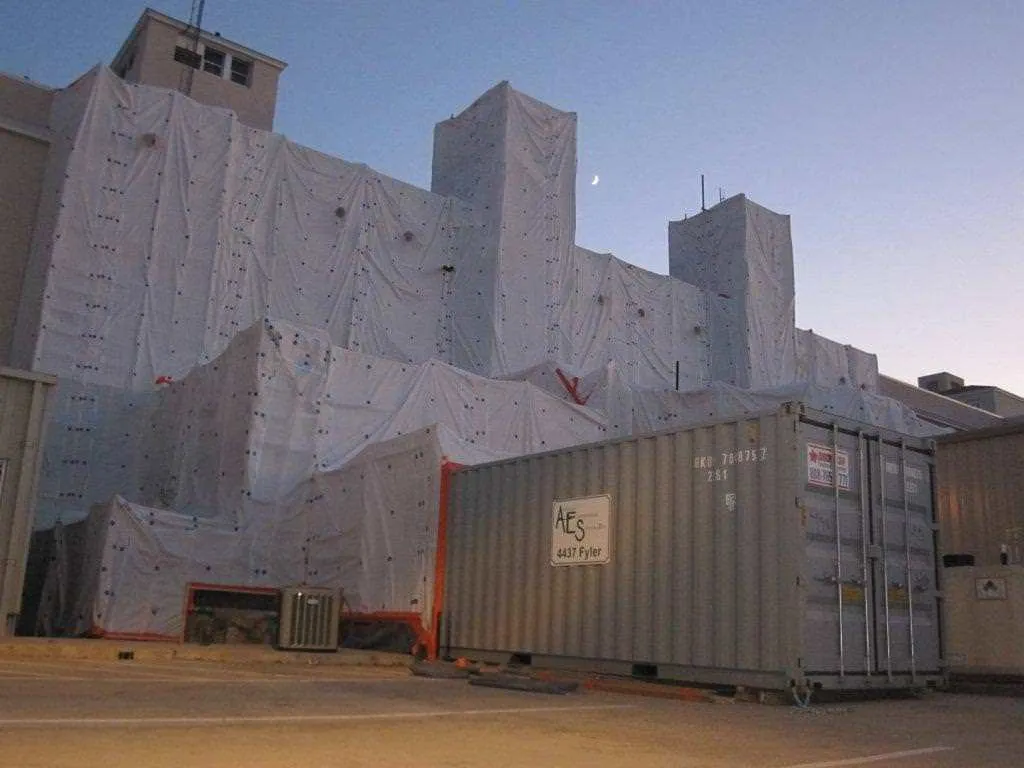
Sometimes, but not in the work area. AES says that for smaller projects you may not need to vacate your premises, because industrial plastic sheets seal off the contaminated area. EPA says to keep household members and pets out of the work area until the work is done. The heat and air are also off.
So the real question is not “stay or go.” It is “which rooms stay open, and for how long.” This post helps you answer that before the crew arrives. It covers St. Louis homes, where tight floor plans, shared basements and one-bathroom houses are common.
What does the crew do to protect the rest of the house?
It seals the work area and shuts down the air system. EPA says a good contractor marks the work site as a hazard area, seals it from the rest of the house with plastic sheeting and duct tape, and turns off the heating and air conditioning. The goal is simple: keep fibers in one controlled space. The glossary entry on containment defines the term.
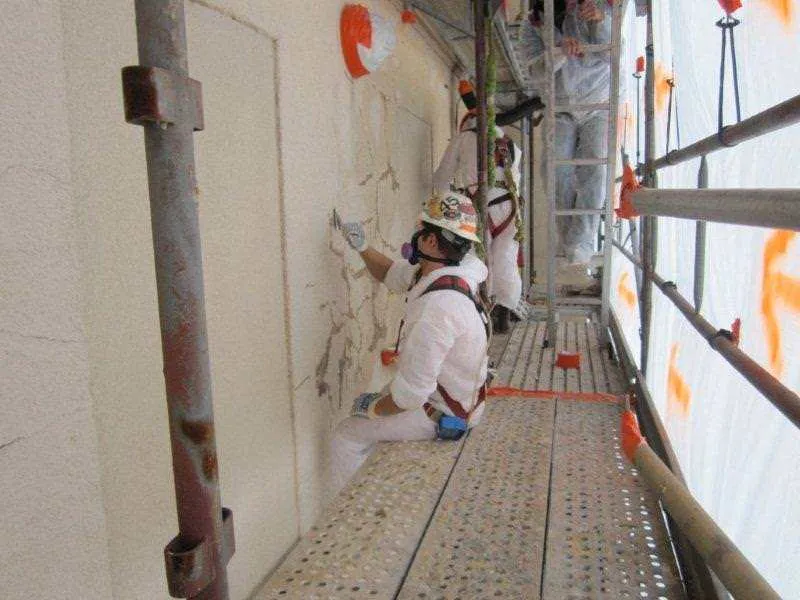
AES describes the same setup on its guide page. The area is marked based on the plan, and occupants are told to leave the area until the work is complete. The HVAC system is disabled, air ducts are sealed, and areas not being treated are sealed off with plastic sheets. On larger jobs, crews can also run a negative air machine with a HEPA filter. Our asbestos removal process guide covers all of the steps.
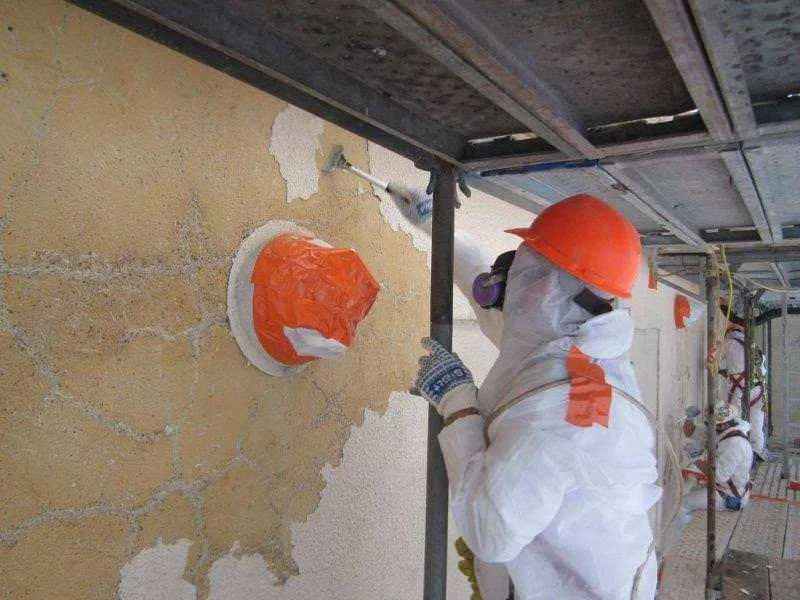
The crew also takes the material out wet and cleans with HEPA vacuums. You do not need to do any of that, and you should not try. EPA warns that improper removal “may actually increase your and your family’s exposure to asbestos fibers.”
When can you stay, and when should you move out?
Use the table as a starting point. It is our planning advice, built on the EPA and AES points above. Your contractor makes the final call for your house.
| Your situation | Leans toward staying | Leans toward moving out |
|---|---|---|
| Size of the job | Small area, such as one room or a short run of pipe | Several rooms, or a whole floor |
| Where the work is | Away from beds, kitchen and the only bathroom | Next to the bedrooms, kitchen, or the only bath |
| Air system | Work area can be sealed from the ducts | Ducts run through the work area, or the system is the problem |
| Weather | Mild days, so no heat or cooling is fine | Hot or cold days, with the HVAC off for the whole job |
| People in the home | Adults who can stay clear of the work zone | Infants, pets that roam, or anyone with a lung condition (ask your doctor) |
| Access | Separate entrance to the work area | The only route to the bedrooms runs through the work area |
Even if you stay, you will give up the work area, and you may give up the HVAC. In St. Louis that can mean a cold house in January or a hot one in July. Ask the contractor for the schedule by day so you can plan a hotel night or a stay with family.
What if you stay? Daily rules for an occupied house
If your contractor says you can stay, the plan only works if the household follows it. These habits are our practical advice, built on the containment steps above. They are not a rule from EPA or Missouri.
- Treat the sealed zone as closed. Do not open the plastic to check on progress.
- Use the one entrance the crew assigns for you, so your route never crosses the work area.
- Leave the HVAC off unless the crew tells you it is safe to run. EPA says a good contractor shuts it down.
- Keep children and pets out of the area, and ask whether they should sleep elsewhere on work days.
- Do not sweep, dust or vacuum anything near the plastic. EPA warns that improper removal can raise exposure.
- Tell the crew at once if you see dust outside the plastic, a torn seam or a bag that split.
- Keep a bag packed. If the seal fails, you can leave the same day.
AES says on its own pages that it attempts “to contain hazardous materials to a defined construction area whenever possible so that you may continue partial occupation of a building.” That is a goal, not a promise for every job. The survey and the room layout decide it.
What should you ask the contractor?
Get the answers in the written contract. EPA advises a written contract that covers the work plan, the cleanup and the rules the contractor must follow. Add these questions:
- Which rooms will be sealed, and which can I use each day?
- Will you shut off my heat and air, and for how many days?
- How will you keep dust out of the rest of the house?
- What is the entry route for workers and waste bags?
- How do you test the air before I move back in?
- What happens if the test fails? Who pays for the retest?
The air test question matters most. See our post on how long after asbestos removal it is safe for who signs off.
What does Missouri require before work starts?
For a regulated project, notice goes to DNR at least 10 working days before the start. That also gives you time to plan where you will stay. Many homeowners are not sure the rule applies to them. Missouri DNR says a single residential structure with four or fewer dwelling units is excepted. Projects with two or more residential structures are not. A building that was converted from residential to commercial use, or the other way, is not excepted either.
Missouri DNR lists St. Louis City and St. Louis County agencies as local agencies that enforce the state asbestos rules and local ordinances, so check with them for your address. Read our post on the Missouri 10 working day notice and our guide to Missouri demolition and renovation asbestos rules. Your contractor files the paperwork when it applies.
Can you do the work yourself and avoid moving out?
No. Our post on removing asbestos yourself in Missouri covers the details. EPA says removal “is complex and must be done only by a trained and accredited asbestos professional.” Federal law does not require training for people who inspect, repair or remove asbestos in detached single-family homes, but some states and localities do. EPA still tells homeowners to hire trained and accredited workers. Disturbing the material is how fibers spread to rooms you live in.
If you are not sure the material is asbestos, a survey and testing comes first. Do not cut, sand or scrape it to find out.
Who should not stay, even on a small job?
Anyone your doctor has warned about breathing problems should ask before staying. The same goes for infants and for pregnant household members. This is cautious advice, not an EPA or Missouri rule. We found no official page that names these groups for asbestos work in a home. Your doctor knows the person. Your contractor knows the job. Ask both, and if either hesitates, stay somewhere else for the work days.
A short stay costs little next to a second round of cleaning. If you rent your home, tell your landlord and ask who handles the notice and the move-out plan.
What should you pack and prepare?
Clear the work area and the path to it. Move furniture and valuables out of the sealed zone if your contractor asks. Plan for no HVAC. Set up a place for pets. Take photos of the area so you and the crew agree on its condition.
Next step
Planning removal in an occupied St. Louis home? Read our residential asbestos removal page, then call (314) 865-2662 or use the contact form. AES quotes each job, and we will tell you which rooms stay open before work starts.
Frequently asked questions
Do I have to leave my house during asbestos removal?
Not always. AES says that for smaller projects you may not need to vacate the premises, because industrial plastic sheets seal off the contaminated area. AES also says occupants are told to leave the area until the work is complete. Larger jobs, or work near your air system, may mean moving out.
Will my heat and air conditioning work during the job?
Plan on no. EPA says a good contractor seals the work area from the rest of the house with plastic sheeting and duct tape and turns off the heating and air conditioning system. AES says the HVAC system is disabled and ducts are sealed. Plan for heat or cooling gaps in St. Louis weather.
Can my kids and pets stay home?
They can stay away from the work area. EPA says do not allow household members and pets into the area until work is completed. If the work area is near the bedrooms, the kitchen or the only bathroom, ask your contractor whether children and pets should stay somewhere else.
Who decides if I should move out?
Your contractor sets the plan after the survey and the notice steps, based on the size of the job, where the material is and how the work area is sealed. Put the decision in writing. Ask which rooms you can use, which you cannot, and how long each stays closed.
Do I need to tell Missouri before the work starts?
Sometimes. For a regulated project, Missouri DNR needs notice at least 10 working days before the start. A single residential structure with four or fewer dwelling units is excepted, but two or more residential structures, or a building converted to or from residential use, are not. Your contractor checks which applies.
Terms on this page
Sources
- U.S. EPA: Protect Your Family from Exposures to Asbestos, keep people out
- U.S. EPA: Protect Your Family from Exposures to Asbestos, sealing and HVAC
- U.S. EPA: Protect Your Family from Exposures to Asbestos, improper removal
- U.S. EPA: Protect Your Family from Exposures to Asbestos, written contract
- Missouri DNR: Asbestos Requirements for Demolition and Renovation Projects (PUB2157), notice
- Missouri DNR: Asbestos Requirements for Demolition and Renovation Projects (PUB2157), exception
- Missouri DNR: Asbestos Requirements for Demolition and Renovation Projects (PUB2157), converted buildings
Written by Advanced Environmental Services and checked against the sources above on July 20, 2026. Rules change, so check the linked page before you act.