

Does an old oil tank have to be removed?
Not by one blanket rule. EPA says tanks storing heating oil used on the premises where it is stored do not need to meet federal requirements for underground tanks. EPA adds that state and local authorities may regulate them. Missouri DNR says a buried tank may be regulated depending on what was stored and what the tank was for.
So the honest answer is “it depends on the tank.” Many pages that rank for this question cover New York, New Jersey or Massachusetts rules. Those do not apply here. This post sticks to what EPA and Missouri DNR publish, then gives you a way to sort your own tank.
Which tanks does Missouri regulate?
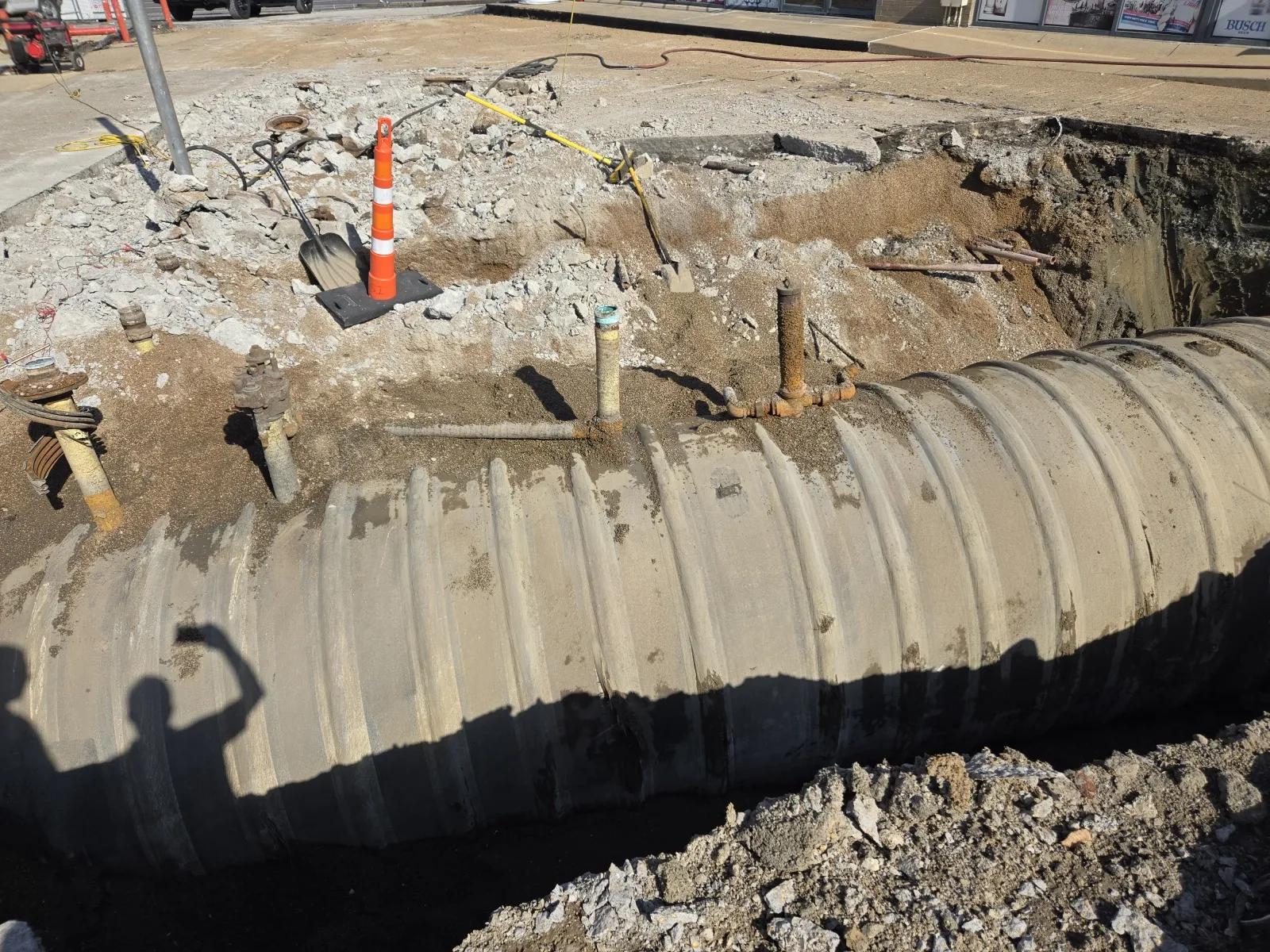
Missouri DNR draws a line by where the tank sits and what it held. It defines an underground storage tank (UST) as a tank and any underground piping connected to it that has at least 10 percent of its combined volume underground. A UST may be regulated under Missouri’s Underground and Petroleum Storage Tank Law, depending on what is or was stored and the tank’s purpose.
The table sorts the common cases. It is a screening tool, not a ruling. Call DNR to confirm your tank.
| Tank | What EPA and DNR say | What it means for removal |
|---|---|---|
| Buried tank, regulated under Missouri law and out of use | DNR: must be permanently closed within five years of going out of use | Closure is required. Notice first. |
| Buried home heating oil tank, used on the premises where stored | EPA: does not need to meet federal UST requirements. State and local authorities may still regulate | No federal removal rule. Ask DNR and your city or county. |
| Tank on or above a basement floor | EPA: tanks on or above the floor of underground areas, such as basements, do not need to meet federal UST requirements. State and local authorities may still regulate | No federal removal rule. Ask DNR and your city or county. |
| Above ground tank | DNR does not regulate operation. It does oversee cleanup of petroleum releases from leaking ones | No DNR removal rule. A leak triggers cleanup oversight. |
| Any tank that leaks | DNR: notify immediately for a regulated tank, using 573-634-2436 | Cleanup follows, whatever the tank type. |
If my tank is regulated, when must it come out?
Within five years of going out of use. DNR says tanks that remain out of use must be permanently closed within five years of being taken out of use. A site assessment must be done within 12 months of taking the tank out of use. “Out of use” has a definition: the tank is emptied so that no more than one inch of product remains, or no more than 0.3 percent by weight of the total capacity remains.
Closure means removing the tank and piping from the ground, or closing the tank in place. DNR says both methods require the owner or operator to notify the department before closure. Our tank closure guide walks through the steps in order.
What are the closure steps and deadlines?
DNR lists these steps for closing a regulated underground tank. Put the notice dates in your calendar first.
- File Closure Notice MO 780-2121 at least 30 days before closure activities. DNR says it should approve the notice before closure can begin.
- Notify DNR at least three days before work begins at the site.
- Report any spill or leak immediately to the Environmental Services Program Emergency Spill Line at 573-634-2436.
- Make sure the tank and materials are properly disposed of under applicable regulations.
- Submit a final Closure Report with supporting documents.
The site assessment must include soil and groundwater sampling where a release would most likely have occurred. That sampling is why a tank removal often turns into a soil question. See our soil remediation page and the glossary entry for soil remediation.
My tank is an old home heating oil tank. Do I still need to act?
Probably, yes, even where no rule forces removal. The legal question and the risk question are separate. A tank can be exempt from federal rules and still leak.
DNR says releases from USTs can cause fires or explosions that threaten human safety, and can contaminate groundwater that many citizens depend on. DNR also notes that petroleum products stain soil black and can contain toxic compounds such as lead, benzene and other chemicals. DNR adds that a UST that is out of use keeps being assessed registration fees until it is removed or permanently closed. A tank in the ground that no one has checked for years is a liability you carry.
Use this order:
- Find out what you have. Locate the fill pipe and vent pipe. Note whether the tank is buried or above ground, and when it last held oil. Records, old bills or a prior inspection help.
- Ask DNR. The Underground Storage Tanks Section answers at 573-751-6822 or tanks-compliance@dnr.mo.gov. Ask whether your tank is regulated.
- Ask your city or county. EPA says state and local authorities may regulate heating oil tanks. Ask your city hall, fire district or county health office.
- Test or remove. A soil check tells you whether a leak has already happened. A contractor can walk you through testing and removal side by side.
- Plan for the sale. See the next section.
Hazardous residue from a tank is hazardous waste in some cases, so disposal matters as much as removal. Do not cut, cap or fill a tank yourself. A tank that held oil can hold vapors and sludge. Leave cleaning and cutting to a trained crew.
What happens when I sell a house with an old oil tank?
Buyers and lenders often ask about it, even when no law requires removal. Missouri DNR and EPA publish no sale rule for home heating oil tanks, so this point comes from another state. New York’s Department of Environmental Conservation says that when you sell, “a bank or the buyer likely will ask for an environmental assessment or the removal of the tank, which could make closing your tank in place costlier than removing it from the ground in the first place.” New York rules do not apply in Missouri. The market pressure is the same here.
Compare your options side by side:
| Option | What it settles | What it leaves open |
|---|---|---|
| Leave it and say nothing | Nothing | A buyer’s inspector may find it. A leak may already exist. |
| Test the soil around it | Whether a leak has happened | A tank that is still in the ground |
| Close it in place | A regulated tank may be closed this way with DNR notice | A deed notice may apply, and a buyer may still ask for an assessment |
| Remove it | The tank and a clear soil record | Cleanup cost if the soil is contaminated |
Ask your title company or agent early. It is easier to answer a buyer with a closure report in hand. Our mold remediation buyer or seller post explains the same negotiation for a different hazard.
What about an above ground oil tank?
DNR does not regulate how an above ground tank operates. It does regulate and oversee cleanup of petroleum releases from leaking above ground tanks. For operating rules, DNR points to the Missouri Department of Agriculture at 573-751-5636.
An above ground tank in a basement or garage is easy to inspect. Look for rust, stains on the floor, wet insulation and a sheen on nearby soil. If you see any, call the DNR spill line or a qualified contractor. See our tank removal and fuel tank disposal pages for the disposal side.
How much does removal cost?
The official pages we opened state no price for oil tank removal. The cost depends on tank size, buried or above ground, access, what the soil shows and which paperwork applies. AES quotes each job; call (314) 865-2662 or use /contact.
Next step
If the tank sits on a lot you plan to clear, also read how long a demolition permit takes in St. Louis. Not sure whether your tank is regulated? Start with a call to DNR, then read our oil tank removal page. When you are ready to price the work, call Advanced Environmental Services at (314) 865-2662 or send the form at /contact. Our underground storage tank removal page covers buried tanks, and the glossary explains an underground storage tank.
Frequently asked questions
Does a home heating oil tank have to be removed in Missouri?
Not by a federal rule. EPA says tanks storing heating oil used on the premises where it is stored do not need to meet federal requirements for underground tanks. EPA adds that state and local authorities may regulate them. Missouri DNR says regulation depends on what was stored and the tank's purpose.
What if the tank is regulated and I stopped using it?
Missouri DNR says tanks that stay out of use must be permanently closed within five years of being taken out of use. A site assessment must be done within 12 months. Closure means removing the tank and piping or closing it in place, and both methods require notifying DNR first.
How early do I have to tell DNR before closing a regulated tank?
DNR says to file Closure Notice MO 780-2121 at least 30 days before closure activities and notify the department at least three days before work begins at the site. DNR says it should approve the Closure Notice before closure activities can begin.
What if I find a leak?
For a regulated tank, DNR says to notify the department immediately if a spill or leak is encountered, using its Emergency Spill Line at 573-634-2436. DNR also says releases from underground tanks can cause fires or explosions and can contaminate groundwater that many citizens depend on.
Are above ground oil tanks treated the same way?
No. DNR says it does not regulate the operation of above ground storage tanks, but it does oversee cleanup of petroleum releases caused by leaking ones. For operating rules, DNR points to the Missouri Department of Agriculture at 573-751-5636.
How much does oil tank removal cost?
The official pages we opened state no price. Cost depends on tank size, whether it is buried or above ground, access, what the soil shows and which paperwork applies. AES quotes each job. Call (314) 865-2662 or use the contact form.
Terms on this page
Sources
- US EPA: Learn About Underground Storage Tanks (exclusion list)
- US EPA: Learn About Underground Storage Tanks (heating oil)
- US EPA: Learn About Underground Storage Tanks (state and local)
- Missouri DNR: Regulated Storage Tank Cleanup and Closure (regulated or not)
- Missouri DNR: Regulated Storage Tank Cleanup and Closure (definition)
- Missouri DNR: Regulated Storage Tank Cleanup and Closure (above ground)
- Missouri DNR: Regulated Storage Tank Cleanup and Closure (leaking above ground)
- Missouri DNR: Regulated Storage Tank Cleanup and Closure (out of use)
- Missouri DNR: Regulated Storage Tank Cleanup and Closure (site assessment)
- Missouri DNR: Regulated Storage Tank Cleanup and Closure (five years)
- Missouri DNR: Regulated Storage Tank Cleanup and Closure (closure notice)
- Missouri DNR: Regulated Storage Tank Cleanup and Closure (three days)
- Missouri DNR: Regulated Storage Tank Cleanup and Closure (leak)
- Missouri DNR: Regulated Storage Tank Cleanup and Closure (groundwater)
- Missouri DNR: Regulated Storage Tank Cleanup and Closure (soil stain)
- Missouri DNR: Regulated Storage Tank Cleanup and Closure (fires)
- Missouri DNR: Regulated Storage Tank Cleanup and Closure (fees)
- US EPA: Learn About Underground Storage Tanks (basement tanks)
- New York State DEC: Underground Heating Oil Tanks, A Homeowner's Guide (sale)
Written by Advanced Environmental Services and checked against the sources above on August 24, 2026. Rules change, so check the linked page before you act.