What is commercial interior demolition?
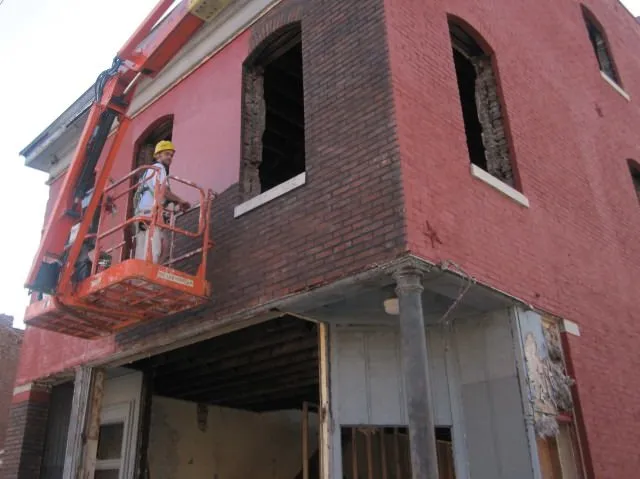
Commercial interior demolition removes the inside of a building and leaves the outer shell standing. AES describes it as taking out walls, pipes and fittings, partitions and ceilings to leave a clear area ready for the next stage. People also call it selective demolition or a tenant strip-out.
Offices, retail shops, hotels, warehouses, manufacturing plants, schools and apartment buildings all need this work at some point. It is usually the first step of a renovation. It can also follow a flood, a leak or a mold problem, or the discovery of asbestos or lead in ceiling tiles, flooring, insulation or paint.
This page explains the steps that come before the crew starts. It is not legal advice. Rules and fees change, so confirm each point with the office named. For the AES service itself, see interior demolition.
What does a tenant build-out demolition remove?
A tenant build-out demolition removes the finishes and fixtures of the old layout so the new tenant can start fresh. The scope depends on the lease, the landlord and the plan. Your drawings or a walk-through set the line between what comes out and what stays.
Typical items in a tenant space include:
- Partition walls and doors
- Ceiling grid, tile and lights
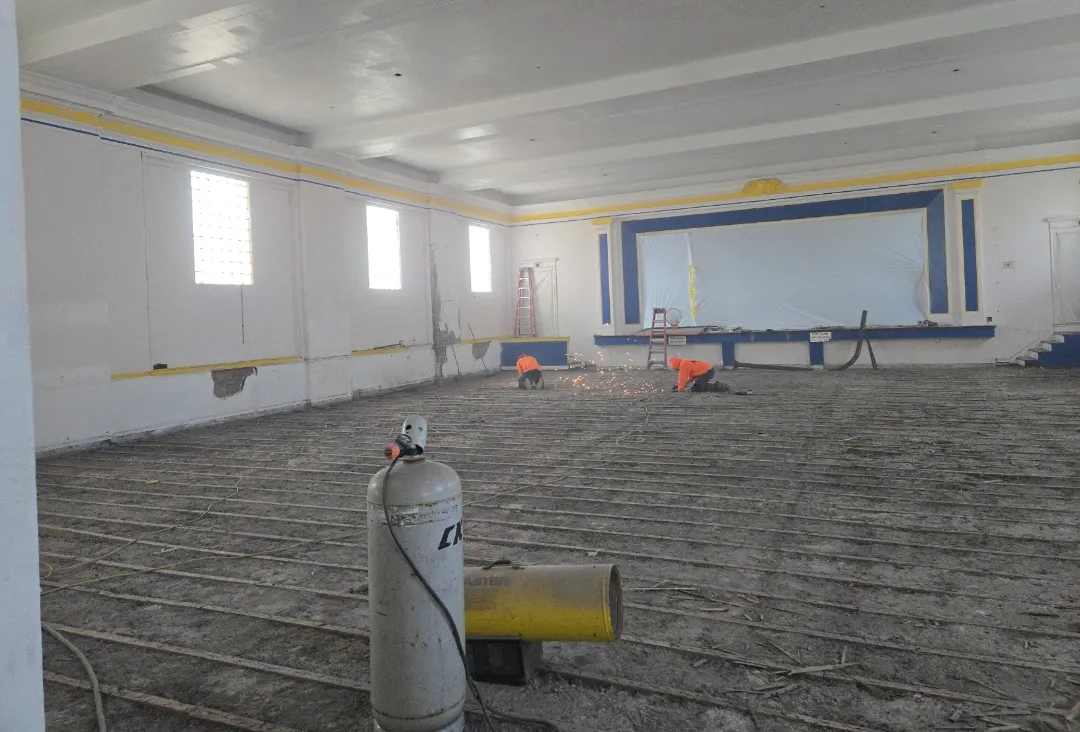
- Flooring and floor adhesive
- Old pipes, fittings and wiring that are no longer needed
- Fixtures and other items in the agreed scope
Some of these items can hold hazardous material. Ceiling tile, flooring and adhesive from older buildings are common cases. That is why the survey comes before the demolition plan. See the AES pages on asbestos floor tile and floor adhesive removal.
Can the building stay open during interior demolition?
Often part of it can. AES says it contains hazardous materials to a defined construction area whenever possible so you may continue partial occupation of a building. It also says that in some cases its crews can demolish while the building is still occupied, with minimal disruption to your business.
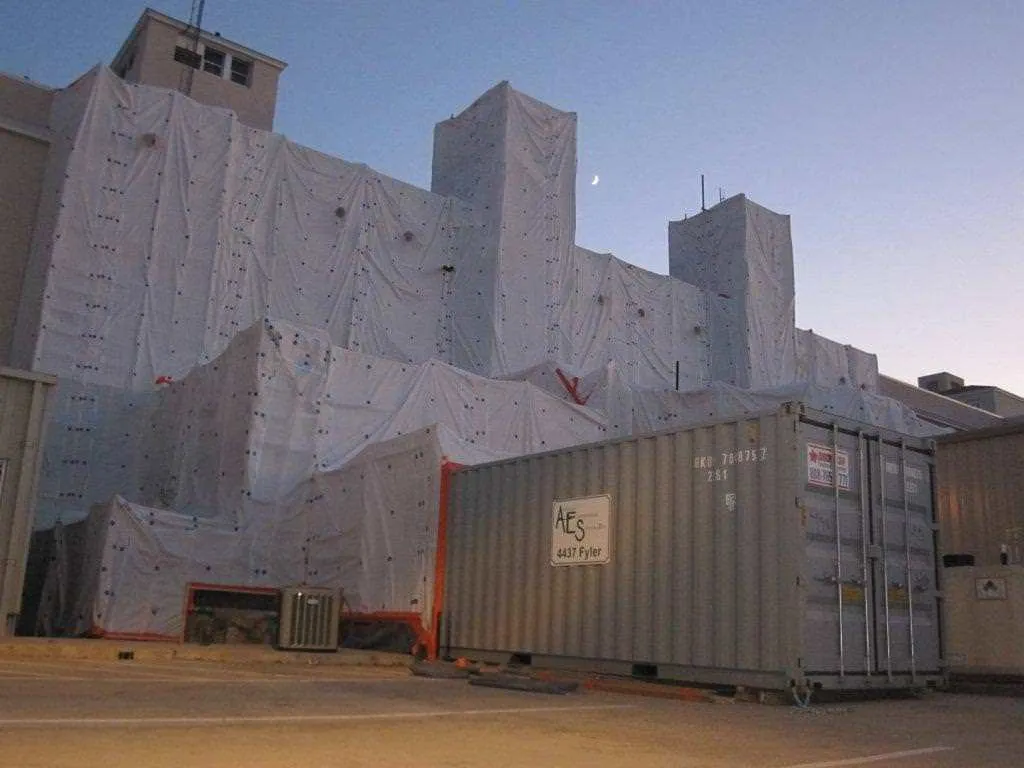
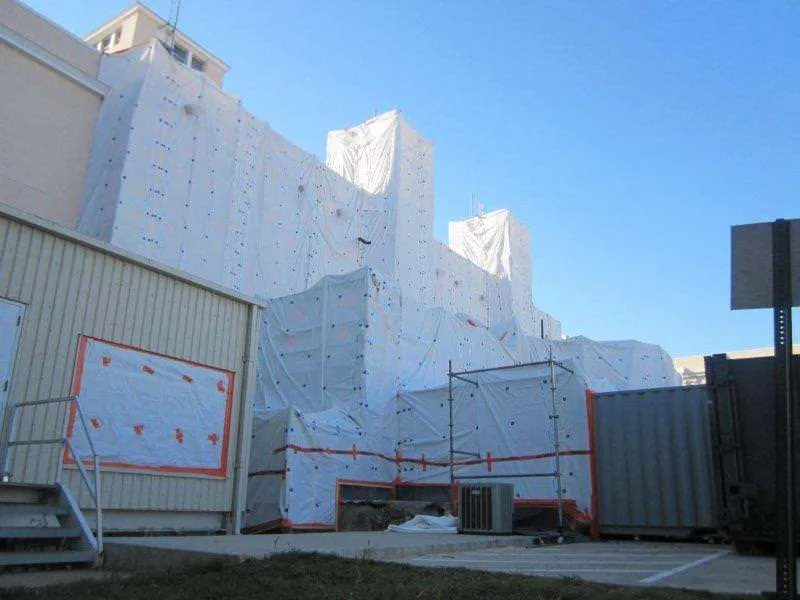
Containment is the key. AES says it confines the work area and uses air filtration machines so that no dust, spores or asbestos fibers enter the atmosphere. Read the glossary entries for containment and HEPA filter if you want the plain definitions.
Occupied work still depends on the job. The survey results, the building layout and the scope decide what is possible. Ask for the containment plan in writing before you sign.
Why does the asbestos survey come first?
The survey tells you what is in the walls, ceilings and floors before anyone breaks them. Missouri DNR says regulated structures, or the areas that will be demolished or renovated, must be thoroughly inspected by a Missouri certified asbestos inspector to find asbestos-containing materials.
DNR regulates demolition and renovation of institutional, commercial, public, industrial and residential structures. Its one exception is a single residential structure with four or fewer dwelling units. A commercial tenant space is not that case.
The inspector collects samples of suspect materials and sends them to a lab. A written report follows. If the inspection finds 160 square feet, 260 linear feet or 35 cubic feet or more of regulated asbestos-containing material that the work will impact, a Missouri registered asbestos abatement contractor must remove all of it. A regulated abatement project also needs a notice to DNR at least 10 working days before it starts.
Related pages:
- Asbestos survey, the AES inspection page
- Glossary: asbestos survey and regulated asbestos-containing material in the glossary
- Missouri demolition and renovation asbestos rules
What permits and notices apply in St. Louis?
It depends on where the building sits and what the work is. The City of St. Louis requires a City-certified contractor to obtain demolition permits. For partial demolition, the City tells you to call its Permit Section. St. Louis County relies on its Air Pollution Control Program to clear asbestos and other hazards before demolition permits issue.
| Question | Office | What the office says |
|---|---|---|
| Who obtains a demolition permit in the City? | City Building Division, Permit Section | Demolition permits must be obtained by a Demolition Contractor certified by the City |
| Is my job only partial demolition? | City Permit Section, (314) 622-3313 | Call the Permit Section about the permit requirements |
| Is asbestos cleared before the permit in the County? | St. Louis County Air Pollution Control, 314.615.8924 | Municipalities and County Public Works rely on this program to make sure asbestos and other hazards are addressed before they issue demolition permits |
| Is a survey required? | Missouri DNR | Regulated structures, or the areas to be demolished or renovated, need a certified inspector’s survey first |
| Is a notice required? | Missouri DNR | At least 10 working days before a regulated asbestos abatement project starts |
The City has not published commercial interior build-out permit rules that we could confirm. Ask the Permit Section whether your scope counts as demolition. For the full permit paths, read the guides to City of St. Louis permits and St. Louis County permits.
What is the order of work on an interior demolition?
The usual order puts the paperwork and hazard checks ahead of the sledgehammers. Each phase hands off to the next, and the contractor tracks the papers.
| Phase | What happens | Who |
|---|---|---|
| 1. Survey | Inspect and sample suspect materials, get a written report | Missouri certified asbestos inspector |
| 2. Notices and permits | File required notices and permits | Contractor and owner, with the City, County and DNR |
| 3. Abatement | Remove regulated asbestos-containing material, if the survey finds it | Missouri registered abatement contractor |
| 4. Utilities and soft strip | Shut off services in the work area, remove fixtures and finishes | Demolition crew |
| 5. Selective demolition | Take out partitions, ceilings and other items in scope | Demolition crew |
| 6. Haul-off | Separate recyclables, dispose of waste at the proper facility | Demolition crew |
| 7. Clean-up | Clean air and surfaces in the contained workspace, then final air testing | Contractor |
AES says it handles hazardous material abatement and mold remediation as part of an interior demolition project, with its own staff handling the documents. It also says it cleans the air and surfaces inside the contained workspace before final air testing gives the area a final approval.
What if the crew finds asbestos or lead during demolition?
The material gets identified before work continues in that area. Missouri DNR says areas of a building that were not inspected will require special handling during demolition. A survey before work starts avoids that delay.
AES offers asbestos abatement and lead abatement alongside demolition, so one company can handle both. In older buildings, lead-based paint on walls and trim is a common find. Ask your contractor how it controls dust.
For more on how the full job flows, including whole-building teardown, see the guide to demolition from survey to debris. House teardowns have their own rules, covered on the house demolition page.
Why hire a City-certified contractor?
Because the City of St. Louis requires one to obtain demolition permits. Ask any bidder for proof of the City certification before you accept a quote. That one request protects you from a stopped job and a wasted permit fee.
AES holds a City of St. Louis Class II demolition certificate, #877, valid February 28, 2026 to February 28, 2027. See the AES certificate. AES serves St. Louis and projects within 300 miles.
What should I send before I ask for a quote?
Send what you have. The address, the size of the space, your plans and any past asbestos results let AES scope the job. If you have no survey yet, say so, and plan to order one first.
AES does not publish interior demolition prices. It quotes each job.
Next step
Ready to scope your space? See AES interior demolition, then call (314) 865-2662 or use the quote form on the contact page.
Frequently asked questions
What is commercial interior demolition?
It is the removal of the inside parts of a building, such as walls, partitions, ceilings, pipes and fittings, while the outer shell stays intact. AES says it is often the first step of a renovation or restoration. Tenant build-outs, office remodels and retail changes all start this way.
Do I need an asbestos survey before interior demolition in Missouri?
For regulated structures, yes. Missouri DNR says the structure, or the areas to be demolished or renovated, must be inspected by a Missouri certified asbestos inspector first. DNR regulates commercial structures. Its exception covers only a single residential structure of four or fewer dwelling units.
Who can pull a demolition permit in the City of St. Louis?
The City says demolition permits must be obtained by a Demolition Contractor certified by the City of Saint Louis. Owners can pull a permit only for small buildings within the City's size limits. If your job is only partial demolition, call the City Permit Section at (314) 622-3313 to learn what applies.
Can the building stay open during interior demolition?
Sometimes. AES says it contains hazardous materials to a defined construction area whenever possible so you may continue partial occupation of a building. It also says that in some cases it can demolish while the building is occupied. Whether your space qualifies depends on the survey results and the scope.
What happens if the survey finds asbestos?
Missouri DNR says that if the inspection finds 160 square feet, 260 linear feet or 35 cubic feet or more of regulated asbestos-containing material that demolition or renovation will impact, a Missouri registered asbestos abatement contractor must remove all of it. A 10 working day notice to DNR is due before a regulated abatement project starts.
Does AES do commercial interior demolition?
Yes. AES says it provides interior demolition for businesses, buildings and institutions, no matter how small, large or complex the project is. It can also do hazardous material abatement and mold remediation as part of the job. For City work, AES holds City of St. Louis Class II demolition certificate #877, valid February 28, 2026 to February 28, 2027.
How do I get a quote?
Call AES at (314) 865-2662 or use the quote form on the contact page at /contact. Send the address, the space size, your plans if you have them, and any asbestos survey results. AES quotes each job, so you get a price for your space.
Terms on this page
Sources
- Missouri DNR: Asbestos requirements for demolition and renovation projects (what is regulated)
- Missouri DNR: PUB2157 (residential exception)
- Missouri DNR: PUB2157 (inspection)
- Missouri DNR: PUB2157 (threshold quantities)
- Missouri DNR: PUB2157 (notice)
- Missouri DNR: PUB2157 (areas not inspected)
- City of St. Louis: Apply for a Demolition Permit (certified contractor)
- City of St. Louis: Apply for a Demolition Permit (partial demolition)
- St. Louis County: Demolition Inspections
Checked against the sources above on November 6, 2026. Rules and fees change, so check the linked page before you act.