On this page
- Who Needs Interior Demolition?
- Request an Interior Demolition Quote
- What does interior demolition remove in a home or small building?
- Does a house interior demolition need an asbestos inspection?
- What order should the work follow?
- What does the City of St. Louis require for partial demolition?
- How is dust controlled during interior demolition?
- What happens to the debris?
- How does a home job differ from a commercial one?
- What should I send to get a quote?
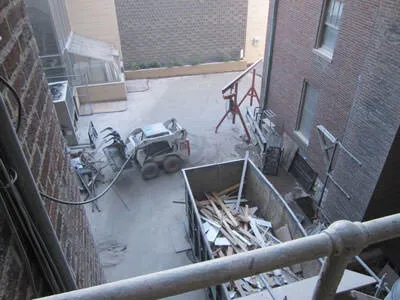
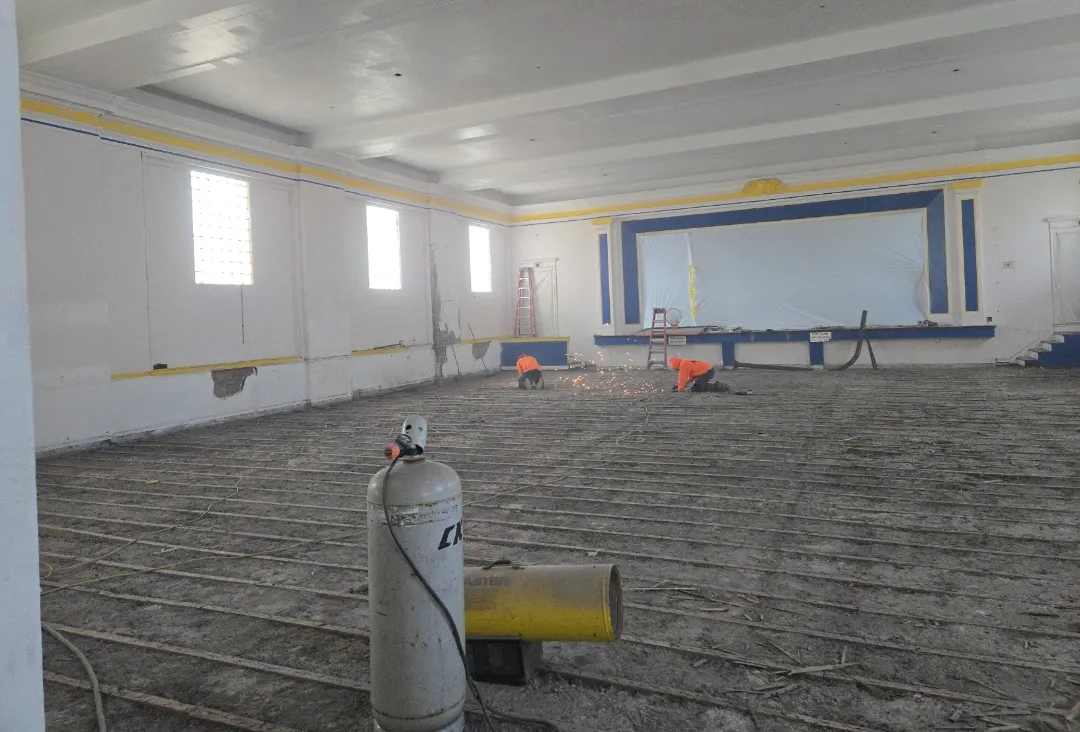
Interior demolition commonly refers to the removal of the internal components of a building in a safe manner without affecting the integrity of the external structure. This can include the demolition of walls, pipes and fittings, partitions, and ceilings so as to leave a clear area ready for the next stage of the project. Interior demolition is often done as part of a large renovation or restoration project.
In St. Louis, St. Charles, Columbia, Missouri, and the surrounding areas, Advanced Environmental Services can provide you with this interior demolition services no matter how small, large, or complex your project may be. Contact our environmental remediation experts today to learn more.
Who Needs Interior Demolition?
There are many types of businesses, buildings, and institutions that may require interior demolition, these can include:
-
Retail Shops
-
Offices
-
Hotels
-
Warehouses and Manufacturing Plants
-
Residential Homes
-
Schools and Universities
-
Condominiums
-
Apartment Buildings
-
Historical Buildings & Homes
While interior demolition is often the first step in most renovation and restoration project, it can be required for other types of projects as well. For example, interior demolition may be required to remove mold infestation due to a flood, broken water pipes, or leaking roofs as well. Additionally, if hazardous building materials such as asbestos and lead are found in the ceiling tiles, flooring, insulation, or paint, demolition may be required as part of the remediation process.
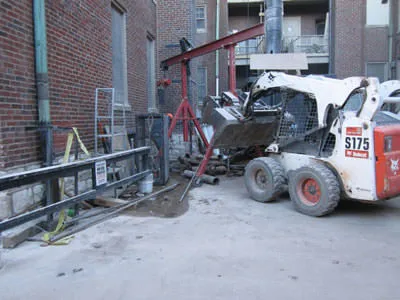
Complete Interior Demolition Services
AES can perform hazardous material abatement and mold remediation as part of an interior demolition project. Our skilled workforce will not only remove and dispose of the affected materials, they will also clean the air and clean the surfaces within the contained workspace before final air testing is conducted to give the work area a final approval.
As part of our asbestos abatement service or when handling any hazardous materials, we will contain the area, and all documentation is handled by our in-house professionals, leaving you worry free regarding the legality of your project. As a duty of care to our clients, we also dispose of all asbestos containing materials in a safe and efficient manner to the correct authorized facility.
AES is one of the leading interior demolition contractors operating in Missouri, and we can undertake any project, regardless of the size. In some cases, our contractors can even carry out demolition while the building is still occupied, causing minimal disruption to your business.
Protecting the Environment During Demolition Projects
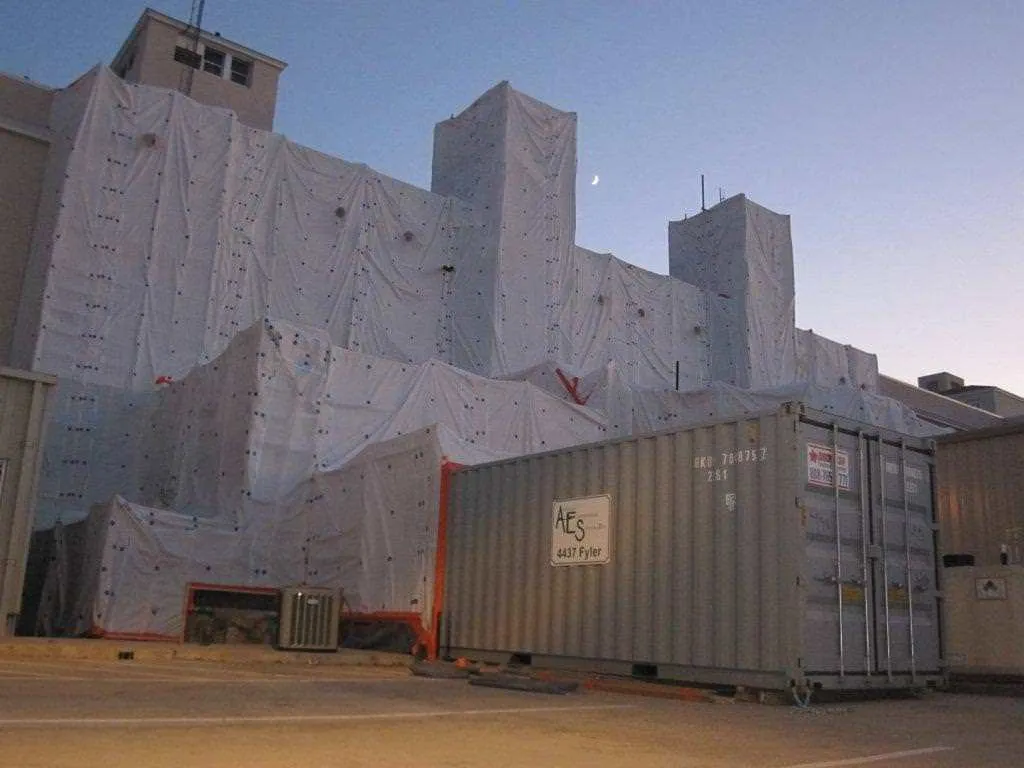
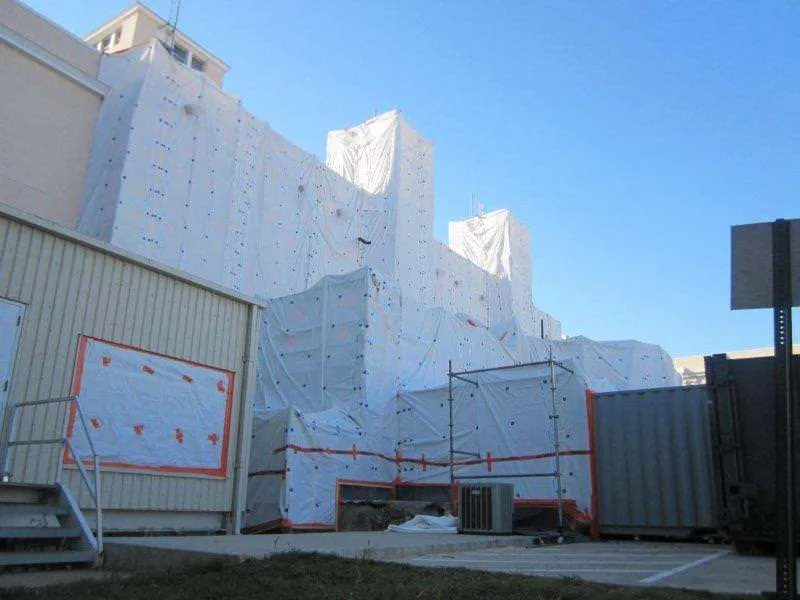
Not only do we have a duty to ensuring the safety of workers or occupants of your premises, we at AES also believe we have a duty to protect the environment. During any of our interior demolition, asbestos abatement, or mold remediation projects, our skilled workforce not only confines the area, but uses air filtration machines to ensure no dust, spores, or asbestos fibers enter the atmosphere.
To further protect the environment, any materials which can be recycled are segregated to be re-used, and any harmful materials that are found will be disposed of by the corrects means. These can include fluorescent lighting fixtures, old wiring, PCBs, ACMs, etc.
Request an Interior Demolition Quote
To learn more information about our interior demolition services or to request a quote for interior demolition as well as complete mold remediation or asbestos abatement services, contact the environmental remediation professionals at AES today.
What does interior demolition remove in a home or small building?
Interior demolition takes out what is inside a building and leaves the outer structure alone. In a house, a small office or a two-flat, that usually means partitions, ceilings, flooring, trim, fixtures and old pipes. Each item raises a different question before anyone swings a tool.
The interior demolition page above covers what AES offers. For tenant spaces and larger commercial buildings, read commercial interior demolition. For teardown of a whole house, see house demolition. This section covers what comes out of a home or smaller building and what to check first.
| What comes out | What to check first |
|---|---|
| Plaster, joint compound, textured paint, acoustical plaster | Missouri DNR lists these among potential asbestos-containing materials |
| Ceiling tiles and panels | Also on the DNR list. DNR names drop-in ceiling tile as a friable example |
| Floor tile, linoleum and mastic | On the DNR list. See asbestos floor tile and floor adhesive removal |
| Pipe and boiler insulation | DNR names boiler insulation and paper pipe insulation as friable examples |
| Painted walls and trim in older homes | AES says many Missouri properties built before the 1980s used lead-based products |
| Tubs, sinks, toilets, doors, windows, lumber | AES separates these for recycling before demolition |
| Fluorescent fixtures and old wiring | AES lists these, with PCBs and ACMs, as harmful materials that need correct disposal |
A listed material is a suspect until a lab says otherwise. DNR says an inspector collects samples of suspect materials and sends them for laboratory analysis. Read the glossary entries on friable asbestos and non-friable asbestos to see why condition matters.
Does a house interior demolition need an asbestos inspection?
It depends on the building. Missouri DNR exempts only a single residential structure with four or fewer dwelling units. Two or more residential structures are not exempt, and neither is a building used for another purpose or converted between residential and commercial. St. Louis County says all regulated structures need an inspection first.
DNR lists other cases too, so read its fact sheet or call the office. The rules differ by agency, and the City, the County and the state each have a role.
| Office | What it says | What it means for a small job |
|---|---|---|
| Missouri DNR | Regulated structures, or the areas to be demolished or renovated, must be inspected by a Missouri certified asbestos inspector | Applies to commercial buildings and to residential structures that are not exempt |
| St. Louis County Health Department | All regulated structures must be inspected by a certified asbestos inspector prior to renovation or demolition | The inspection report goes with the notification form |
| St. Louis County Air Pollution Control | Municipalities and County Public Works rely on it to make sure asbestos and other hazards are addressed before demolition permits issue | Expect a clearance step before a permit |
| City of St. Louis Building Division | Partial demolition: call the Permit Section | Ask whether your scope needs a permit |
Our asbestos survey page explains what the inspection involves. The guides to Missouri asbestos rules for demolition and renovation, City of St. Louis permits and St. Louis County permits go deeper. Rules and fees change, so confirm each point with the office named.
What order should the work follow?
Paperwork and hazard removal come before the soft strip. Survey first. Then notices and permits. Then abatement of any regulated material. Then the strip-out, haul-off and cleanup. Skipping ahead can stop the job, and a City permit is good for only 30 days, so the order also protects your schedule.
AES describes the same logic. It says that before any demolition project it provides a demolition survey by licensed inspectors that reports any mold, asbestos or lead, and that older Missouri properties often need special abatement before any demolition work. See asbestos abatement, lead abatement and mold remediation for the AES services that fit those steps.
This table shows who files what.
| Document | Who files it | Timing and conditions |
|---|---|---|
| Asbestos inspection report | Missouri certified asbestos inspector | A copy must accompany the DNR notifications. The County asks for a complete copy with its form |
| DNR demolition notification | Owner and contractors share the obligation | At least 10 working days before demolishing a regulated structure, even if no asbestos is found |
| DNR abatement notification | Owner and contractors share the obligation | At least 10 working days before a regulated asbestos abatement project starts |
| St. Louis County NESHAP form | Project owner or operator may sign | Do not enter a start date less than ten working days past the postmark, unless the department grants a waiver |
| City demolition permit | City-certified Demolition Contractor, or an owner within the City limits | Good for 30 days. Needs photos of all four sides and neighbors |
Our post on the 10 working day notice explains how to count the days. The glossary entries for NESHAP and regulated asbestos-containing material define the terms on the forms.
What does the City of St. Louis require for partial demolition?
The City says demolition permits are required for wrecking or demolishing work. For partial demolition, it tells you to call the Permit Section at (314) 622-3313 about the requirements. Permits must be obtained by a Demolition Contractor certified by the City of Saint Louis.
An owner may be issued a permit only if the building is no more than 1 1/2 stories or 15 feet in height, holds less than 10,000 cubic feet and 1,000 square feet of floor area, and has no basement. An owner may also get a permit for a garage or shed. If you are not the owner, you need a notarized letter from the owner. Every application needs photos of all four sides of the structure and of neighboring structures or lots.
The permit is good for 30 days. Line up the survey, the notices and the crew before you apply. Buildings in Local Historic Districts, Preservation Review Districts or eligible for the National Register of Historic Places can draw a Cultural Resources review.
AES holds a City of St. Louis Class II demolition certificate, #877, valid February 28, 2026 to February 28, 2027. The full steps are in the City permit guide.
How is dust controlled during interior demolition?
Contain the work area, filter the air and keep the dust from reaching the rest of the building. AES says its crews confine the area and use air filtration machines so no dust, spores or asbestos fibers enter the atmosphere, and that they contain dirt, dust and debris within the work area.
Learn the tools in plain terms: containment is the barrier around the work, a negative air machine pulls air through filters so it flows into the work area, and a HEPA filter catches fine particles. Ask your contractor which of these will be used and where.
Breaking up concrete or masonry adds another dust. OSHA’s silica rule for construction lists tool-by-tool controls in Table 1. For jackhammers and handheld powered chipping tools, it gives two options:
| OSHA Table 1 option | Control | Respirator, indoors or in an enclosed area |
|---|---|---|
| Water | Tool with a water delivery system that supplies a continuous stream or spray at the point of impact, operated and maintained per the manufacturer’s instructions | APF 10 for both 4 hours or less and over 4 hours per shift |
| Dust collection | Tool with a commercially available shroud and dust collection system, operated and maintained per the manufacturer’s instructions to minimize dust. The collector must give the airflow the tool maker recommends, or more, with a filter of 99% or greater efficiency and a filter-cleaning mechanism | APF 10 for both 4 hours or less and over 4 hours per shift |
Outdoors, the same row asks for no respirator at 4 hours or less and APF 10 above 4 hours. The hours count across all Table 1 tasks: if one worker does more than one Table 1 task in a shift and the tasks add up to more than four hours, the over-4-hours respirator rule applies to each task. Indoors or in an enclosed area, the rule also requires a means of exhaust as needed to minimize the buildup of visible airborne dust, and where crews use water, the flow must be enough to minimize visible dust. A contractor can also measure exposure and follow the rule’s other path instead. The concrete grinding contractors page covers the floor-grinding rows of the same table.
What happens to the debris?
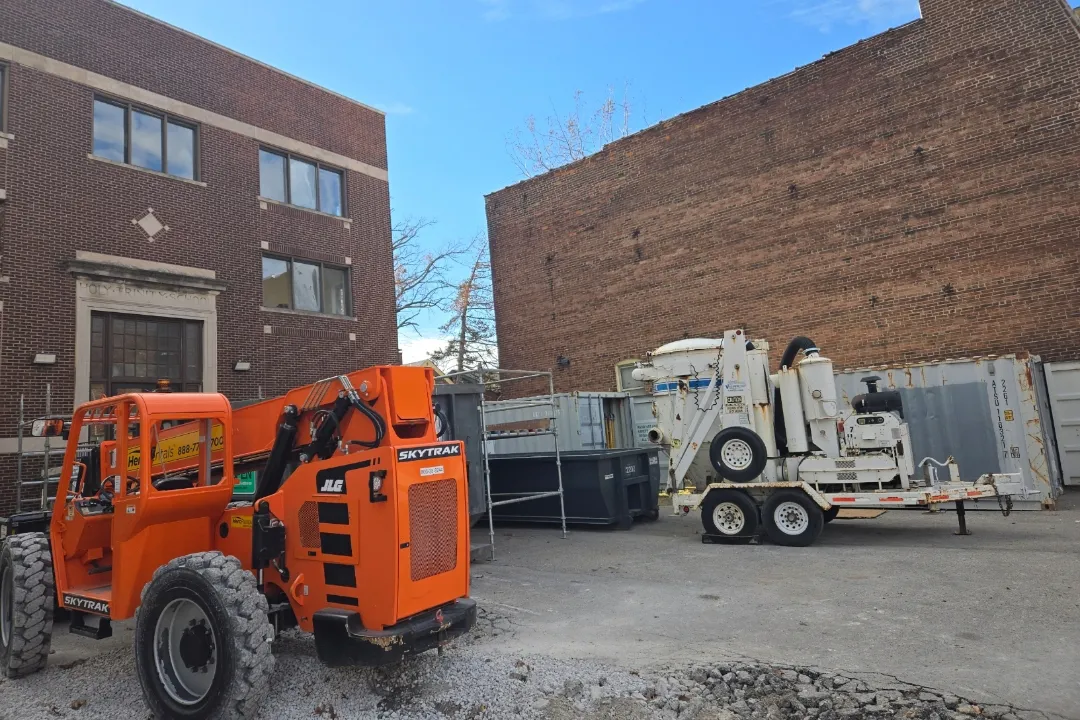
Sort it. AES says materials fit for recycling come out before demolition, including bathtubs, sinks and toilets, bricks and stones, dimensional lumber, doors and windows, and marble and wooden flooring. Harmful items go to correct disposal. Everything else is separated for an authorized site.
Asbestos waste has its own rules. DNR says waste from regulated projects at threshold quantities must go to an approved sanitary landfill or transfer station through registered asbestos abatement contractors. Non-friable asbestos-containing material that is not made into regulated material is not regulated by DNR’s asbestos rules. DNR still treats it as solid waste for an approved landfill or transfer facility. Call the facility about packaging.
| Waste stream | Who handles it | Where to read |
|---|---|---|
| Asbestos waste from regulated projects | Registered asbestos abatement contractor | Asbestos disposal |
| Fluorescent fixtures, old wiring, PCBs | Contractor, to the correct disposal | Hazardous material disposal |
| General demolition debris | Demolition crew, to an authorized site | Construction waste disposal |
| Recyclable fixtures, lumber, brick | Separated before demolition | Building demolition |
How does a home job differ from a commercial one?
Mostly in scale, exemptions and who is in the space. A home may fall under the single residential exception. A commercial building does not. A commercial tenant space adds landlord rules and business hours. Both start with the same question: what is in the walls and floors?
The commercial page walks through tenant build-outs and occupied-building containment, so this page does not repeat it. See commercial interior demolition and the demolition from survey to debris guide. For the full AES list, visit demolition.
What should I send to get a quote?
Send the address, the type and size of the building, the rooms in scope, your plans if you have them, and any asbestos or lead results. Say if you want part of the building to stay in use. AES does not publish interior demolition prices. It quotes each job.
Call AES at (314) 865-2662 or use the contact page. AES serves St. Louis and projects within 300 miles.
Frequently asked questions
What does interior demolition remove in a house?
AES describes interior demolition as removing walls, pipes and fittings, partitions and ceilings to leave a clear area for the next stage, while the outer structure stays intact. In a house, that often means plaster, ceilings, flooring, trim and fixtures. The survey results decide which of these need special handling first.
Does a house remodel need an asbestos inspection in Missouri?
It depends on the building. Missouri DNR exempts only a single residential structure with four or fewer dwelling units. Two or more residential structures, and any building used for another purpose or converted between residential and commercial, are not exempt. DNR lists more cases. St. Louis County says all regulated structures must be inspected before renovation or demolition. Ask the agency about your address.
Do I need a City permit for partial demolition in St. Louis?
The City says demolition permits are required for wrecking or demolishing work. If you are only doing partial demolition, call the Permit Section at (314) 622-3313 about the requirements. Permits must be obtained by a City-certified Demolition Contractor. An owner may get one only for a small building within the City's size limits, or a garage or shed.
How long before interior demolition can start?
Plan for at least 10 working days when notices apply. Missouri DNR requires a demolition notification at least 10 working days before demolishing a regulated structure, even if no asbestos is found, and the same lead time before a regulated abatement project. DNR can waive the period in some cases, such as a structure in imminent danger of collapse that a government agency has ordered demolished.
Can part of the building stay open during the work?
Sometimes. AES says its contractors can complete interior demolition in buildings that are currently occupied, and that it contains dirt, dust and debris within the work area so part of the building can stay occupied. Whether your space qualifies depends on the survey and the scope. Ask for the containment plan in writing.
What happens to the debris from an interior demolition?
AES says it separates items fit for recycling and sends harmful materials to the correct disposal, including fluorescent fixtures, old wiring, PCBs and ACMs. Under Missouri DNR rules, waste from regulated asbestos projects at threshold quantities goes to an approved landfill or transfer station through a registered abatement contractor. Ask who hauls each waste stream.
What if the crew finds suspect material that the survey missed?
Pause work in that area until the material is identified. Missouri DNR says areas of a building that were not inspected will require special handling during demolition. The County's notification form also asks what will be done if friable asbestos or suspect materials are unexpectedly encountered, so ask your contractor for that plan before work begins.
Terms on this page
Sources
- OSHA: 29 CFR 1926.1153(c)(2)(i), exhaust indoors
- OSHA: 29 CFR 1926.1153(c)(2)(ii), water flow
- OSHA: 29 CFR 1926.1153(c)(3), combined task time
- Missouri DNR: Asbestos Requirements for Demolition and Renovation Projects, PUB2157 (inspection)
- Missouri DNR: PUB2157 (residential exception)
- Missouri DNR: PUB2157 (converted buildings)
- Missouri DNR: PUB2157 (demolition notification)
- Missouri DNR: PUB2157 (waste from regulated projects)
- Missouri DNR: Asbestos (examples of suspect materials)
- St. Louis County Health Department: Asbestos NESHAP notification instructions
- City of St. Louis: Apply for a Demolition Permit (partial demolition)
- City of St. Louis: Apply for a Demolition Permit (certified contractor)
- Missouri DNR: PUB2157 (friable examples)
- City of St. Louis: Apply for a Demolition Permit (owner limits)
- City of St. Louis: Apply for a Demolition Permit (photos)
- City of St. Louis: Apply for a Demolition Permit (term)
- City of St. Louis: Apply for a Demolition Permit (historic review)
- OSHA: 29 CFR 1926.1153, Table 1 (jackhammers and handheld powered chipping tools)
Checked against the sources above on November 6, 2026. Rules change, so check the linked page before you act.