How much does bathroom mold removal cost?
Servpro, citing HomeAdvisor national data, lists $500 to $1,000 for bathroom mold removal. This Old House says visible surface mold may cost no more than $500. AES says prices typically range between $1500 to $10,000 for a home which is showing visible signs of mold. The number depends on how far the mold has gone.
Those are third-party and whole-home figures. AES does not publish a bathroom price. AES quotes each job; call (314) 865-2662 or use our contact page.
| Case | Figure | Source and condition |
|---|---|---|
| Bathroom mold removal | $500 to $1,000 | Servpro, citing HomeAdvisor 2026 national data; varies with location, bathroom size and severity |
| Visible surface mold | No more than $500 | This Old House; relatively inexpensive to remove |
| Hidden plumbing leak | Many thousands | This Old House; when contractors need to tear out cabinets and fixtures |
| Whole home with visible mold | $1500 to $10,000 | AES; a home which is showing visible signs of mold |
| Typical job length | 1 to 5 days | AES; normal timeframe for most average jobs |
For the St. Louis average across all rooms, see our post on mold remediation cost in St. Louis. For the basement version of this question, read basement mold remediation cost.
What separates a $500 bathroom job from a job that costs thousands?
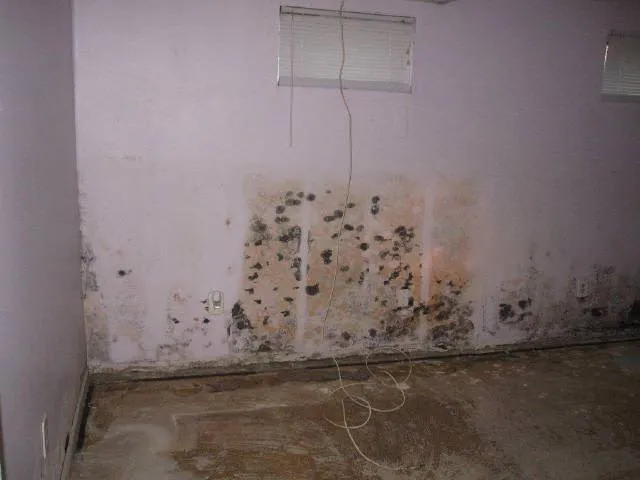
What is behind the surface. Servpro says bathrooms are contained spaces, so you are likely to catch mold early on visible surfaces like tile grout, caulk or drywall. It adds that costs climb if the mold gets behind walls or under flooring. A film on caulk is a surface problem. Mold inside the wall is a building problem.
Think of the bathroom in three layers.
- The surface. Caulk, grout, paint, shower curtain, ceiling. Light growth here sits at the low end.
- The material behind it. Drywall, backer board, subfloor. Once these get wet and stay wet, they may have to come out.
- The cavity. Studs, insulation, plumbing. Growth here stays hidden until someone opens the wall.
EPA says absorbent or porous materials, such as ceiling tiles and carpet, may have to be thrown away if they become moldy. This Old House adds that carpeting in bathrooms can trap moisture and create hidden mold problems beneath. Hard, non-porous surfaces such as tile and glass clean much more easily.
Square foot pricing gives a second check. ATI Restoration says many experts quote $10 to $25 per square foot. That is a national figure for all rooms. A 10 square foot patch at that rate comes to $100 to $250 on paper. This Old House says smaller areas tend to fall on the higher end of the per-foot range because of minimum labor fees, so expect a floor price.
How can I tell surface mold from hidden mold?
Look for water signs that go beyond the mold itself. A musty smell with no visible patch, a soft spot in the floor, paint that bubbles, tile that loosens and a stain that grows after a shower all point behind the surface. Visible mold alone does not settle the question.
| Sign | What it may mean | Next move |
|---|---|---|
| Black or green film on caulk or grout only | Surface growth from steam | Clean, then fix ventilation |
| Ceiling spots over the shower | Poor ventilation or a leak above | Check the fan duct and the roof or upstairs plumbing |
| Soft or spongy floor near the tub or toilet | Water has reached the subfloor | Get an inspection before you clean |
| Paint peeling or wall bubbling | Moisture inside the wall | Expect to open the wall |
| Musty smell, nothing visible | Hidden growth | Have someone inspect before you guess |
| Stain returns a week after cleaning | The water source is still active | Find the leak first |
A mold inspection (see the glossary entry on mold inspection) shows how far the mold goes before anyone prices the repair. Angi reports that a mold inspection costs between $300 and $1,075. Our post on mold inspection cost explains what drives that price.
Can I clean bathroom mold myself?
For a small surface patch, usually yes. EPA says that if the moldy area is less than about 10 square feet, you can in most cases handle the job yourself. Fix the leak first, because EPA says to fix plumbing leaks and other water problems as soon as possible.
Our post on mold over 10 square feet explains where the line sits. Servpro says professional remediation is necessary when mold growth is larger than 10 square feet, or when mold is hidden inside walls or your HVAC system. Stop and call a professional when:
- The patch covers more than about 10 square feet
- You find mold on drywall, wood or flooring and not just on tile or caulk
- A leak has soaked the wall or floor
- The water came from a sewage backup
- Someone in the home has asthma or a weak immune system and symptoms get worse
Protect yourself. EPA lists gloves, goggles and an N-95 respirator. EPA also says chlorine bleach is not recommended as a routine practice during mold cleanup, though professional judgment may indicate its use in some cases, for example when immune-compromised individuals are present. Read the label on any cleaner, and never mix products. Do not caulk or paint over mold, because EPA says paint applied over moldy surfaces is likely to peel.
How do I stop bathroom mold from coming back?
Control moisture. EPA says that if mold in the shower or elsewhere in the bathroom keeps reappearing, increasing ventilation (running a fan or opening a window) and cleaning more frequently will usually prevent it from recurring. It also says to keep indoor humidity below 60 percent if possible, ideally between 30 and 50 percent.
A short routine covers most cases.
- Run the exhaust fan during every shower and for a while afterward.
- Squeegee or wipe wet walls and the tub edge.
- Hang towels and mats to dry, not in a pile.
- Fix drips under sinks and around the toilet base right away.
- Check that the fan duct goes outside, not into the attic.
A fan that does not vent outside does not help. If mold keeps returning after you do all of this, the moisture comes from somewhere you cannot see. That is the point to bring in a professional. Our home mold removal page explains how AES approaches residential jobs, and the glossary defines mold remediation.
What should a bathroom mold quote include?
It should name the area, the source of the water, what gets removed, how the crew contains the work and how long it will take. Ask for the scope in writing. Compare scopes before you compare totals.
- Area and fixtures. Which walls, floor sections and fixtures are in scope?
- Source. Does the quote cover finding and fixing the leak, or only the mold?
- Rebuild. If the wall opens, who replaces drywall, tile and caulk, and is it priced?
- Containment. Is the work area sealed so spores do not spread to the rest of the house? The glossary explains containment.
- Timeline. Does it match the 1 to 5 days AES describes for most average jobs? Our post on staying home during mold remediation covers the practical side.
A low bathroom quote that covers only the surface will not hold if the leak is still active. A high quote without a scope tells you nothing. Ask for the list.
Next step
Send AES a photo of the bathroom and tell us where you see the mold and when it started. AES quotes each job; call (314) 865-2662 or use our contact page. The mold remediation page explains the full process.
Frequently asked questions
How much does bathroom mold removal cost?
Servpro, citing HomeAdvisor national data, lists $500 to $1,000 for bathroom mold, and says prices vary with location, bathroom size and severity. This Old House says visible surface mold may cost no more than $500. Which end you reach depends on whether the mold stays on the surface.
Why can bathroom mold cost thousands?
This Old House says that when a hidden plumbing leak means contractors must tear out cabinets and fixtures, the cost can run into the many thousands. Servpro says costs climb when mold gets behind walls or under flooring. The repair work often adds more than the mold removal does.
How do I keep bathroom mold from coming back?
EPA says that if mold in the shower or bathroom keeps reappearing, increasing ventilation by running a fan or opening a window, and cleaning more frequently, will usually prevent it from recurring. Fix any leak at the source, because cleaning mold without fixing the water problem only delays the return.
Can I clean bathroom mold myself?
Often yes for a small patch. EPA says that if the moldy area is less than about 10 square feet, you can in most cases handle the job yourself. If the water damage is large, the growth covers more than 10 square feet, or it is behind a wall, get a professional estimate.
How long does a bathroom mold job take?
AES says 1 to 5 days is the normal timeframe expected to complete most average jobs. A bathroom that needs a wall opened, dried and rebuilt can take longer than a surface cleanup. Ask for a schedule in writing before work starts.
Should I use bleach on bathroom mold?
EPA says using a biocide such as chlorine bleach is not recommended as a routine practice during mold cleanup, though professional judgment may indicate its use in some cases, for example when immune-compromised individuals are present. Wear gloves, goggles and an N-95 respirator, and never mix cleaners.
Terms on this page
Sources
- Servpro: How Much Does Mold Remediation Cost?, bathroom
- Servpro: How Much Does Mold Remediation Cost?, conditions
- Servpro: How Much Does Mold Remediation Cost?, data source
- Servpro: How Much Does Mold Remediation Cost?, behind walls
- Servpro: How Much Does Mold Remediation Cost?, early catch
- Servpro: How Much Does Mold Remediation Cost?, opening the wall
- This Old House: How Much Does Mold Remediation Cost?, bathroom
- This Old House: How Much Does Mold Remediation Cost?, hidden leak
- This Old House: How Much Does Mold Remediation Cost?, carpet
- This Old House: How Much Does Mold Remediation Cost?, small areas
- U.S. EPA: A Brief Guide to Mold, Moisture and Your Home, bleach exception
- ATI Restoration: How Much Does Mold Remediation Cost?, per square foot
- Angi: How Much Does Mold Remediation Cost in St. Louis, MO?, inspection
- Advanced Environmental Services: Mold Remediation FAQs
- Advanced Environmental Services: Mold Remediation FAQs, timeframe
- U.S. EPA: A Brief Guide to Mold, Moisture and Your Home, bathroom ventilation
- U.S. EPA: A Brief Guide to Mold, Moisture and Your Home, humidity
- U.S. EPA: A Brief Guide to Mold, Moisture and Your Home, bleach
- U.S. EPA: A Brief Guide to Mold, Moisture and Your Home, protective gear
- U.S. EPA: Mold Cleanup in Your Home, caulk
- U.S. EPA: Mold Cleanup in Your Home, porous materials
- U.S. EPA: Mold Cleanup in Your Home, plumbing
Written by Advanced Environmental Services and checked against the sources above on October 5, 2026. Rules change, so check the linked page before you act.