Is mold remediation worth it?
Yes, when the mold is large, hidden, or tied to water damage. No, when it is a small patch on a hard surface and you fix the cause. EPA says you can usually clean under about 10 square feet yourself. Past that, EPA points to professional guidance. AES says $1500 to $10,000 for a home showing visible signs of mold.
That range is wide because jobs differ. The real question is not “is it worth the money.” It is “is this a cleaning problem or a moisture and materials problem.” Pay when it is the second kind.
When is it worth paying for remediation?
Pay when the problem is bigger than a surface wipe. EPA names several cases where size alone is not the test: a lot of water damage, mold over about 10 square feet, sewage or contaminated water, and a suspect HVAC system. Missouri’s health department adds that mold growth is a symptom of a water problem, and it can damage wood, drywall, carpeting and other porous materials.
Use this table:
| Your situation | Worth paying for? | Why |
|---|---|---|
| Under about 10 sq ft, hard surface, leak fixed | Usually no | EPA: in most cases you can handle it yourself |
| Over 10 sq ft | Yes, get quotes | EPA points you to its remediation guidance |
| A lot of water damage | Yes | Wet porous materials hold mold and may need removal |
| Sewage or contaminated water | Yes | EPA says call a professional with that experience |
| Mold you smell but cannot see | Start with an inspection | Hidden mold may be larger than it looks |
| Mold near or in the HVAC | Yes | EPA says do not run the system if you suspect mold |
| Someone in the home has health concerns | Talk to a health professional first | EPA and DHSS both say to consult one |
| Mold in a rental | Start with a written complaint | Missouri DHSS lists tenant steps |
What does waiting cost?
Waiting lets the damage grow. EPA says, “Mold damages what it grows on. The longer it grows, the more damage it can cause.” EPA also says mold can eventually cause structural damage if a moisture problem goes unaddressed for a long time. In a St. Louis basement, that can mean a wet corner today and a replaced wall system later.
What can you do yourself first?
Fix the water, then scrub and dry. EPA’s tips are short: fix plumbing leaks and other water problems as soon as possible, dry all items completely, scrub mold off hard surfaces with detergent and water, throw away porous items that are moldy, and do not paint or caulk over mold. Our post on mold over 10 square feet has the full list, including the three cases where size is not the test. If the mold is in a basement, read whether all basements have mold first.
If the water source is not fixed, remediation will not hold. Missouri’s health department says that “with sufficient moisture, mold will keep coming back no matter how many times it is cleaned up.” Ask any contractor what they will do about the source.
Do not rely on bleach alone. EPA says it is necessary to clean up mold, not just to kill it, since dead mold is still allergenic.
How do the three choices compare?
You can do nothing, clean it yourself or hire a crew. Each has a price, in money or in risk. The table sets them side by side. The risk column is our reading of the EPA and Missouri sources above.
| Choice | Out-of-pocket cost | Fits when | Main risk |
|---|---|---|---|
| Do nothing | None today | Almost never | EPA: mold damages what it grows on, and longer growth means more damage |
| Clean it yourself | Supplies and your time | Under about 10 sq ft, hard surface, leak fixed | Missing hidden mold, or stirring it up |
| Hire a remediation crew | AES: $1500 to $10,000 for a home showing visible signs of mold | Over 10 sq ft, a lot of water damage, sewage, or HVAC involvement | Paying for a scope that skips the water source |
AES’s range is for its own work on a home with visible mold. It is not a quote for your house.
What will remediation not fix?
It will not fix the water problem, and it may not restore how things look. Missouri’s health department says mold “may cause staining and cosmetic damage” and that it may not be possible to clean an item back to its original appearance. A stained porous item may need to be replaced even after the mold is gone.
Remediation also cannot hold if moisture returns. Ask any contractor in writing who fixes the source, and whether a plumber, roofer or drying crew is part of the quote. See our guide to mold after water damage for the drying clock.
Is a small, one-room problem worth a crew?
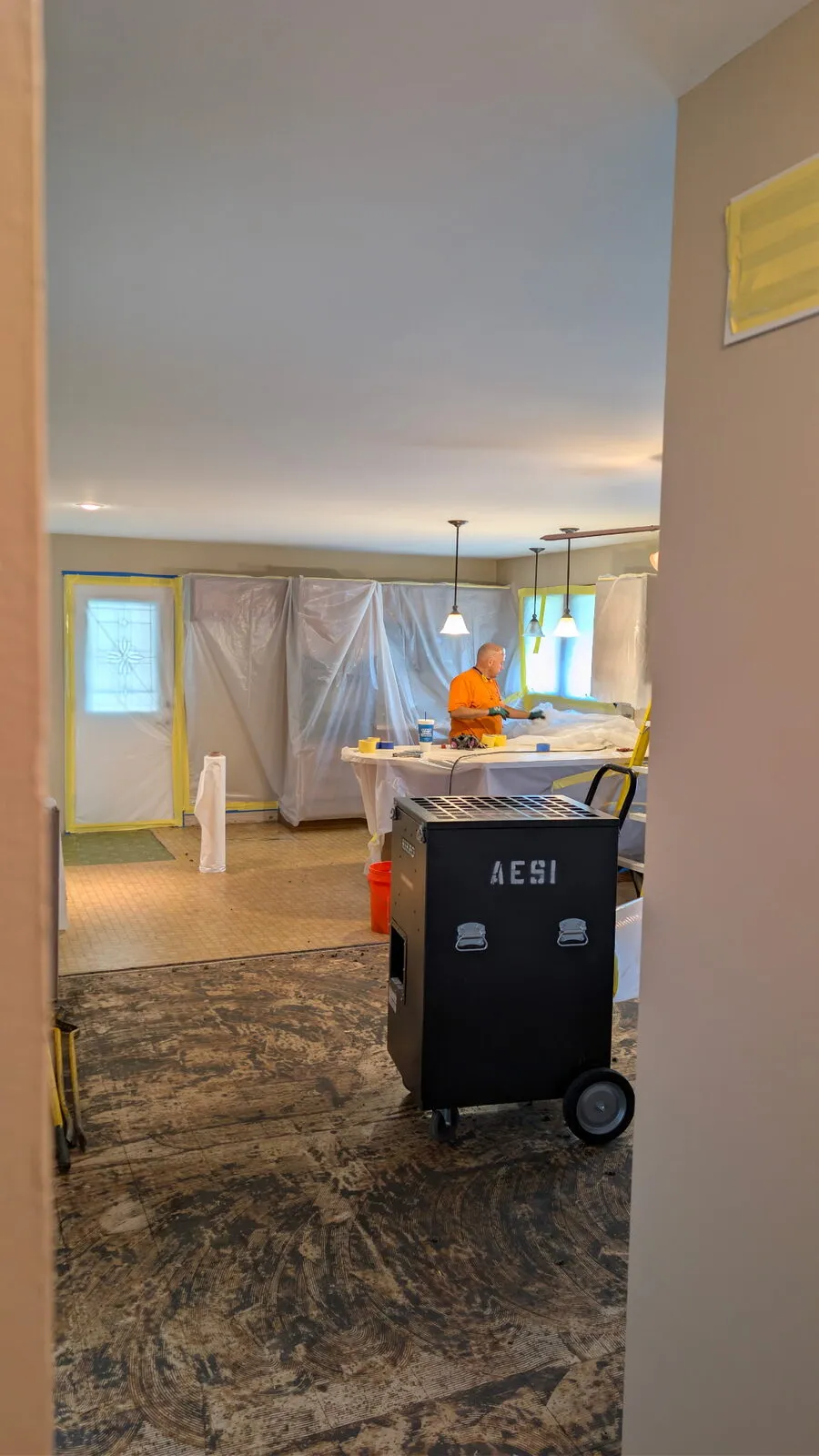
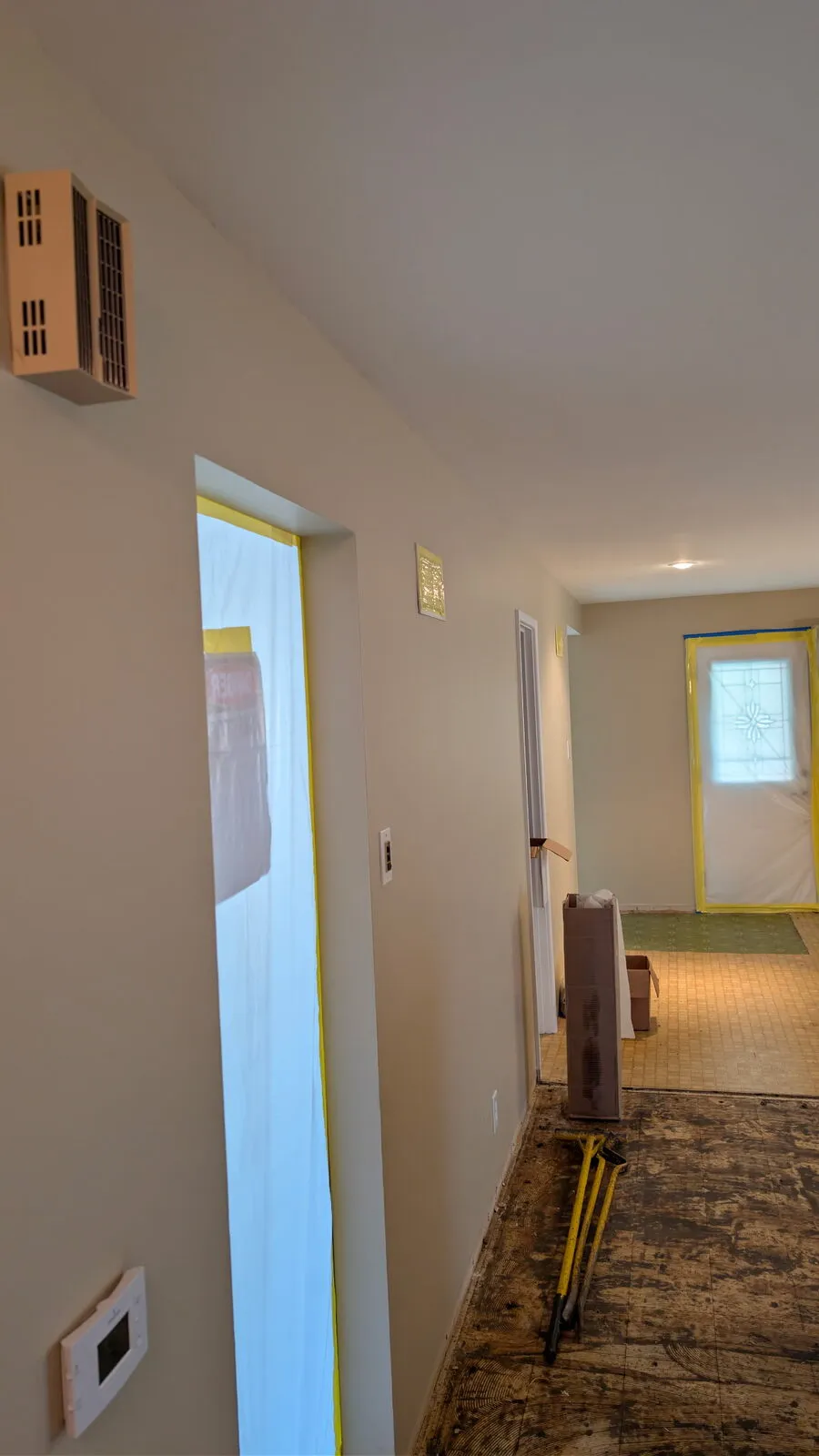
Sometimes, if it sits where you cannot reach or see. Missouri’s health department says that when mold is limited to one room or part of a room, you may isolate the area with heavy plastic sheeting over the door to keep spores from circulating through the house. That is a holding step for a small area, not a cure. If the mold is behind a wall, under flooring or in a basement corner that stays damp, get a quote before you tear into it. Our page on mold in basements covers the usual St. Louis causes.
What order should you do things in?
Start with the cause, then the size, then the choice. A simple order keeps you from overspending:
- Stop the water. Fix the leak, roof problem or flooding. Dry items within 24 to 48 hours, as Missouri’s health department advises.
- Measure the mold. If it covers under about 10 square feet on a hard surface, follow EPA’s cleanup tips.
- Look for hidden mold. EPA lists hidden spots such as the back of drywall, the top of ceiling tiles and the underside of carpet and pads. A moldy smell with nothing in sight is a reason to look closer.
- Skip testing in most cases. EPA and Missouri’s health department both say sampling is usually unnecessary when visible mold growth is present.
- Get two or three written quotes if the area is large, wet or in the HVAC.
- Check the work. EPA says the site should show no signs of water damage or mold growth after remediation, and people should be able to use the space without health complaints.
This order keeps the spend on the step that needs it. A mold inspection is useful when you smell mold but cannot find it, or when the water source is unclear.
What does mold remediation cost?
AES publishes one range: “Prices typically range between $1500 to $10,000 for a home which is showing visible signs of mold.” AES says severity, the materials affected and the size of the contaminated area drive cost, and that 1 to 5 days is the normal timeframe expected to complete most average jobs. See how long mold remediation takes.
Those are AES’s own figures for its work. Other companies price differently, and we do not quote a competitor’s numbers here. For more on cost drivers, read mold remediation costs and our guide to mold remediation cost and timeline. AES quotes each job; call (314) 865-2662 or use /contact.
How do you tell if a quote is worth it?
A good quote spells out the work. Look for:
- The size of the area, and how it was measured.
- What gets removed, cleaned or replaced.
- The containment plan and the cleanup method.
- The fix for the water source, or a written note that it is outside the scope.
- How the contractor will show the work is complete.
- The schedule, in days.
If one bid leaves out the moisture fix, it may look cheaper and cost more. See choosing a mold removal company and the mold inspection page. The glossary entry on mold remediation defines the process, and mold spores explains how mold spreads.
What about health, and what about “black mold”?
Missouri’s health department says the presence of mold does not present a health risk in most cases, but airborne spores are a common allergen and excess mold can increase asthma symptoms. It also says there is no conclusive scientific evidence linking black mold spores to illness beyond allergy symptoms. If anyone in the home has symptoms, see a health care provider. Our glossary entry on black mold covers the term. Cleanup is the same either way.
Next step
Not sure if your mold is worth a job? Read our mold remediation page, then call (314) 865-2662 or use the contact form for a quote. AES quotes each job, and we will tell you if a small patch is a do-it-yourself fix.
Frequently asked questions
How much does mold remediation cost with AES?
AES says "prices typically range between $1500 to $10,000 for a home which is showing visible signs of mold." Cost depends on severity, materials affected and the size of the area. AES quotes each job; call (314) 865-2662 or use /contact.
How long does a mold remediation job take?
AES says 1 to 5 days is the normal timeframe expected to complete most average jobs. Large areas, hidden mold or water that must dry first can take longer. Ask for a day-by-day schedule in your written quote.
Is mold remediation worth it for a small patch?
Often not. EPA says that if the moldy area is under about 10 square feet, in most cases you can handle the job yourself. EPA's cleanup tips are to fix the water problem, scrub hard surfaces with detergent and water, and dry them. Hire help if the area grows or returns.
Can I just kill the mold and leave it?
No. EPA says it is necessary to clean up mold contamination, not just to kill the mold, because dead mold is still allergenic and some dead molds are potentially toxic. Dry the area, remove what cannot be cleaned, and fix the moisture source.
What if the mold keeps coming back?
Look for the water source. Missouri's health department says that with sufficient moisture, mold will keep coming back no matter how many times it is cleaned up. Repeat mold often points to a leak, humidity or a drying problem that cleaning alone will not fix.
Terms on this page
Sources
- U.S. EPA: Mold Cleanup in Your Home, speed
- U.S. EPA: Mold Cleanup in Your Home, small areas
- U.S. EPA: Mold Cleanup in Your Home, larger jobs
- U.S. EPA: Mold Remediation in Schools and Commercial Buildings, Chapter 3, dead mold
- U.S. EPA: Mold Remediation in Schools and Commercial Buildings, Chapter 3, structural damage
- Missouri Department of Health and Senior Services: Mold, water problem
- Missouri Department of Health and Senior Services: Mold, moisture
- Missouri Department of Health and Senior Services: Mold, health
- Missouri Department of Health and Senior Services: Mold, staining
- Missouri Department of Health and Senior Services: Mold, isolating an area
Written by Advanced Environmental Services and checked against the sources above on July 27, 2026. Rules change, so check the linked page before you act.