What kind of buildings does Maryland Heights have, and what do their floors need?
Maryland Heights is a warehouse, office-flex and logistics city. Its Active Projects list shows nine office-flex or office-distribution buildings of up to 2.5 million square feet along Route 141, and the 1.4 million square foot Westport Logistics Center. Big slabs, forklift traffic and tenant turnover drive most floor work.
The same city holds Westport Plaza, where the city says “extensive office spaces” sit beside two Sheraton hotels. Office towers need quieter jobs: selective interior demolition, new flooring prep and moisture control before carpet or tile.
Many listed projects are new or under construction, so we do not claim any of them as AES work. They show the kind of space the city has: wide, flat concrete that tenants fit out, wear down and refit. That is where epoxy floor coatings and concrete polishing earn their cost.
Which AES service fits which Maryland Heights building?
Match the service to the slab and the use. AES says its epoxy coating “can be applied over new or old concrete floors” and suits factories, warehouses and manufacturing plants. Polishing suits showrooms and offices. A liquid moisture barrier goes down before flooring.
| Building type | Common problem | AES page |
|---|---|---|
| Warehouse or distribution bay | Dusting, stains, worn joints, chemical spills | Epoxy floor coatings |
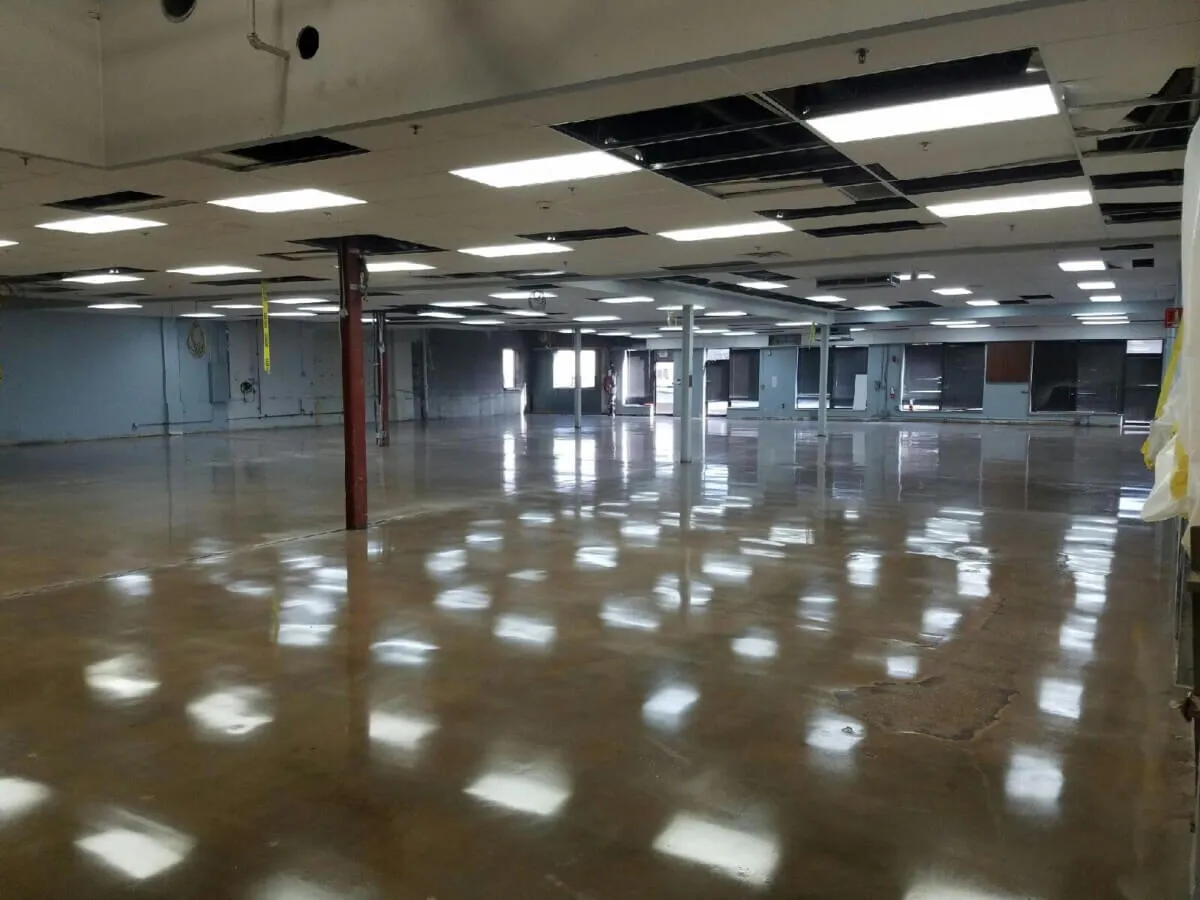
| Office-flex or showroom | Dull, stained or patchy slab | Concrete polishing |
| Office suite before new flooring | Moisture rising through the slab | Moisture barriers |
| Tenant buildout | Old walls, ceilings and finishes to strip | Interior demolition |
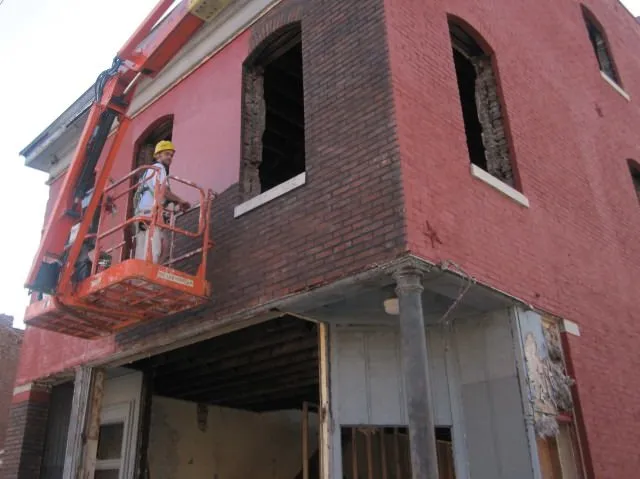
| Older building coming down | Whole-structure removal | Demolition |
Not sure between epoxy and polish? Our comparison of polished concrete vs epoxy walks through wear, slip, stain and cost drivers. Prep decides how long either finish lasts, so read the concrete floor prep guide before you bid the job. AES quotes each floor after it sees the slab.
Do I need a permit to demolish a building in Maryland Heights, Missouri?
Yes. The city’s permit page lists demolition among the work that needs a building permit, and the Permits Coordinator takes questions at (314) 738-2240. For commercial work, the minimum permit fee is $200 at application. Further fees can follow, depending on the cost of construction.
St. Louis County adds its own step. Every municipality in the county relies on the County Department of Public Health Air Pollution Control Program to make sure asbestos and other hazards are handled before a demolition permit issues. A Demolition Waste Application and Release Authorization form goes to the County for every demolition, wherever the site sits.
Mechanical, electrical and plumbing permits on commercial jobs also run through the County, because Maryland Heights contracts with it for those inspections. So a tenant buildout can touch two offices: the city for the building permit and the County for MEP.
What does St. Louis County check before demolition starts?
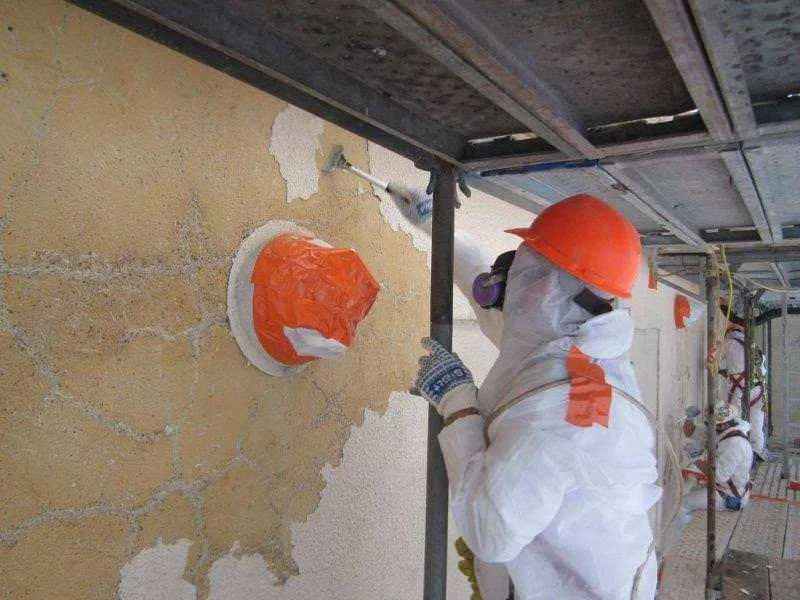
The County wants a survey. Each structure must be inspected for asbestos-containing material by a Missouri licensed asbestos inspector, and the survey copy goes in with the form. Depending on the structure, a NESHAP form and a commercial checklist may also be required.
County inspectors visit residential and commercial demolitions to confirm that dust does not leave the property. The County calls dust from demolition, including lead, a public health concern. Plan dust control into the bid.
Missouri DNR sets a separate state notice. It requires notice of demolitions and abatement of regulated structures at least 10 working days before crews begin. Our Missouri demolition and renovation asbestos rules guide lays out the full sequence, and demolition from survey to debris shows how the steps fit together. AES offers an asbestos survey and holds Missouri DNR asbestos contractor registration 27-06-0640.
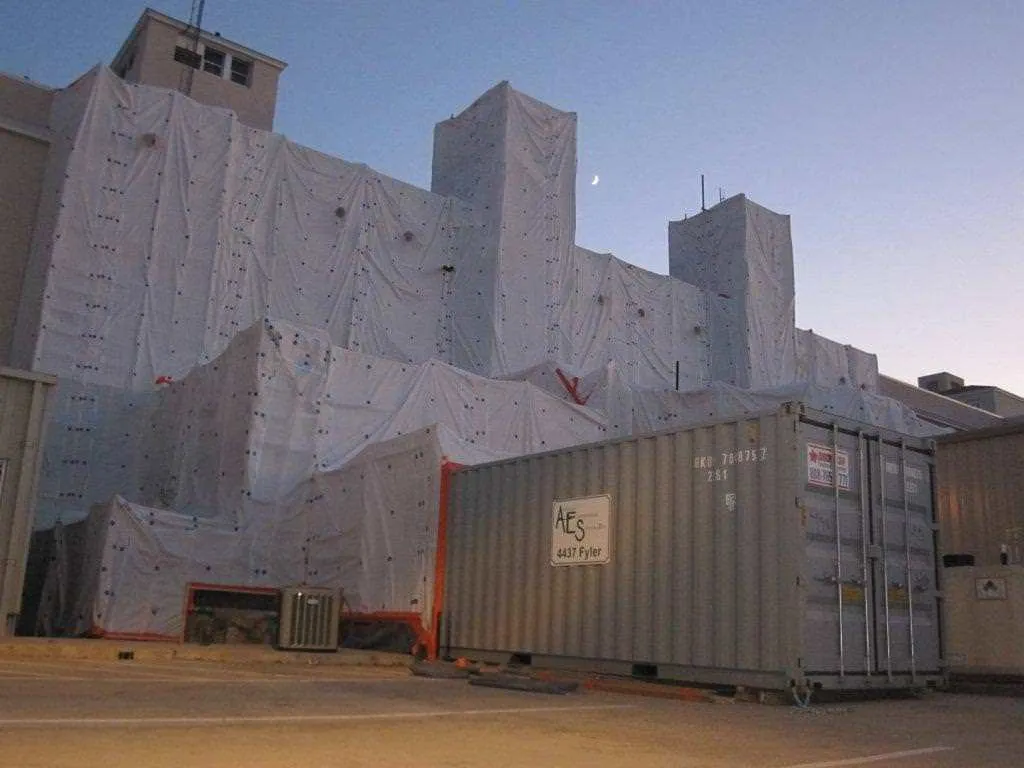
A regulated asbestos-containing material finding changes the order of work. Abatement comes first, then demolition. For a tenant space, that can mean sealed work areas so the rest of the building keeps running.
Does the floodplain affect floor and moisture work in Maryland Heights?
It affects the paperwork first. The city says the Missouri River and Creve Coeur Lake are its main water sources, that much river-side land is levee-protected, and that Floodplain Development Permits are required for all work in the floodplain. Check your parcel with the city before you plan work.
Moisture is a separate question, and the city publishes no moisture data for slabs. A slab can pass a dry day and fail a wet season. Test the concrete, then pick the coating. AES describes its moisture barrier as a liquid applied before flooring “to prevent moisture from penetrating the flooring,” which can head off mold growth later. If water has already entered a space, see fire and water restoration.
How old are the homes in Maryland Heights?
Mostly mid-century. The 2024 American Community Survey counts 13,108 housing units in the city. About 38.2% were built before 1970 and 61.4% before 1980, and the 1960s are the largest group at 3,743 units. The 1980 figure is a ceiling, because the 1970s group straddles 1978.
| Measure | Maryland Heights |
|---|---|
| Housing units counted | 13,108 |
| Built before 1970 | 38.2% |
| Built before 1980 | 61.4% |
| Built 1960 to 1969 | 3,743 units |
Homes from that era can hold asbestos floor tile, pipe wrap and old paint. We have no official age count for commercial buildings, so check each one by its own record and a survey. Our guide to asbestos in older St. Louis homes lists the usual places.
How far is AES from Maryland Heights?
About 20.5 miles, roughly 29 minutes without traffic, from our office at 3100 Gravois Ave in St. Louis to the Maryland Heights Government Center. That is an OSRM free-flow estimate, so allow more at rush hour. AES takes projects within 300 miles of St. Louis.
For county-wide rules, see St. Louis County, MO. For the services behind this page, see epoxy floor coatings, concrete polishing and demolition.
Next step
Call (314) 865-2662 or send the quote form with your Maryland Heights address, the building type and the work you plan. Start with epoxy floor coatings if the slab is the job.
Frequently asked questions
Do I need a permit to demolish a building in Maryland Heights, Missouri?
Yes. The City of Maryland Heights lists demolition among the work that needs a building permit. St. Louis County also has to clear asbestos and other hazards first, because every municipality relies on its Air Pollution Control Program. Call the Permits Coordinator at (314) 738-2240 before you hire a crew.
Who does mechanical, electrical and plumbing permits for commercial work here?
St. Louis County does. Maryland Heights contracts with the County for mechanical, electrical and plumbing permits and inspections on commercial and multi-family projects. The city handles the building permit, and its minimum fee is $200 at application. Other fees can follow, depending on the cost of construction.
Does the floodplain change a floor or moisture project?
It can change the paperwork. The city requires a Floodplain Development Permit for all work in the floodplain, and the Missouri River and Creve Coeur Lake are its main water sources. Ask the city whether your address is in the floodplain. Moisture itself is tested slab by slab, not by zip code.
Are Maryland Heights buildings old enough to have asbestos?
Some are. About 61.4% of city homes were built before 1980, and the 1960s are the largest group at 3,743 units. We have no official age count for commercial buildings. Test before you demolish or renovate. A licensed inspector surveys each structure, and the County asks for that survey.
Does AES work in Maryland Heights, Missouri?
AES serves St. Louis and takes projects within 300 miles of the city. Maryland Heights is about 20.5 miles from our office at 3100 Gravois Ave, roughly 29 minutes without traffic. Call (314) 865-2662 to confirm your address and scope.
How do I get a quote?
Call (314) 865-2662 or send the quote form at /contact with your Maryland Heights address, the building type and the work you plan. Tell us the floor area if you know it. For demolition, say whether the job is the whole building or the interior only.
Terms on this page
Sources
- U.S. Census Bureau: ACS 2024 5-year, table B25034 (Maryland Heights city), total units
- U.S. Census Bureau: ACS 2024 5-year, table B25034 (Maryland Heights city), 1960-69
- OSRM route estimate: office to Maryland Heights Government Center
- City of Maryland Heights: Commercial Building Permits (MEP)
- City of Maryland Heights: Commercial Building Permits (fee)
- City of Maryland Heights: Residential Building Permits (demolition)
- City of Maryland Heights: Residential Building Permits (contact)
- City of Maryland Heights: Floodplain Management (permit)
- City of Maryland Heights: Floodplain Management (water sources)
- City of Maryland Heights: Active Projects (KBG)
- City of Maryland Heights: Active Projects (Westport Logistics Center)
- City of Maryland Heights: Westport Plaza
- St. Louis County Public Health: Demolition Inspections (clearance)
- St. Louis County Public Health: Demolition Inspections (survey)
- St. Louis County Public Health: Demolition Inspections (form)
- St. Louis County Public Health: Demolition Inspections (dust)
- Missouri DNR: Asbestos (notice)
- Missouri DNR: Asbestos contractor registrations
Checked against the sources above on November 6, 2026. Rules and fees change, so check the linked page before you act.